


Can a Placa Solar Para Alimentar Una Nevera Power Your Home and Save You Money?
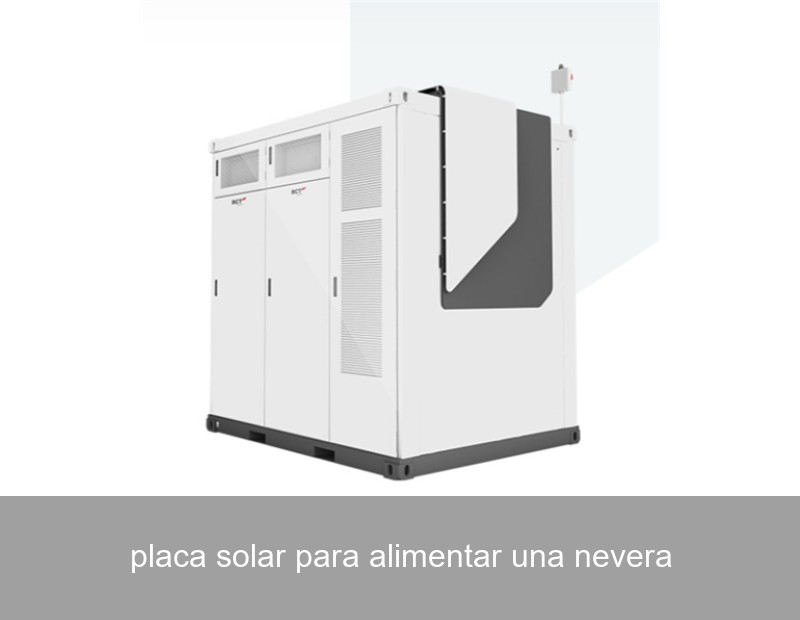
You're not alone if you've ever looked at your refrigerator—that ever-humming cornerstone of modern life—and wondered about its electricity bill. What if you could silence that worry with the power of the sun? The concept of using a placa solar para alimentar una nevera (a solar panel to power a refrigerator) is more than just a niche idea for off-grid cabins. It's a practical entry point into energy independence, resilience, and significant savings, especially with today's advanced solar and storage technologies. This guide will walk you through everything from the basic calculations to real-world implementations, showing how this specific application can be a gateway to a smarter, more sustainable home energy system.
Table of Contents
- The Core Question: Can Solar Really Handle a Fridge?
- Calculating Your Solar Needs: It's All About Watts and Hours
- Beyond the Panel: Why a Battery is Non-Negotiable
- The Highjoule Solution: Integrated Systems for Real Life
- Getting Started: Your Path to Solar-Powered Cooling
The Core Question: Can Solar Really Handle a Fridge?
Let's address the elephant in the room first. Refrigerators are cyclic loads. They don't run constantly but cycle on and off to maintain temperature. This means their energy consumption isn't a steady stream but a series of bursts. A modern, energy-efficient fridge might use between 100 to 400 kWh per year. Broken down, that's roughly 0.3 to 1.1 kWh per day. So yes, a properly sized solar panel system can absolutely generate this amount of energy. The real challenge isn't the generation during sunny hours; it's ensuring power during the night, on cloudy days, and during those compressor startup surges that demand a sudden burst of power (known as surge power). This is where a simple panel setup falls short and a complete system shines.
Calculating Your Solar Needs: It's All About Watts and Hours
Think of it like a water tank. You need to fill it (generation) faster than you drain it (consumption), and you need a reserve tank (battery) for when the tap is off. Here’s a simplified breakdown:
- Step 1: Find Your Fridge's Appetite. Check the energy label or spec sheet for its annual kWh consumption. Divide by 365 for daily use. Example: A 300 kWh/year fridge uses ~0.82 kWh/day.
- Step 2: Account for System Losses. Inverters, wiring, and heat aren't 100% efficient. Multiply your daily need by 1.2-1.3. 0.82 kWh/day becomes ~1.0 kWh/day needed from the system.
- Step 3: Size Your Solar Panel (Placa Solar). In sunny Southern Europe or California, one 400-watt panel can produce about 1.6-2.0 kWh on a good day. In less sunny regions, you might need two panels. The formula: Daily Energy Need ÷ Peak Sun Hours = Panel Wattage Required.
| Component | Specification | Notes |
|---|---|---|
| Refrigerator Consumption | 0.9 kWh/day | Modern A++ rated, 300L combined fridge-freezer |
| Required System Output | ~1.1 kWh/day | Including ~20% system losses |
| Solar Panel (Sunny Climate) | 1 x 450W panel | Assuming 4.5 peak sun hours |
| Battery Storage | ≥ 1.2 kWh usable | Critical for night & cloudy day operation |
| Inverter | ≥ 1000W pure sine wave | Must handle compressor surge (3-5x running wattage) |
Beyond the Panel: Why a Battery is Non-Negotiable
Attempting to run a fridge directly off a solar panel is a recipe for spoiled food. The sun sets, clouds roll in, but your fridge needs to run 24/7. A battery storage system is the heart of a reliable setup. It stores excess solar energy produced at midday for use anytime. More importantly, modern battery energy storage systems (BESS) like those from Highjoule provide clean, stable power that protects sensitive appliance electronics and seamlessly handles the high surge current of a compressor startup. This isn't just about backup; it's about intelligent energy management.

Image Source: Unsplash (Photographer: Andreas Gücklhorn)
A Real-World Case Study: From Spain to Savings
Let's look at a concrete example. A small family-run bodega (winery) in Andalusia, Spain, wanted to secure power for their critical wine storage refrigeration during frequent afternoon grid outages that risked spoilage. Their goal was specific: power a 700-litre commercial fridge (1.8 kWh/day) and basic lighting.
- Solution Installed: A 1.2 kW solar array (3 x 400W panels) paired with a 2.4 kWh Highjoule HomePower battery system and a 3 kW hybrid inverter.
- Outcome: The system not only guaranteed 24/7 refrigeration but also reduced the bodega's grid electricity bill for that circuit by over 90%. The payback period, considering local subsidies, was under 5 years. The owner noted, "The peace of mind knowing our inventory is safe is worth more than the savings. The system just works silently in the background." This case perfectly illustrates the move from a simple placa solar para alimentar una nevera to a resilient micro-solution.
The Highjoule Solution: Integrated Systems for Real Life
At Highjoule, we understand that powering a refrigerator is rarely an isolated need. It's part of a broader desire for resilience, efficiency, and sustainability. That's why we design systems that start with your immediate goal—like keeping the fridge on—and scale to meet your entire home's needs.
Our HomePower Series of integrated battery storage systems is built for this exact purpose. Unlike piecing together components from different brands, our all-in-one units combine a high-efficiency inverter, a sophisticated battery management system (BMS), and scalable lithium iron phosphate (LiFePO4) batteries in one compact, wall-mounted unit. For the challenge of powering a refrigerator, the HomePower system offers key advantages:
- Surge Power Handling: Delivers 2-3 times its rated power for seconds to effortlessly start compressor motors.
- Seamless Backup: During a grid outage, the system switches to backup power in milliseconds, keeping your fridge and other essential loads running without interruption.
- Smart Energy Management: Our intuitive app allows you to prioritize solar energy for your refrigeration circuit, maximize self-consumption, and even schedule charging from the grid during off-peak rates if needed.
We think beyond the single appliance. Starting with a placa solar para alimentar una nevera often leads our customers to expand their system to cover lighting, internet routers, and medical equipment, creating a true resilient home energy ecosystem.

Image Source: Unsplash (Photographer: Sidekix Media)
Getting Started: Your Path to Solar-Powered Cooling
So, how do you move from concept to cold drinks powered by the sun? Here's a practical roadmap:
- Audit & Prioritize: Use an energy monitor to measure your fridge's actual consumption over a week. List other critical loads you'd want to back up.
- Consult a Professional: A certified installer can assess your roof, local climate, and regulations. They can provide a precise design—something crucial for safety and performance. Resources like the Solar Energy Industries Association checklist are a great starting point.
- Choose an Integrated System: Opt for a matched, pre-engineered system like Highjoule's HomePower. It simplifies installation, ensures compatibility, and comes with a single warranty.
- Explore Incentives: In many U.S. states and European countries, financial incentives for solar and storage can dramatically improve ROI.
What's the First Appliance You Would Secure with Solar Power?
Your refrigerator is a compelling starting point on the journey to energy independence. It represents a tangible, daily need that solar and storage technology can reliably meet. By addressing this specific challenge, you unlock a deeper understanding of your home's energy flow and take a concrete step towards a more resilient and cost-effective future. What other critical loads in your home would you want to pair with your solar-powered fridge to build your perfect energy security plan?
 Inquiry
 Online Chat