


Lithium Ion Battery for Home Use: Your Guide to Energy Independence
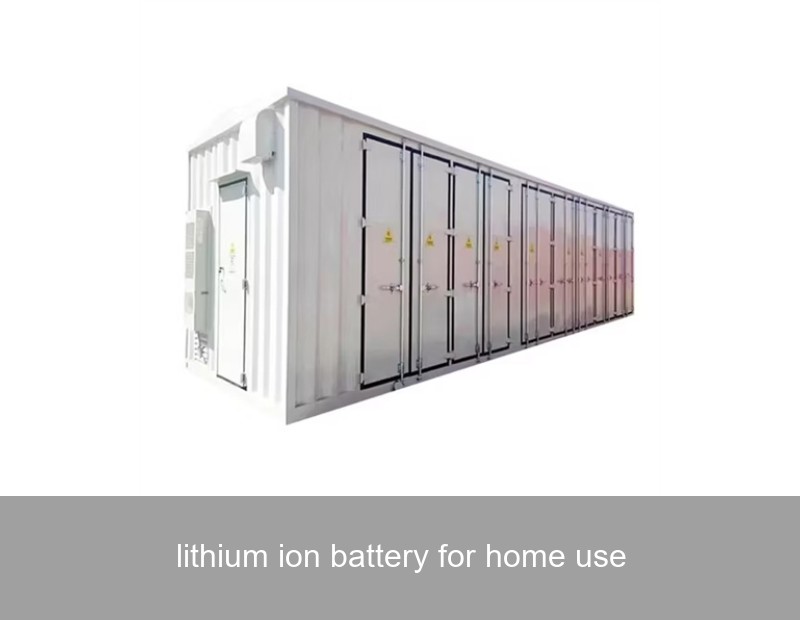
Have you ever glanced at your electricity bill with a sense of resignation, watching the numbers climb with every season? You're not alone. Across Europe and the US, homeowners are seeking control, resilience, and a sustainable way to power their lives. Enter the lithium ion battery for home use, a transformative technology moving from niche to necessity. This isn't just about backup power; it's about fundamentally rethinking how we generate, store, and consume energy at home. Let's explore how this smart energy solution works and why it might be the missing piece in your home's energy puzzle.
Table of Contents
- The Phenomenon: Why Home Batteries Are Booming
- The Data Reality: Costs, Savings, and Grid Strain
- A Real-World Case Study: The Smith Family's Journey
- Key Insights Before You Invest
- The Highjoule Solution: Engineered for Modern Homes
The Phenomenon: Why Home Batteries Are Booming
The story starts with two powerful trends converging. First, the dramatic rise in residential solar installations has given millions the ability to produce their own clean electricity. Second, increasing grid instability—from extreme weather events in the US to energy security concerns in Europe—has highlighted the vulnerability of our centralized power systems. A lithium ion battery for home use sits at the intersection of these trends. It's the bridge that allows solar energy captured at noon to power your home at night, and the shield that keeps your lights on when the grid goes down. It transforms your home from a passive consumer into an active, intelligent energy hub.
The Data Reality: Costs, Savings, and Grid Strain
Let's talk numbers. The cost of lithium-ion battery cells has plummeted by over 90% since 2010, according to analysis from BloombergNEF. This economic shift has made home storage systems financially viable for a much broader audience.
| Benefit | How It Works | Typical Impact |
|---|---|---|
| Bill Savings | Storing solar energy for use at peak tariff times, avoiding grid import. | Can increase solar self-consumption by 50-80%, reducing bills by a similar margin. |
| Backup Power | Providing electricity during grid outages automatically. | Can power essential loads (fridge, lights, comms) for 6-24+ hours, depending on system size. |
| Grid Support | Some utilities offer incentives for allowing limited, grid-stabilizing use of your battery. | Can provide modest annual payments or bill credits. |
Furthermore, agencies like the U.S. Department of Energy actively promote home storage as a key component for a resilient and efficient national energy grid. The data is clear: the technology is mature, the economics are compelling, and the grid needs it.
A Real-World Case Study: The Smith Family's Journey
Let's make this tangible. Meet the Smiths (name changed for privacy), a family of four in Munich, Germany. In 2021, they installed a 8 kW solar array. While their daytime energy bills dropped, they still relied heavily on the grid in the evenings. In early 2023, they decided to install a 10 kWh lithium ion battery for home use.
- Energy Self-Sufficiency: Increased from 35% to 85%. They now import very little from the grid, primarily in the deepest winter months.
- Financial Payback: Combined with Germany's high electricity prices (over €0.35/kWh), they project the battery will pay for itself in under 8 years.
- Peace of Mind: During two unexpected local grid outages totaling 9 hours, their home's power didn't flicker. The heating system, internet, and lights remained on seamlessly.

"It's not just about the savings," Mrs. Smith noted. "It's the feeling of control. We're less affected by energy price shocks, and we know our home has a reliable backup plan. It feels like a responsible investment for both our budget and the environment."
Key Insights Before You Invest
Not all home battery systems are created equal. Based on industry expertise, here are the critical factors to consider:
1. Capacity vs. Power: Know the Difference
Capacity (kWh) is your energy "tank size"—how much electricity you can store. Power (kW) is how much you can draw at once—critical for starting large appliances like air conditioners. A system must be sized correctly for both your energy needs and your appliance demands.
2. Depth of Discharge and Cycle Life
High-quality lithium-ion batteries, particularly those using Lithium Iron Phosphate (LFP) chemistry, can regularly discharge 90-100% of their capacity and withstand thousands of charge cycles with minimal degradation. This directly translates to a longer, more useful life and a better return on investment.
3. System Intelligence is Non-Negotiable
A battery is just a box without a brain. The software that manages it—optimizing for self-consumption, time-of-use rates, or backup readiness—is what unlocks its true value. Look for systems with smart, adaptive energy management.
The Highjoule Solution: Engineered for Modern Homes
This is where Highjoule's nearly two decades of expertise in advanced energy storage comes to the fore. We don't just sell batteries; we deliver integrated, intelligent power solutions. For the residential market, our HomePower Stack series is designed to meet the precise challenges outlined above.

Built with inherently safe and long-life LFP chemistry, the HomePower Stack offers modular scalability from 5 kWh to 20 kWh, allowing you to start with what you need and expand later. Its true differentiator is the Highjoule EnergyOS platform. This AI-driven software learns your home's energy patterns, automatically shifting between solar charging, grid charging (during off-peak hours if desired), and discharge to maximize your savings and readiness. It turns raw storage into intelligent, actionable home energy management.
Whether you're retrofitting a battery to an existing solar system or building a new solar-plus-storage setup from scratch, Highjoule's solutions are designed for seamless integration, professional installation by our certified partners, and long-term reliability backed by robust warranties and monitoring.
Making the Decision: Is a Home Battery Right for You?
The journey to energy independence is personal. It depends on your local electricity rates, solar production, climate, personal resilience goals, and available incentives. The technology, however, is no longer a futuristic concept—it's a practical, proven asset for the modern home.
So, what does your ideal energy future look like? Is it the certainty of an uninterrupted power supply for your family, the satisfaction of dramatically lowering your carbon footprint, or the financial savvy of locking in your energy costs against volatile markets? Perhaps it's all three. The lithium ion battery for home use makes that future attainable today.
What's the first question you would ask an energy expert to evaluate if your home is ready for this step?
 Inquiry
 Online Chat