


Industrial Power Plant: The Modern Energy Backbone for Factories and Facilities
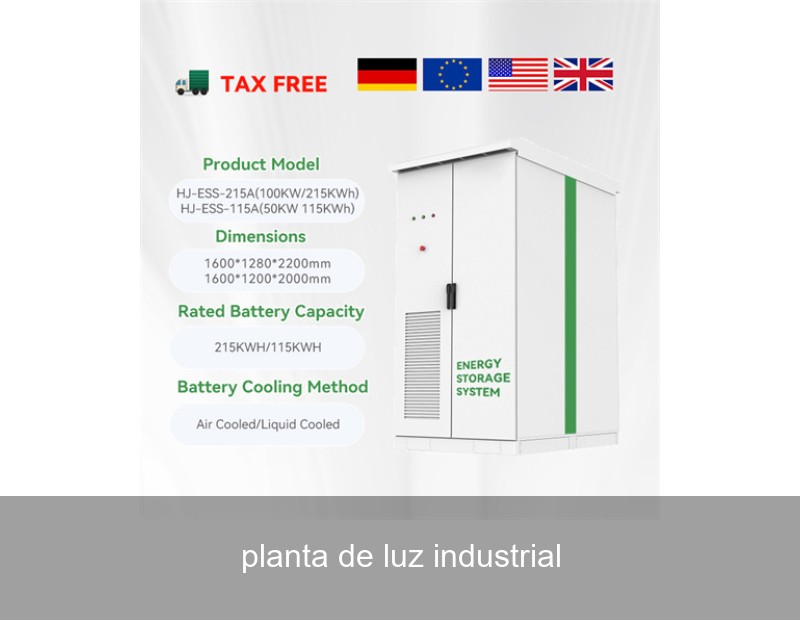
When you hear "planta de luz industrial" or industrial power plant, you might picture a massive, smoke-belching facility. But today, the term has evolved. It represents the critical, on-site energy generation and management system that keeps factories running, data centers humming, and logistics hubs operating 24/7. For facility managers and plant engineers across Europe and the US, the challenge is clear: how to ensure a reliable, cost-effective, and increasingly sustainable power supply in the face of volatile energy markets and ambitious decarbonization goals. This is where the modern industrial energy solution comes in—a blend of generation, smart storage, and digital control.
The Reliability Challenge: More Than Just a Blackout
For an industrial operation, a power interruption isn't merely an inconvenience. A sudden dip in voltage—a "brownout"—can halt sensitive robotic assembly lines, corrupt data center operations, or spoil a batch of pharmaceuticals. The traditional response has been diesel generators. They work, but they're noisy, polluting, and dependent on fuel supply chains that can be disrupted. Moreover, they're a cost center, only operating in emergencies. The modern industrial power plant must be smarter, acting not just as a backup, but as a primary tool for energy resilience and financial efficiency.
The Data: Cost Volatility and Carbon Footprint
The numbers paint a compelling picture for change. According to the U.S. Energy Information Administration (EIA), industrial electricity prices in Europe have seen significant fluctuations, heavily influenced by geopolitical factors. Meanwhile, corporate sustainability mandates are tightening. Many multinationals now have strict Scope 1 and 2 carbon reduction targets, making a diesel-dependent strategy untenable. A 2023 report highlighted that industrial facilities with on-site solar and storage could reduce their energy costs by 20-40% while slashing carbon emissions from backup power by up to 100%.
| Challenge | Traditional Approach | Modern Imperative |
|---|---|---|
| Grid Outage | Diesel Generator | Seamless Battery Backup + Generation |
| High Energy Costs | Negotiate Rates, Reduce Usage | On-site Solar + Peak Shaving with Storage |
| Carbon Targets | Purchase Offsets | Direct Emission Reduction via Clean Tech |
| Grid Demand Charges | Accept as Fixed Cost | Intelligent Load Management |
Case Study: A German Automotive Parts Manufacturer
Let's look at a real example. A mid-sized automotive supplier in Bavaria, Germany, faced tripling energy costs and pressure from its parent company to achieve carbon-neutral operations by 2030. Their old diesel gensets were becoming a liability.
The Solution: They deployed a hybrid industrial power plant. This included:
- A 2.1 MW rooftop solar PV system.
- A 1.8 MWh containerized battery energy storage system (BESS).
- An advanced energy management system (EMS) to orchestrate everything.

The Results (18 Months Post-Installation):
- Cost Savings: 32% reduction in net electricity costs through self-consumption of solar and avoiding peak demand charges.
- Reliability: The BESS provides 45 minutes of full-facility backup, bridging the gap until generators are online, and handles all minor grid sags seamlessly.
- Sustainability: 1,150 tons of CO2 emissions avoided annually. The diesel generators now run less than 10 hours a year for testing.
- ROI: Projected payback period of under 7 years, with incentives.
This case exemplifies the shift from a passive power consumer to an active energy manager.
The Modern Solution: Hybrid Energy Systems
The core of the contemporary planta de luz industrial is integration. It's no longer a single technology but a system-of-systems:
- Solar PV Generation: The primary renewable workhorse, reducing grid draw.
- Battery Energy Storage (BESS): The heart of flexibility. It stores solar excess, provides instant backup, and performs "peak shaving" – discharging during expensive peak grid periods.
- Advanced Inverters & Power Conversion: The critical link that manages the flow between AC and DC power, ensuring grid compatibility and power quality.
- Energy Management System (EMS): The "brain." This software platform uses weather forecasts, energy price signals, and consumption patterns to make autonomous, cost-optimal decisions every second.
This integrated approach turns a cost center into a strategic asset.
Highjoule's Role: Intelligent Industrial Energy Platforms
At Highjoule, we've been at the forefront of this evolution since 2005. We don't just sell components; we deliver integrated, intelligent power solutions. For an industrial facility, our H-Series Industrial Energy Platform is designed as the cornerstone of a modern power plant.
Our platform combines high-density, liquid-cooled battery storage (scalable from 500 kWh to multi-MWh) with our proprietary JouleMind AI energy management software. What does this mean for a plant manager? Simplicity and control. The system automatically:
- Prioritizes using low-cost, self-generated solar power.
- Predicts peak demand periods and uses stored energy to cut demand charges.
- Maintains perfect power quality for sensitive machinery.
- Provides a detailed, real-time dashboard of energy flows, costs, and carbon savings.

Our services extend from initial feasibility studies and system design to long-term performance monitoring and support, ensuring your industrial energy asset delivers value for decades.
Future Trends: The Self-Optimizing Plant
The future of the industrial power plant is autonomous and grid-interactive. With the rise of FERC Order 2222 in the US and similar mechanisms in Europe, facilities will be able to participate in grid service markets. Your battery storage system could earn revenue by providing frequency regulation or capacity reserves to the local grid, all managed automatically by the EMS. The plant becomes a proactive node in the energy ecosystem, enhancing community resilience while boosting its own bottom line.
An Open Question for Industry Leaders
As you look at your facility's next 10-year plan, is your current power strategy a legacy cost or a future-proofed asset? What would it mean for your operational budget and sustainability ledger if your next power interruption was not a crisis, but a seamlessly managed event—or even an opportunity to sell power back to the grid?
 Inquiry
 Online Chat