


Unlocking Energy Independence: A Deep Dive into BESS for Lithium Battery Systems
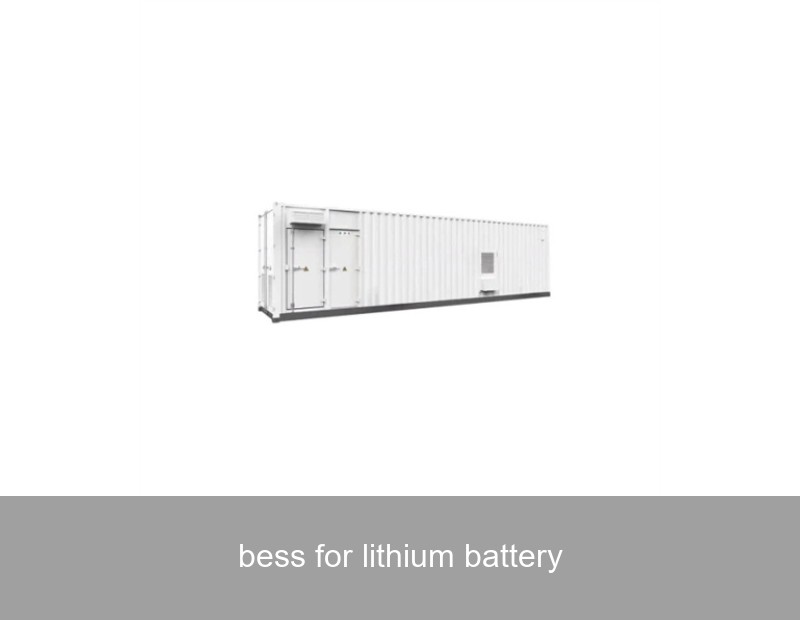
If you're exploring ways to manage energy costs, increase resilience, or integrate renewable sources, you've likely encountered the term "BESS." But what exactly is a BESS for lithium battery systems, and why has it become the cornerstone of modern energy strategy for businesses and homeowners alike? Simply put, a Battery Energy Storage System (BESS) is the intelligent brain and brawn that transforms powerful lithium-ion batteries from simple storage units into a dynamic grid asset. At Highjoule, with nearly two decades of experience since 2005, we've seen this technology evolve from a niche concept to a critical tool for energy security and sustainability. Let's demystify the modern lithium-ion BESS and explore its transformative potential.
What is a BESS for Lithium Battery?
Think of a lithium-ion battery as a powerful, high-capacity "muscle" for storing electricity. A BESS for lithium battery installations is the complete "athletic system"—the nervous system, the circulatory system, and the strategic coach—that allows that muscle to perform safely, efficiently, and intelligently. It's an integrated suite of components that goes far beyond the battery cells themselves.
- Battery Modules: The core lithium-ion cells (like LFP - Lithium Iron Phosphate), grouped into modules.
- Battery Management System (BMS): The guardian. It monitors cell voltage, temperature, and health, ensuring safety, longevity, and performance.
- Power Conversion System (PCS): The translator. This bi-directional inverter converts DC electricity from the batteries to AC for your building or grid, and vice-versa for charging.
- Energy Management System (EMS): The intelligent brain. This software-based controller decides when to charge, when to discharge, and at what power, based on weather forecasts, utility rates, or your specific energy goals.
- Thermal Management & Safety Enclosures: The life-support system. It maintains optimal operating temperature and provides physical protection and fire suppression.

Image Source: Unsplash (Representative image of battery modules)
Why the Focus on BESS is Intensifying Now
The surge in BESS adoption isn't accidental. It's a direct response to three converging global phenomena.
Phenomenon: The renewable energy boom, particularly in solar PV, creates a mismatch between generation and consumption. The sun shines at noon, but peak demand often hits in the evening.
Data: According to the International Energy Agency (IEA), global grid-scale battery storage capacity is set to multiply 15-fold by 2030, with lithium-ion technology dominating. In the U.S. alone, the Solar Energy Industries Association (SEIA) reports that a new battery storage system was installed every minute in Q3 2023.
Insight: Without storage, excess renewable energy is wasted. A BESS for lithium battery technology captures this surplus, turning intermittent generation into a reliable, dispatchable power source. This is crucial for both grid stability and maximizing the return on your solar investment.
How a Modern Lithium-Ion BESS Works: Beyond the Basics
Let's walk through a typical day for a commercial BESS paired with solar, like the systems Highjoule engineers for European and North American businesses.
| Time of Day | Energy Scenario | BESS Action | Business Benefit |
|---|---|---|---|
| Midday (Solar Peak) | Solar production exceeds building load. | EMS charges the BESS with excess solar energy. | Zero energy waste; batteries are "fueled" for free. |
| Late Afternoon (Peak Demand) | Utility rates spike ("Time-of-Use" charges), solar generation wanes. | BESS discharges to power the facility, avoiding grid draw. | Direct reduction in the highest electricity costs. |
| Evening (Grid Stress) | High regional demand, potential for grid instability. | BESS can provide grid services (frequency response) if enrolled in a utility program. | Creates a new revenue stream by supporting the grid. |
| Night / Grid Outage | Power failure occurs. | BESS instantly islandes the facility, providing backup power to critical loads. | Ensures business continuity and protects sensitive operations. |
Key Benefits of Deploying a Lithium-Ion BESS
- Cost Savings: Dramatically reduces demand charges and time-of-use energy costs through peak shaving.
- Enhanced Resilience: Provides seamless backup power, a critical consideration for data centers, manufacturers, and even farms.
- Renewable Optimization: Increases self-consumption of solar PV from ~30-40% to over 70% or more, maximizing your green investment.
- Future-Proofing: Prepares your energy infrastructure for electrification (like EV fleets) and evolving utility regulations.
- Sustainability Leadership: Reduces carbon footprint and demonstrates a tangible commitment to clean energy.
A Real-World Case Study: The U.S. Commercial Success Story
Consider a mid-sized cold storage logistics company in California. They faced crippling peak demand charges and needed reliable backup for their refrigeration units. Their challenge was twofold: manage costs and prevent spoilage.
The Solution: Highjoule deployed a turnkey 500 kW / 1 MWh lithium iron phosphate (LFP) BESS, integrated with their existing solar array and controlled by our advanced Helios EMS platform.
The Data-Driven Outcome (12-month period):
- Demand Charge Reduction: 40% decrease in monthly peak demand, saving over $72,000 annually.
- Energy Arbitrage: Storing cheap solar/off-peak power to use during expensive periods saved an additional $18,000.
- ROI: The system achieved a simple payback period of under 5 years, factoring in available state incentives (like SGIP).
- Resilience: The system successfully provided 8 hours of backup during a planned grid outage, preventing significant product loss.
This case exemplifies how a well-designed BESS for lithium battery applications solves multiple pain points simultaneously, delivering a compelling financial and operational return.
Choosing the Right BESS Partner: More Than Just Hardware
Selecting a BESS is not like buying a generator. It's a long-term technology partnership. The hardware is important, but the software intelligence, system integration expertise, and long-term support are what determine success. Key questions to ask:
- Is the system designed with safe, durable LFP chemistry?
- How sophisticated and adaptable is the Energy Management System?
- Does the provider offer full lifecycle support, from design to commissioning to ongoing optimization?
- Can the system seamlessly integrate with my existing solar, generators, and building management systems?
The Highjoule Solution: Engineered for Performance and Simplicity
At Highjoule, we've distilled our 19 years of global experience into our Nexus Series BESS platform. We understand that a successful deployment hinges on simplicity and reliability. Our all-in-one, containerized solutions feature:
- Ultra-Safe LFP Technology: Prioritizing long life and thermal stability for peace of mind.
- Pre-Integrated Intelligence: Our Helios EMS comes pre-configured with optimization algorithms for peak shaving, solar self-consumption, and backup readiness.
- Plug-and-Play Architecture: Designed for faster, simpler installation, reducing on-site complexity and cost.
- Global Service Network: Remote monitoring and a network of technical partners in Europe and North America ensure you're never alone.
We move beyond supplying components to delivering a guaranteed outcome—whether that's a specific percentage of demand charge reduction or a defined level of backup power.

Image Source: Unsplash (Representative image of energy storage service)
The Future Horizon: What's Next for BESS Technology?
The innovation curve is steep. We're actively working on integrating artificial intelligence for even more precise energy forecasting and dispatch. Second-life EV battery repurposing for BESS is gaining traction, promising a more circular economy. Furthermore, advanced grid-forming inverter technology will allow BESS networks to form microgrids that can independently support communities during extended outages, a concept detailed in research by the National Renewable Energy Laboratory (NREL).
The core question is no longer if a BESS for lithium battery systems is a viable technology, but how it can be tailored to unlock value for your specific energy profile. What would a 30% reduction in your highest monthly electricity bill enable you to do? Or, what is the true cost to your business of a one-hour power interruption versus the investment in resilience?
We invite you to start that conversation. What's the single biggest energy challenge you'd like to solve this year?
 Inquiry
 Online Chat