


Portable Power Station Lithium Battery: Your Ultimate Guide to Modern Off-Grid Energy
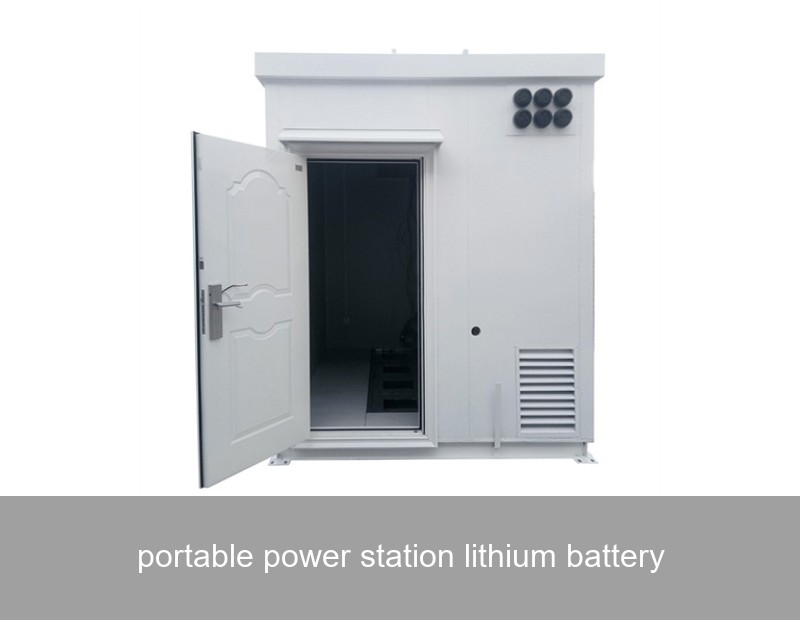
Have you ever been in the middle of a perfect camping trip when your phone battery died, or faced a sudden power outage that left your home office in the dark? You're not alone. Our modern lives are powered by devices, and the demand for reliable, clean energy on-the-go is skyrocketing. This is where the portable power station lithium battery comes in—a silent, powerful revolution in personal energy. But not all power stations are created equal. The core technology, the battery, makes all the difference. Let's explore how lithium-based technology transformed bulky, inefficient generators into the sleek, powerful companions we rely on today, and how companies like Highjoule are pushing this technology even further for a sustainable future.
Table of Contents
- The Lithium Revolution: Why Chemistry Matters
- Key Features of a High-Performance Portable Power Station
- Real-World Applications: Beyond the Camping Trip
- A Case Study: Powering a Remote Film Production in Scotland
- Choosing Your Power Station: A Buyer's Checklist
- The Future is Portable and Sustainable
The Lithium Revolution: Why Chemistry Matters
Remember the old, heavy power banks that could barely charge your phone twice? They likely used lead-acid or nickel-cadmium batteries. The shift to lithium-ion (Li-ion) and the newer Lithium Iron Phosphate (LiFePO4) chemistry is the game-changer for portable power station lithium battery units. Here's a quick comparison of why lithium reigns supreme:
| Battery Type | Energy Density | Cycle Life | Weight | Safety Profile |
|---|---|---|---|---|
| Lead-Acid | Low | 200-300 cycles | Very Heavy | Moderate (contains acid) |
| Li-ion (Standard) | High | 500-800 cycles | Light | Good (requires protection circuit) |
| LiFePO4 (Lithium Iron Phosphate) | Moderately High | 3000+ cycles | Light | Excellent (thermally stable) |
LiFePO4, in particular, has become the gold standard for premium portable power stations. It offers incredible longevity—often lasting over 10 years—and superior safety due to its stable chemical structure that resists overheating. This is the technology Highjoule integrates into its Voyager Series of portable power solutions, ensuring users get a durable, safe, and reliable power source that can withstand thousands of charge-discharge cycles, whether for weekend adventures or critical backup power.

Image Source: Unsplash - A close-up view of advanced lithium battery cell technology.
Key Features of a High-Performance Portable Power Station
When you're evaluating a portable power station lithium battery unit, look beyond just the watt-hours (Wh). Here are the critical features that define a top-tier product:
- Battery Chemistry & Cycle Life: As discussed, LiFePO4 is the leader for longevity. A station rated for 3000+ cycles retains most of its capacity over its life, offering far better value.
- Pure Sine Wave Inverter: This is crucial for safely powering sensitive electronics like laptops, medical devices, and high-end audio equipment. It provides clean, grid-like electricity, unlike modified sine wave inverters which can damage devices.
- Multiple Charging Inputs: Flexibility is key. The best units can be charged via a standard wall outlet, a car port, and most importantly, solar panels. Solar input compatibility turns your power station into a true off-grid renewable energy system.
- Output Versatility: Look for a variety of ports: multiple AC outlets, USB-A, fast-charging USB-C Power Delivery (PD), and 12V DC car ports. This ensures you can power everything from a mini-fridge to a drone.
- Smart Battery Management System (BMS): An advanced BMS monitors voltage, current, and temperature, protecting the battery from overcharge, deep discharge, and short circuits. Highjoule's systems feature an industry-leading BMS that not only protects but also optimizes performance and provides real-time data via a user-friendly app.
Real-World Applications: Beyond the Camping Trip
While camping and tailgating are popular uses, the reliability of modern portable power station lithium battery units has opened up a world of applications:
- Residential Backup Power: Keep essential circuits—like your refrigerator, modem, and some lights—running during short-term outages. It's a quieter, fume-free alternative to gas generators.
- Mobile Work & Creative Hubs: Digital nomads, photographers, and construction crews use them to run tools, laptops, and lighting in remote locations.
- Emergency Preparedness: A pre-charged unit is an invaluable part of any emergency kit, ensuring communication and small medical devices remain operational.
- Micro-Grid Support: On a larger scale, companies like Highjoule deploy containerized lithium battery energy storage systems (BESS) for commercial and industrial micro-grids. The same core LiFePO4 technology that powers a portable station is scaled up to stabilize grids, store renewable energy, and provide backup power for entire facilities.
A Case Study: Powering a Remote Film Production in Scotland
Let's look at a concrete example from the European market. In 2023, an independent film crew was shooting a documentary in the Scottish Highlands, miles from the nearest grid connection. Their challenge was to power high-wattage film lighting (totaling 1500W), camera batteries, sound equipment, and a small catering station for 10-12 hours a day.
The Problem: Traditional diesel generators were noisy (disrupting audio recording), emitted fumes, and required frequent fuel runs to a distant town, increasing cost and carbon footprint.
The Solution: The crew deployed four Highjoule Voyager 2000 (2048Wh LiFePO4) portable power stations, paired with eight 200W portable solar panels. The stations were linked for increased capacity.
- Power Provided: Over a 14-day shoot, the system provided an average of 15 kWh per day.
- Noise & Emissions: Noise levels dropped from over 85 dB (generator) to near silent, enabling clean audio capture. Carbon emissions were reduced by an estimated 85% (calculated by replacing ~40 liters of diesel per day).
- Cost Efficiency: Despite a higher upfront cost, the crew eliminated daily fuel costs (approx. £80/day) and transport logistics. The units recharged fully via solar during daylight when weather permitted, and via a backup generator at night only when necessary, slashing fuel use by over 70%.
This case perfectly illustrates the transition from fossil-fuel dependency to clean, flexible, lithium-battery-powered solutions. The crew's director noted, "The silent, reliable power wasn't just an operational benefit; it fundamentally changed the atmosphere on set and our connection to the remote environment we were filming."

Image Source: Unsplash - Professional film equipment operating in a remote, off-grid location.
Choosing Your Power Station: A Buyer's Checklist
Ready to choose your own portable power station lithium battery system? Walk through this checklist:
- Calculate Your Power Needs (in Watt-hours): List the devices you'll run, their wattage, and how many hours you'll use them. (Device Wattage × Hours of Use = Watt-hours Needed).
- Prioritize LiFePO4 Chemistry: For long-term value and safety, this is the recommended choice.
- Check the Inverter: Ensure it's a pure sine wave inverter, especially for sensitive electronics.
- Review Solar Input Limits: If going solar, check the maximum solar input wattage the unit can accept. A higher limit allows for faster recharging with more panels.
- Consider Brand & Ecosystem: Choose a provider with a proven track record in energy storage. Highjoule, for instance, leverages nearly two decades of experience in commercial BESS to build exceptionally robust and smart portable power stations, backed by global service and support.
The Future is Portable and Sustainable
The evolution of the portable power station lithium battery is a microcosm of the larger energy transition. As battery densities improve and solar panel efficiency increases, we are moving towards a paradigm of truly decentralized, resilient energy. The line between a portable power station and a home energy storage system is already blurring, with products that can be both taken on trips and integrated into home solar setups.
Highjoule's vision extends from the individual's pocket to the industrial park. Our portable stations use the same rigorously tested LiFePO4 cells and intelligent software that manage our large-scale grid storage projects. This means when you choose a solution from an established provider like Highjoule, you're not just buying a battery box; you're investing in a piece of proven, scalable energy infrastructure technology.
What will you power first with your own slice of clean, portable energy? Will it be to secure your home, enable an adventure, or perhaps to create something new in a place where power was once a limitation?
 Inquiry
 Online Chat