


Portable Solar with Battery: Your Ultimate Guide to Off-Grid Power Freedom
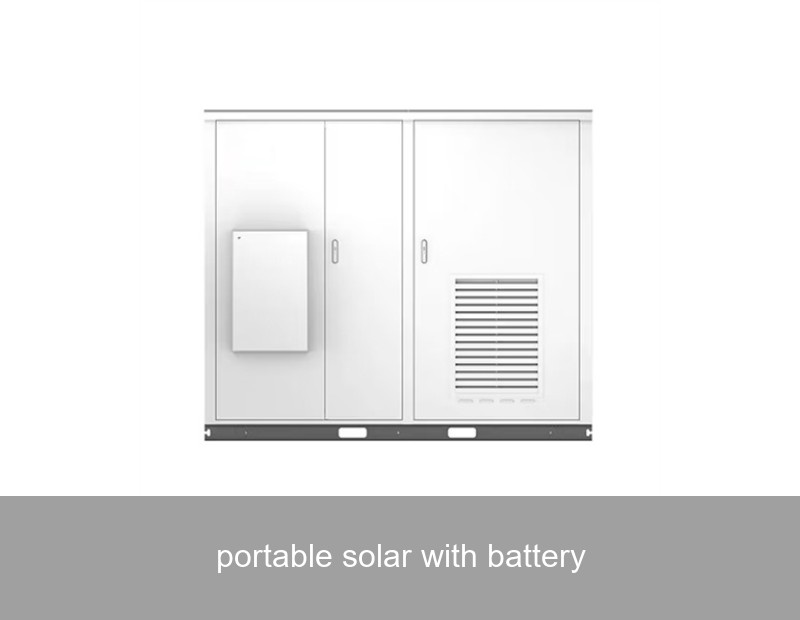
Imagine having a silent, emissions-free power plant that fits in your car trunk, ready to energize your adventures, protect your home during an outage, or power a remote worksite. This isn't science fiction; it's the reality offered by modern portable solar with battery systems. Combining compact photovoltaic panels with integrated battery storage, these units are revolutionizing how we access electricity, providing resilience, independence, and convenience. Whether you're in the European countryside or on a North American road trip, the ability to generate and store your own clean power is now genuinely portable.
What is a Portable Solar with Battery System?
At its core, a portable solar with battery system—often called a solar generator—is an all-in-one unit that captures, stores, and delivers renewable electricity. Unlike traditional noisy, fume-emitting gas generators, these systems operate silently and cleanly. They typically consist of a portable solar panel (or foldable array) that converts sunlight into DC electricity, a charge controller that manages the energy flow, and a high-capacity lithium-ion battery pack (like LiFePO4) that stores the energy. An integrated inverter then converts the stored DC power into standard AC power, allowing you to run everything from smartphones and laptops to refrigerators and power tools.

Image source: Unsplash - Portable solar panel setup in a field.
The Power Shift Phenomenon: Why Portable Solar is Booming
The demand for portable solar power isn't just a niche trend; it's a significant shift driven by tangible factors. Let's break down the data and drivers.
The Data Behind the Demand
- Grid Instability: In the US, power outages have increased by approximately 64% over the past decade. In Europe, extreme weather events linked to climate change are straining aging infrastructure.
- Cost of Energy: Soaring electricity prices, particularly in parts of Europe following geopolitical tensions, have made energy independence financially attractive.
- Tech Advancements: The cost of lithium-ion batteries has plummeted by nearly 90% in the last decade, while solar panel efficiency continues to improve, making systems more powerful and affordable.
The Logical Progression: From Awareness to Adoption
The journey for most users follows a clear path: Phenomenon (experiencing a blackout or high energy bill) → Data (researching solutions and cost savings) → Solution (investing in a portable solar+battery system). This logical progression moves the technology from a "nice-to-have" for campers to an essential tool for homeowners, digital nomads, and emergency responders.
Beyond Camping: The Expanding Universe of Applications
While perfect for keeping the campsite lit, today's portable solar systems are incredibly versatile.
| Use Case | Typical Power Needs | System Benefit |
|---|---|---|
| Home Backup Power | Refrigerator, lights, comms, medical devices | Resilience during outages |
| Remote Work & Van Life | Laptop, monitor, Wi-Fi, lighting | Productivity anywhere |
| Outdoor Events & Vendors | POS systems, lighting, small appliances | Quiet, clean operation |
| Construction & Farming | Power tools, electric fencing, sensors | No grid connection needed |
Key Components of a Reliable Portable Solar Power Station
Not all systems are created equal. Understanding the key components ensures you invest in a solution that lasts.
- Battery Chemistry: Lithium Iron Phosphate (LiFePO4) is the gold standard for portable power. It's safer, has a longer lifespan (3,000+ cycles vs. 500 for standard lithium-ion), and performs better in a wider temperature range. This is the technology Highjoule employs in its HJ-Portable Series, designed for durability and long-term value.
- Solar Panel Efficiency: High-efficiency monocrystalline panels generate more power in limited space, crucial for portable setups. Look for panels with robust, weather-resistant construction.
- Inverter Quality & Output: A pure sine wave inverter delivers clean, stable power that is safe for sensitive electronics like laptops and medical equipment. Highjoule systems feature advanced inverters with high surge capacity to start motor-driven appliances.
- Portability & Ecosystem: The best systems offer a modular "ecosystem." You can start with a base battery unit and add more solar panels or even expand battery capacity later, a principle central to Highjoule's scalable product design.
Real-World Case Study: Disaster Resilience in California
Let's look at a concrete example from a Highjoule customer in Sonoma County, California, an area frequently threatened by wildfires and Public Safety Power Shutoffs (PSPS).
The Challenge: A small family-run vineyard needed to keep its critical monitoring systems (soil sensors, security cameras) and communications online during multi-day grid outages to prevent data loss and monitor property safety.
The Solution: They deployed two Highjoule HJ-Portable 2000 systems, each paired with 400W of foldable solar panels. One system was dedicated to the sensor network and internet router, while the other served as a mobile unit for the family home and could be moved to power a water pump if needed.
The Data & Outcome: During a 72-hour PSPS event, the systems, recharged daily via solar, maintained 100% uptime for critical loads. The vineyard estimated avoiding over $5,000 in potential data loss and crop monitoring gaps. The silent, zero-emission operation was a stark contrast to the noisy generators used by neighbors, and the systems were easily moved as needs changed. This case underscores how portable solar with battery is not just for recreation but a serious tool for business continuity and resilience.

Image source: Unsplash - Solar panels in an agricultural setting.
Choosing the Right System for Your Needs
Selecting your ideal portable power station involves a few key steps:
- Audit Your Power Needs: List the devices you need to run, their wattage, and estimated runtime. (e.g., 60W laptop for 4 hours = 240 Watt-hours).
- Prioritize Battery & Inverter: Choose a system with a LiFePO4 battery and a pure sine wave inverter. The battery capacity (in Watt-hours, Wh) should exceed your daily calculated need to account for less-than-ideal solar conditions.
- Match Solar Input: Ensure the solar panels can recharge the battery in a reasonable time. A good rule of thumb is to have solar input (in Watts) that is at least 20-30% of the battery's capacity in Wh for a full daily recharge.
- Consider Scalability & Support: Opt for a system from a reputable provider like Highjoule that offers scalable configurations, robust warranties, and expert technical support—crucial for both European DIY enthusiasts and US commercial users.
Highjoule's expertise, built since 2005 in providing large-scale commercial and microgrid storage, directly informs the engineering of our portable systems. We understand the importance of cycle life, system safety, and reliable performance under stress, translating industrial-grade knowledge into consumer-ready products.
The Future is Mobile and Decentralized
The rise of portable solar with battery technology is a microcosm of the larger energy transition: a move towards decentralized, resilient, and consumer-centric power. As battery densities improve and solar panels become even more flexible, we can expect these systems to become more powerful and integrated into our daily lives—from powering temporary disaster relief camps to serving as standard equipment in every utility vehicle.

Image source: Unsplash - Modern home with renewable energy integration.
What will your first step be towards energy independence? Will you start by powering your next weekend adventure, or will you design a backup power plan to protect what matters most at home? The power to choose is now, quite literally, in your hands.
 Inquiry
 Online Chat