


Finding the Right Power Store Supplier: A Guide to Sustainable Energy Independence
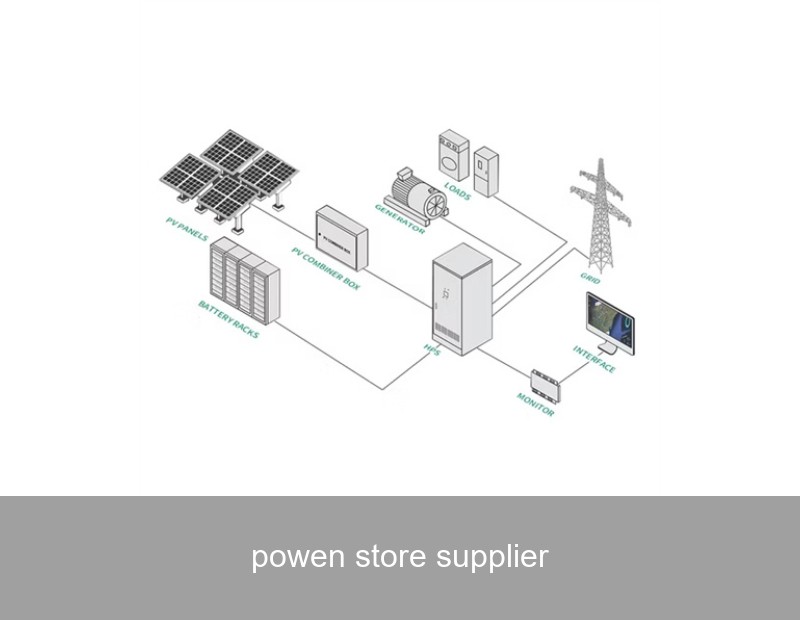
Table of Contents
Have you noticed your electricity bill becoming less predictable? Or perhaps you're concerned about grid reliability as we integrate more renewable energy? You're not alone. Across homes and businesses in Europe and the US, a quiet revolution is underway. The quest for energy independence and resilience is driving a massive surge in demand for battery energy storage systems (BESS) – the sophisticated "power stores" of the modern age. But with this growth comes a critical question: how do you choose the right power store supplier? It's a decision that goes far beyond just buying batteries; it's about selecting a long-term partner for your energy future.
The Rising Demand for Power Stores
Let's face it, our energy landscape is transforming at a breathtaking pace. The phenomenon is clear: solar panels and wind turbines are now common sights, but their intermittent nature—the sun doesn't always shine, and the wind doesn't always blow—creates a challenge for grid stability. This is where the power store becomes indispensable. Think of it not just as a backup, but as an intelligent energy manager for your property.
The data underscores this shift. According to the International Energy Agency (IEA), global energy storage capacity is set to multiply exponentially this decade, with grid-scale and behind-the-meter installations leading the charge. In markets like California, Texas, Germany, and the UK, time-of-use tariffs and falling feed-in tariffs make storing your own solar energy more economical than ever. For businesses, this isn't just about cost savings; it's about operational continuity. A single grid outage can cost thousands per minute in lost productivity. A reliable power store acts as an insurance policy against such disruptions.
What Makes a Superior Power Store Supplier?
Not all suppliers are created equal. The market is filled with companies offering "battery boxes," but a true power store supplier provides a holistic system. Here are the key pillars to evaluate:
- Technology & Safety: Core battery chemistry (like Lithium Iron Phosphate or LFP, known for its safety and longevity), thermal management systems, and robust battery management systems (BMS) are non-negotiable. The hardware must be certified to the highest international standards (UL, IEC).
- System Intelligence: The real value lies in the software. Can the system learn your consumption patterns, automatically decide when to charge from the grid or solar, and when to discharge to maximize savings? This intelligent energy management is what transforms a passive device into an active financial asset.
- Integration Capability: A top-tier system should seamlessly integrate with existing solar PV, new renewable installations, generators, and the main grid. It should be "future-proof," able to scale as your energy needs grow.
- Service & Support: This is a long-term investment. Does the supplier offer comprehensive warranties, remote monitoring, proactive maintenance, and local technical support? Your supplier should be a partner for the 10-15 year lifespan of the system.

Image: A professional-grade battery energy storage system installation. Credit: Unsplash.
Case Study: A German Manufacturing Plant Cuts Costs and Carbon
Let's look at a real-world example from Bavaria, Germany. A mid-sized automotive parts manufacturer was facing two major challenges: skyrocketing energy costs (with peak demand charges constituting 30% of their bill) and ambitious internal carbon reduction targets. Their existing 500 kW rooftop solar array was often curtailed during weekends and low-production periods, wasting clean energy.
They partnered with a leading power store supplier to install a 1 MWh/500 kW containerized BESS. The system was integrated with their solar PV and main factory load. The intelligent software was programmed for two primary functions: peak shaving (discharging the battery during times of highest grid demand to avoid costly tariffs) and solar self-consumption optimization (storing excess solar generation for use later in the evening).
The results, measured over the first 12 months, were compelling:
| Metric | Result |
|---|---|
| Reduction in Peak Demand Charges | 22% |
| Increase in Solar Self-Consumption | From 55% to 89% |
| Annual Energy Cost Savings | €68,000 |
| CO2 Emissions Avoided | Equivalent to 120 tonnes annually |
This case illustrates the tangible dual benefit of a well-designed power store: a strong return on investment and significant progress toward sustainability goals. The supplier's role was crucial in system design, grid interconnection approval, and ongoing performance analytics.
The Highjoule Approach: Beyond the Battery Box
At Highjoule, with nearly two decades of experience since 2005, we've built our philosophy around this comprehensive understanding of a power store supplier's role. We don't just sell hardware; we deliver intelligent, tailored energy ecosystems.
Our flagship product lines, like the H-Series Commercial & Industrial (C&I) systems and the Nexus Home Energy Hub, are built on a foundation of LFP chemistry and feature our proprietary Adaptive Energy OS. This software platform is the brain of the operation. For our business clients, it can perform complex economic dispatch, participating in demand response programs where available, essentially turning your power store into a revenue-generating asset. For homeowners, it provides seamless, app-based control, ensuring the house runs on the cleanest, cheapest energy available at any moment.
Our services complete the picture. From the initial Energy Needs Assessment—where we model your load profile and simulate savings—through to turnkey installation by certified technicians, and onto 24/7 performance monitoring and preventative maintenance, we ensure your system delivers optimal value year after year. Whether it's a residential setup in California, an industrial microgrid in Northern Europe, or a community storage project, we provide the certainty and expertise our clients need.

Image: Monitoring a modern home energy storage system. Credit: Unsplash.
Choosing Your Partner for the Energy Transition
Selecting your power store supplier is one of the most impactful decisions you'll make on your path to energy resilience. It requires looking past the initial price tag to the total cost of ownership, system intelligence, and the reliability of the partner standing behind it.
We encourage you to ask potential suppliers detailed questions: How does your software add value daily? Can you provide references for projects similar to mine? What does the long-term service and support agreement include? The answers will quickly separate commodity vendors from true energy partners.
As you contemplate your next step towards energy independence, consider this: Is your current energy setup a cost center you passively pay for, or could it be transformed into an intelligent, proactive asset that saves money, secures your operations, and supports a sustainable future?
 Inquiry
 Online Chat