


Understanding the True Cost of Large Scale Solar Panels: A 2024 Breakdown
When considering a shift to renewable energy, one of the first questions that comes to mind for project developers, utility managers, and business owners is: what is the real cost of large scale solar panels? It's a crucial question, but the answer is more nuanced than a simple price-per-watt. The upfront module cost is just the tip of the iceberg. To truly understand the economics, we must dive into the total system cost, the balance of system (BOS) components, and the long-term value equation where energy storage plays a pivotal role. As a global leader in advanced energy storage, Highjoule has been partnering with solar developers since 2005 to ensure that the true value of every solar investment is fully realized, making projects not just viable, but highly profitable and resilient.
Table of Contents
- The Iceberg Effect: More Than Just Module Prices
- The Current Price Landscape: A Data-Driven View
- Case Study: Maximizing ROI in Southern Spain
- The Storage Imperative: Unlocking Solar's Full Potential
- How Highjoule Integrates to Optimize Solar Economics
- Future Trends Affecting Large-Scale Solar Costs
The Iceberg Effect: More Than Just Module Prices
Think of the cost of large scale solar panels like an iceberg. The visible top is the photovoltaic (PV) module itself. Thanks to advancements in manufacturing and scale, global solar PV module prices have fallen dramatically over the last decade. However, the larger, submerged portion of the cost iceberg includes everything else:
- Balance of System (BOS): Inverters, mounting structures, cabling, and combiner boxes.
- Soft Costs: Engineering, permitting, financing, and labor for installation.
- Grid Integration: Connection fees, potential grid reinforcement costs, and compliance with grid codes.
- Operation & Maintenance (O&M): Ongoing costs for cleaning, monitoring, and repairs over a 25-30 year lifespan.
This is where the conversation gets interesting. While module prices fluctuate, optimizing the "submerged" costs is key to a project's financial success. Efficient system design, smart component selection, and strategic energy management become critical levers for improving return on investment (ROI).
The Current Price Landscape: A Data-Driven View
Let's look at some numbers. In 2024, for utility-scale solar farms in markets like the U.S. and Europe, the average cost breakdown looks something like this:
| Cost Component | Approximate Share of Total Installed Cost | Notes |
|---|---|---|
| PV Modules | 20% - 30% | Highly variable based on technology (mono PERC, TOPCon, etc.) and supply chain. |
| Balance of System (Hardware) | 25% - 35% | Inverters and mounting systems are significant portions. |
| Installation & Soft Costs | 35% - 45% | Includes labor, engineering, permitting, and project management. |
So, if we talk about the cost of large scale solar panels in isolation, we're only addressing 20-30% of the total capital expenditure. The levelized cost of energy (LCOE)—the net present value of the total cost over the plant's life divided by energy production—is the true metric. And here's a key insight: increasing the usability and value of each generated kilowatt-hour directly improves LCOE. This is impossible to achieve optimally without considering storage.

Credit: Photo by American Public Power Association on Unsplash. The scale highlights the importance of optimizing every component beyond the panels themselves.
Case Study: Maximizing ROI in Southern Spain
Let's examine a real-world scenario. A 50 MW solar plant was developed in Andalusia, Spain, a region with superb solar irradiation. The initial project economics were positive, but the developer faced two challenges: 1) grid congestion during peak solar hours leading to curtailment risks, and 2) a significant drop in the market value of solar energy during the midday production peak (the "duck curve" effect).
The solution wasn't to find cheaper panels. It was to integrate a 20 MWh battery energy storage system (BESS). By adding Highjoule's GridSynergy commercial storage system, the project could:
- Store excess midday generation and shift it to the early evening peak (around 7-9 PM), when electricity prices were 40-60% higher.
- Provide grid frequency regulation services, creating an additional revenue stream.
- Reduce curtailment to near zero, ensuring every possible solar kWh was monetized.
The result? The added storage capex was offset in less than 4 years through these combined revenue streams. The project's overall ROI increased by over 15% across its lifetime, transforming it from a simple solar play into a versatile, high-value grid asset. This case perfectly illustrates why the modern cost of large scale solar panels must be evaluated as part of a "solar-plus-storage" package.
The Storage Imperative: Unlocking Solar's Full Potential
As solar penetration grows, the market itself is reshaping the value proposition. The cheapest kWh is the one you can use or sell when it's most needed. Storage is no longer an optional luxury; it's a core component for financial robustness. Here’s why:
- Price Arbitrage: Buy low (store your own excess solar), sell high.
- Capacity Firming: Make solar output predictable and dispatchable, increasing its contract value.
- Grid Resilience: Provide backup power and grid services, which are increasingly monetizable.
Without storage, a significant portion of your solar investment might be wasted during times of oversupply, or fail to capture maximum value. Integrating storage from the planning phase allows for optimized sizing of both solar and battery assets, leading to better inverter utilization and lower overall BOS costs.
How Highjoule Integrates to Optimize Solar Economics
This is where Highjoule's expertise becomes a direct lever to improve your project's bottom line. We don't just supply batteries; we provide intelligent, integrated storage solutions that make your solar investment work harder.
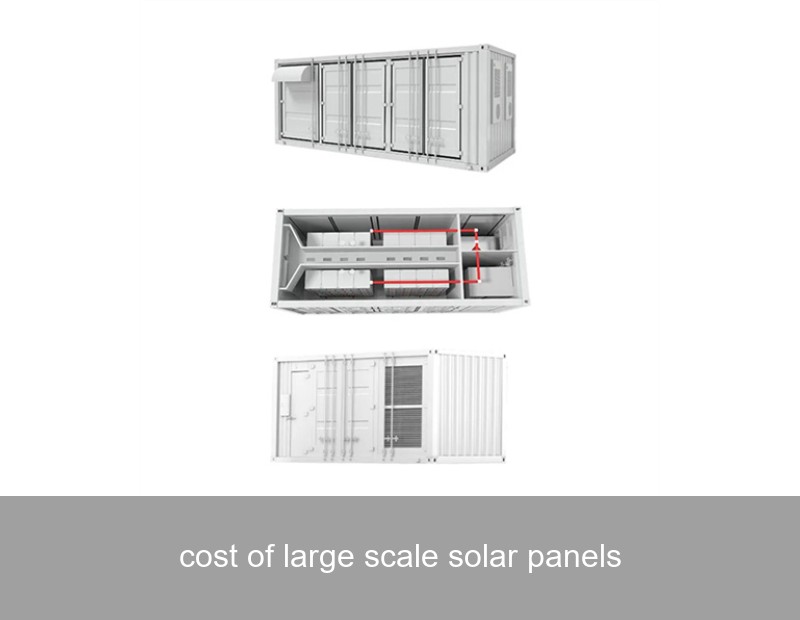
Our Energy Management System (EMS) is the brain of the operation. It uses predictive algorithms based on weather forecasts and market price signals to autonomously decide the most profitable action for every stored kWh: sell to the grid, use for on-site load, or provide a grid service. For large-scale solar farms, our UtilityScale BESS platform offers containerized, pre-assembled solutions that reduce on-site installation time and cost by up to 30%.
For commercial and industrial (C&I) applications, our CommStorage series seamlessly integrates with existing solar arrays, allowing businesses to maximize self-consumption, participate in demand response programs, and build energy resilience. By viewing storage as a value-optimizing layer for solar, Highjoule directly addresses the hidden costs and revenue opportunities that lie beyond the panel price.

Credit: Photo by ThisisEngineering RAEng on Unsplash. Modern BESS units, like those from Highjoule, are key to optimizing solar ROI.
Future Trends Affecting Large-Scale Solar Costs
Looking ahead, the cost of large scale solar panels will continue to be influenced by several factors:
- Technology Shifts: The transition from PERC to TOPCon and HJT cells offers higher efficiency, meaning more power from the same area, effectively reducing BOS costs related to land and mounting.
- Supply Chain Dynamics: Policies like the U.S. Inflation Reduction Act (IRA) and European Green Deal are incentivizing local manufacturing, which may affect module prices but add supply security.
- Digitalization & AI: Advanced O&M platforms using AI for predictive maintenance and yield optimization will further drive down lifetime costs. Highjoule's EMS is at the forefront of this trend, leveraging data to maximize asset performance daily.
According to a 2023 report by the National Renewable Energy Laboratory (NREL), continued innovation in storage and grid integration is critical to achieving ultra-low solar LCOE in a high-penetration future.
So, What's Your Next Step?
As you evaluate your next large-scale solar project, are you calculating the full system cost and lifetime value, or just the price tag of the panels? How will you design your asset to remain profitable and relevant as energy markets evolve? We invite you to connect with Highjoule's technical experts for a free, no-obligation analysis of how integrated solar-plus-storage can transform your project economics. What unique grid challenges or market opportunities in your region could turn storage from a cost into your most significant revenue center?
 Inquiry
 Online Chat