


The Unstoppable Shift: Why Power Generation from Renewable Energy is Redefining Our Grid
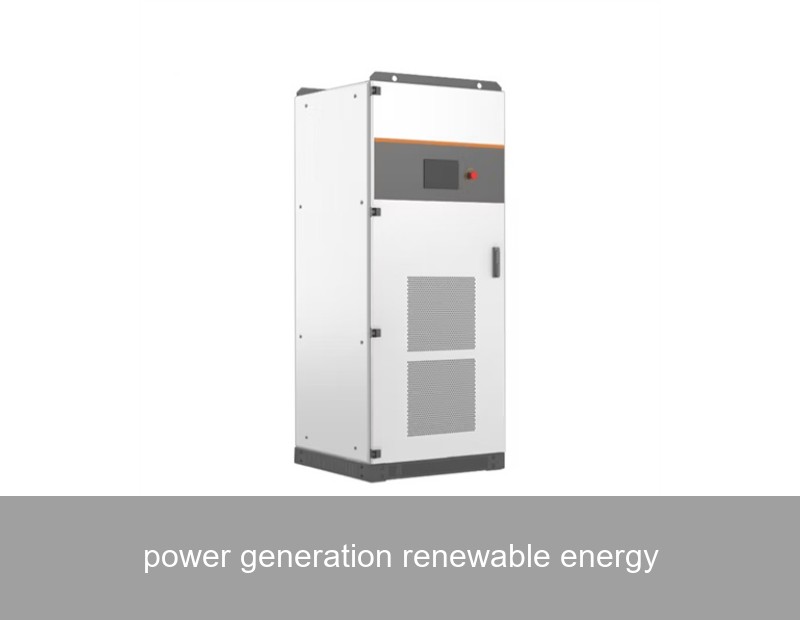
Let's be honest, the global conversation around electricity has fundamentally changed. It's no longer just about flipping a switch and expecting the lights to come on. Today, it's about power generation from renewable energy – a transformative shift moving us from fossil-fueled central plants to a dynamic, decentralized network powered by the sun and wind. Across Europe and the U.S., this isn't a distant future ideal; it's happening now. But as any homeowner with solar panels or a grid operator will tell you, this brilliant future comes with a critical question: what happens when the sun sets and the wind calms? The answer to that question is what separates a promising trend from a reliable revolution.
The Intermittency Challenge: Sun Doesn't Always Shine, Wind Doesn't Always Blow
The core phenomenon is simple: renewable power generation is variable. Solar photovoltaic (PV) systems generate maximum output during peak sunlight hours, often creating a famous "duck curve" in net demand charts. Wind farms can be idle one day and at full capacity the next. This intermittency creates a significant challenge for grid stability. Traditional grids were built for consistent, dispatchable power from coal or gas plants. Integrating high levels of renewables requires a new kind of flexibility.
Consider the data: In 2023, renewables provided over 30% of global electricity generation, with solar leading capacity growth. Germany, a frontrunner, frequently sees days where renewable energy supplies over 50% of its power demand. However, this success highlights the next hurdle. Energy must be used when it's produced, or it's wasted. Curtailment—deliberately reducing renewable output to balance the grid—is becoming a costly reality, essentially throwing away clean, free energy.

Image Source: Unsplash - A large-scale solar farm, a cornerstone of modern renewable power generation.
The Missing Link: How Advanced Energy Storage Unlocks True Potential
This is where the narrative evolves from problem to solution. The key to transforming power generation from renewable energy from a supplemental source to a foundational one is energy storage. Think of storage as a "time machine" for electrons. It captures excess electricity when generation is high and demand is low, then releases it when needed most—during evening peaks, cloudy periods, or calm spells.
The logic ladder is clear:
- Phenomenon: Renewable sources are intermittent.
- Problem: This causes grid instability and energy waste.
- Solution: Advanced Battery Energy Storage Systems (BESS).
- Outcome: Reliable, dispatchable, and 100% clean power.
Modern BESS, using primarily lithium-ion technology, are highly efficient, fast-responding, and scalable. They perform multiple critical grid services: frequency regulation, peak shaving, and backup power. For a business, this means lower energy bills through arbitrage (buying/store cheap solar, using during expensive peak times) and enhanced resilience. For the grid, it means smoother integration of renewables, deferred infrastructure upgrades, and reduced reliance on fossil-fuel "peaker" plants.
Key Services Provided by Modern Energy Storage
| Service | Description | Benefit |
|---|---|---|
| Energy Arbitrage | Store low-cost energy, discharge during high-price periods. | Reduces electricity costs for commercial/industrial users. |
| Peak Shaving | Reduces power draw from the grid during demand spikes. | Lowers demand charges, a significant portion of utility bills. |
| Backup Power & Resilience | Provides seamless power during grid outages. | Ensures business continuity and critical load protection. |
| Renewable Firming | Smooths the output of solar and wind farms. | Makes renewable generation more predictable and grid-friendly. |
Case in Point: A German Industrial Park's Journey to Energy Independence
Let's look at a real-world example from Bavaria, Germany. A mid-sized manufacturing park with high, consistent energy demand faced rising costs and sought to meet corporate sustainability goals. They installed a 5 MW rooftop solar PV system—a great start. However, they found themselves exporting excess power at low noon prices and buying expensive power in the early evening, while still being vulnerable to grid instability.
Their solution was integrating a 4 MWh Highjoule Horizon commercial battery storage system. Here’s the impact after one year of operation:
- Self-Consumption of Solar: Increased from 35% to over 80%.
- Peak Grid Demand: Reduced by 40%, slashing capacity charges.
- Energy Cost Savings: Achieved €150,000 annually through arbitrage and demand charge management.
- Carbon Footprint: Reduced by an additional 450 tonnes of CO2 per year by avoiding peak grid power, which is often fossil-fuel based.
This case, mirrored by similar projects in California and Texas, demonstrates that power generation from renewable energy achieves its full economic and environmental potential only when paired with intelligent storage. The system's AI-driven energy management software predicts consumption, generation, and market prices to optimize every charge-discharge cycle automatically.

Image Source: Unsplash - Technician inspecting a modern battery energy storage system.
Highjoule's Role: Intelligent Storage for a Sustainable Future
At Highjoule, founded in 2005, we've witnessed and driven this evolution. Our mission is to bridge the gap between abundant renewable energy generation and reliable, 24/7 power consumption. We understand that one size does not fit all. That's why our product suite is designed to address diverse needs across the energy landscape.
For Commercial & Industrial (C&I) clients, our Horizon Series offers modular, containerized BESS solutions. They are the workhorses for peak shaving, solar optimization, and backup power, featuring industry-leading safety standards and cycle life. For Utility-Scale and Microgrid applications, our Pinnacle Platform provides massive, grid-forming storage capacity that can stabilize entire networks and enable higher renewable penetration.
But we provide more than hardware. Our proprietary JouleMind AI energy management platform is the brain of the operation. It continuously analyzes data streams—from weather forecasts and electricity prices to onsite load patterns—to make autonomous, profit-maximizing decisions for the asset owner. This holistic approach from a single provider simplifies the journey from feasibility study to commissioning and long-term support.
Why Storage is No Longer Optional
The U.S. Department of Energy's Solar Futures Study outlines a path where solar could provide 40% of the nation's electricity by 2035, but it explicitly notes that this requires a "deep decarbonization of the grid" supported by a massive expansion of energy storage. Similarly, European Union directives are pushing for greater energy independence and flexibility. The writing is on the wall: the future of power generation is renewable, and the backbone of that future is storage.
The Future of Power Generation: A Decentralized, Resilient, and Clean Grid
We are moving towards a paradigm where every home, factory, and community can be both a consumer and a producer of energy—a "prosumer." This decentralized model, powered by local solar and wind and buffered by storage, creates a more resilient grid less prone to widespread outages. It democratizes energy and accelerates decarbonization.
So, what does this mean for you? Whether you're a factory manager tired of volatile energy bills, a municipality planning a microgrid, or a homeowner looking to maximize your solar investment, the equation now includes a critical third variable: storage. It's the enabler that turns variable renewable resources into firm, dependable power.
The technology is proven, the economics are compelling, and the environmental imperative is clear. The transition to power generation from renewable energy is unstoppable. The only question that remains is: How will you capture and control that power to secure your energy future?
 Inquiry
 Online Chat