


Understanding Power Inverters and Solar Battery Price for Your Energy Independence
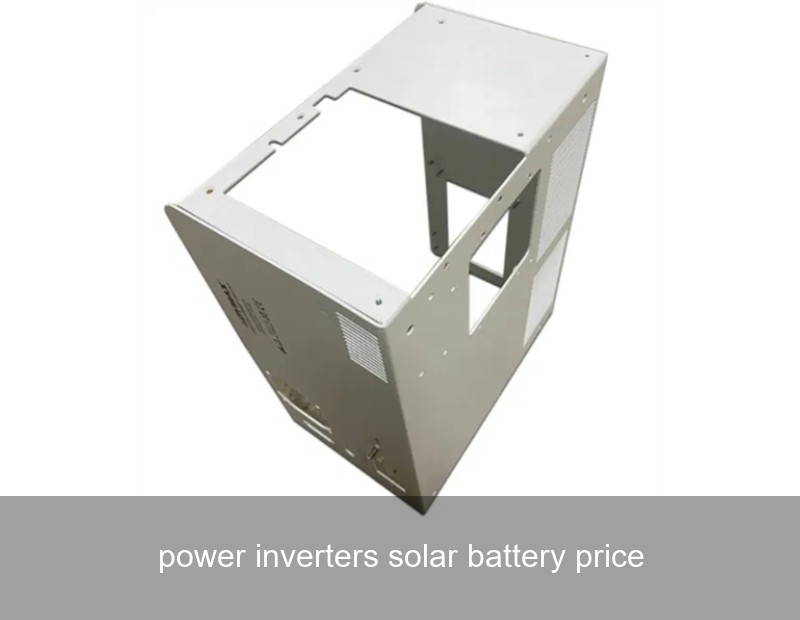
If you're exploring solar energy for your home or business, you've likely encountered two crucial, yet often confusing, components: the power inverter and the solar battery. While the solar panels capture the sun's energy, it's the inverter and battery that make it usable and reliable. The combined solar battery price and inverter technology are the heart of any modern energy storage system, dictating efficiency, reliability, and ultimately, your return on investment. Let's demystify these technologies and understand what drives their cost and value.
The Unsung Hero: What a Power Inverter Really Does
Think of your solar panels as producing raw, direct current (DC) electricity—like the power from a car battery. Your home and the grid, however, run on alternating current (AC). The power inverter is the intelligent translator in this process. But modern inverters do far more than simple conversion. They are the brain of your solar power system, performing maximum power point tracking (MPPT) to squeeze every possible watt from your panels, monitoring system performance, and ensuring safe, grid-compliant operation.
There are several key types, each with implications for system cost and performance:
- String Inverters: A cost-effective solution where panels are connected in series. However, shading on one panel can affect the whole string's output.
- Microinverters: Attached to each panel, they optimize output individually, maximizing harvest in partially shaded conditions, but at a higher upfront cost.
- Hybrid or Battery-Ready Inverters: This is where the future lies. These devices are designed from the ground up to seamlessly integrate with battery storage, managing the flow of energy between panels, batteries, and your home.

Image Source: Unsplash - A modern hybrid inverter, the core of an integrated energy system.
Decoding the Solar Battery Price: More Than Just a Number
When consumers ask about solar battery price, they're often quoted a single figure for the battery unit itself. However, the true cost—and value—is a composite of several factors. The battery's chemistry, capacity, power rating, lifespan, and intelligence all play a critical role.
| Cost Factor | What It Means | Impact on Price & Value |
|---|---|---|
| Battery Chemistry | Typically Lithium-ion (NMC or LFP) | LFP (LiFePO4) batteries, like those used by Highjoule, often have a higher upfront cost but offer superior longevity and safety, providing better lifetime value. |
| Usable Capacity (kWh) | The amount of energy you can actually store and use. | A higher kWh rating means more backup power and greater self-consumption, directly increasing the price. |
| Continuous Power (kW) | How much power the battery can deliver at once. | Determines if you can run multiple high-power appliances (like an AC unit) simultaneously during an outage. |
| Round-Trip Efficiency | Percentage of energy put in that you can get back out. | A 90%+ efficient battery, like Highjoule's H-Energy Cube, wastes very little energy, making your stored solar more valuable. |
| System Integration & Installation | Hardware, software, and labor to connect everything. | An integrated, pre-engineered system reduces soft costs and ensures reliability. |
Therefore, evaluating a battery solely on its price-per-kWh is misleading. A cheaper battery with a shorter warranty and lower efficiency will cost you more over its lifetime.
Why Inverter and Battery Compatibility is Non-Negotiable
The magic—and maximum financial return—happens when the power inverter and battery speak the same language. A poorly matched system can lose 15-20% in efficiency due to communication delays and suboptimal energy routing. An integrated system, where the inverter and battery are designed to work together, ensures:
- Seamless Mode Switching: Instant transition between grid-tied, backup, and time-of-use modes without a flicker in your lights.
- Advanced Energy Management: The inverter's software intelligently decides when to charge from solar, when to discharge to power the home, and when to sell back to the grid based on weather forecasts and usage patterns.
- Simpler Maintenance & Monitoring: One unified app to monitor both production and storage, with proactive alerts.
This synergy is where Highjoule's expertise shines. Our H-Energy Hub, a premium hybrid inverter, is engineered in tandem with our H-Energy Cube battery modules. They aren't just compatible; they are a unified system, managed by our AI-driven Highjoule OS platform. This eliminates guesswork and integration headaches, delivering a plug-and-play experience that maximizes every kilowatt-hour of your solar investment.
From Theory to Practice: A German Case Study in Efficiency
Let's look at real data. A medium-sized bakery in Bavaria, Germany, installed a 45 kWp solar array in 2020. Initially, they used a standard string inverter without storage, achieving a 30% self-consumption rate—meaning 70% of their solar energy was exported to the grid at a low feed-in tariff, while they still bought expensive power in the evening.
In 2022, they upgraded with a Highjoule integrated storage system: an H-Energy Hub inverter and 40 kWh of H-Energy Cube battery capacity. The results, monitored over one year, were transformative:
- Self-Consumption Rate: Increased from 30% to 85%.
- Grid Electricity Purchases: Reduced by 78%.
- Payback Period: The added storage system is projected to pay for itself in 6.8 years, thanks to Germany's high electricity prices and intelligent, software-driven arbitrage.
This case highlights that the optimal power inverter and solar battery price equation isn't about minimizing initial cost, but about maximizing lifetime energy savings and control. The bakery now has reliable backup power for refrigeration and can operate critical loads during grid outages, ensuring business continuity.

Image Source: Unsplash - Energy management software providing insights into consumption and savings.
Highjoule's Integrated Solution: Delivering Value Beyond the Price Tag
At Highjoule, we believe the true cost of an energy system is measured over 15-20 years, not just on day one. Our products are built with this philosophy:
- H-Energy Cube Batteries: Utilizing stable LFP chemistry, they are rated for 6,000+ cycles with a 15-year warranty, ensuring decade-long performance.
- H-Energy Hub Inverter: Features multiple MPP trackers for complex roof layouts and built-in grid-forming capability for essential backup power.
- Highjoule OS: Our cloud-based platform uses machine learning to adapt to your energy habits and local weather, automatically optimizing for financial savings and carbon reduction.
For commercial and microgrid applications, our containerized Megapack solutions provide utility-scale storage with the same intelligence and reliability, enabling peak shaving, demand charge reduction, and enhanced grid resilience.
Looking Ahead: What's Next for Inverters and Storage?
The technology isn't standing still. We're moving towards virtual power plants (VPPs), where thousands of decentralized systems like yours are aggregated to act as a single, flexible power resource for the grid. This requires even smarter inverters and batteries that can respond to real-time grid signals. The future solar battery price will increasingly reflect this grid-service value, potentially creating new revenue streams for system owners.
Furthermore, standards like the U.S. SunShot Initiative continue to drive down hardware and soft costs, while research into solid-state batteries promises even denser, safer storage. Staying informed through authoritative sources like the International Energy Agency (IEA) is key.
Your Next Step Towards Energy Independence
So, how do you navigate the balance between upfront solar battery price and the long-term value of a superior power inverter system? The key is to focus on total cost of ownership, system compatibility, and the intelligence of the software that manages it all.
What specific energy goal is driving your interest in solar and storage—is it achieving complete backup power, maximizing financial savings, or reducing your carbon footprint? Defining this will help determine the ideal inverter and battery configuration for your unique needs.
 Inquiry
 Online Chat