


Your Comprehensive Solar Panels Buying Guide: From Sunlight to Savings
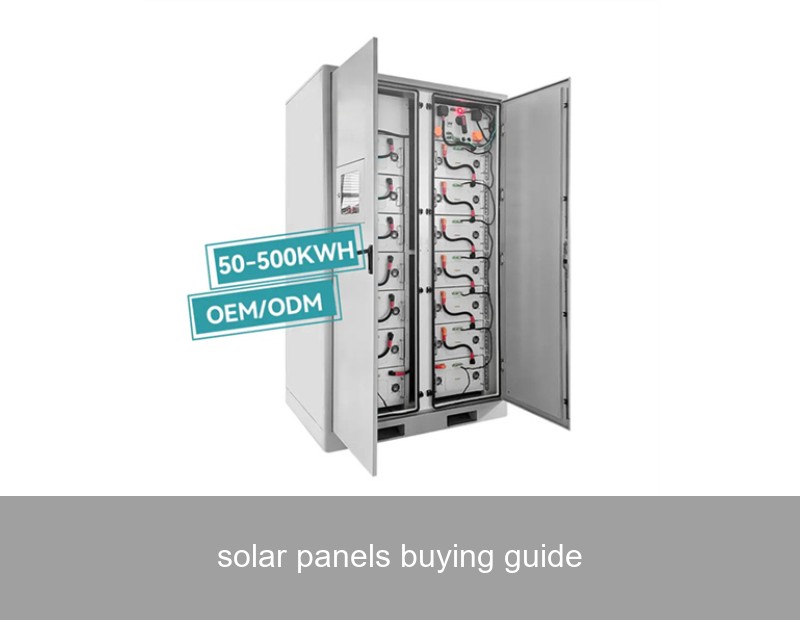
So, you’ve decided to harness the sun’s power. Congratulations! That’s a brilliant first step towards energy independence and sustainability. But as you start researching, you might feel a bit overwhelmed. Monocrystalline, polycrystalline, inverters, kilowatt-peak, storage options… it’s a lot. This solar panels buying guide is here to cut through the noise. We’ll walk you through the entire process, not just the panels themselves, but the crucial system they power. Because at Highjoule, we believe a solar investment is only as good as the intelligent, resilient energy ecosystem you build around it.
Table of Contents
Step 1: Understanding Your Energy Needs & Goals
Before comparing panel specs, ask yourself: What do I want to achieve? Are you primarily aiming to slash your electricity bill, achieve energy security during outages, increase your property value, or reduce your carbon footprint? Your goals directly influence your system design. For instance, a homeowner in sunny California focused on bill savings has different needs than a small farm in Germany seeking backup power for critical operations.
Start by analyzing your past energy bills. Look for your average monthly kilowatt-hour (kWh) consumption. A key metric is your peak usage—those times of day when you're running the AC, oven, and laundry simultaneously. This data is gold; it tells you the size of the solar array and, critically, the capacity of the battery storage you might need to cover those peaks, especially after the sun sets.
Step 2: Decoding Solar Panel Types & Efficiency
Let's demystify the main types of panels you’ll encounter:
| Panel Type | Efficiency Range | Pros | Best For |
|---|---|---|---|
| Monocrystalline | 18-22%+ | High efficiency, space-efficient, long lifespan, performs better in low light. | Roofs with limited space, homeowners seeking maximum output. |
| Polycrystalline | 15-18% | Cost-effective, reliable technology. | Larger roofs where space is not a constraint, budget-conscious projects. |
| Thin-Film | 10-13% | Lightweight, flexible, performs well in high heat. | Commercial roofs with low weight tolerance, unconventional surfaces. |
Efficiency matters, but it's not the sole factor. A 20% efficient panel produces more power in the same space than a 16% one. If your roof is small, higher efficiency panels are worth the premium. But if you have ample space, a larger array of slightly less efficient panels might achieve the same output for less cost.

Image Source: Unsplash (Professional photography of solar panels)
Step 3: Looking Beyond Panels: The Heart of Your System
Here’s a vital truth in this buying guide: Solar panels are just the beginning. The inverter is the brain, converting DC power from panels to usable AC for your home. You have string inverters, microinverters, and hybrid inverters. For systems planning to include batteries, a hybrid inverter or an inverter paired with a dedicated battery inverter is essential.
This is where system integration becomes critical. A mismatch between panels, inverter, and future storage can cripple performance. At Highjoule, our H-Energy Hub is designed to solve this. It's an integrated hybrid inverter and energy management system that seamlessly connects solar generation, battery storage, and your home loads. It’s the central command unit that optimizes every kilowatt-hour you produce, ensuring your panels work in perfect harmony with storage from day one.
Step 4: Why Storage is No Longer Optional
Think about it: the sun doesn't shine at night, but your energy needs continue. Without storage, excess solar energy you produce midday often gets sold back to the grid at a low rate, only for you to buy expensive power in the evening—a phenomenon known as the "duck curve." The "duck curve" challenge is well-documented by the U.S. Department of Energy.
A battery storage system, like Highjoule's Everflow Home Battery Series, turns your solar installation into a true 24/7 power plant. It stores your surplus daytime energy for use at night, shields you from blackouts, and maximizes self-consumption—sometimes up to 80% or more of the energy you produce. For our commercial and industrial clients, our GridMax Utility-Scale BESS provides stability, peak shaving, and backup power, transforming energy costs from a variable expense into a predictable asset.
Real-World Insights: A Case Study from Bavaria
Let’s look at data from a real installation. A medium-sized dairy farm in Bavaria, Germany, installed a 45 kWp solar array in 2020. Initially without storage, they were self-consuming only 35% of their solar production, exporting the rest.
- Phenomenon: High feed-in tariffs were decreasing, and evening energy costs were rising.
- Data: Their energy audit showed a nightly base load of 15 kWh for cooling and automation.
- Solution: In 2022, they integrated a Highjoule Everflow C&I 50 kWh battery system with our H-Energy Hub.
- Result: Self-consumption rate jumped to 92%. They now weather power fluctuations without disrupting operations and have reduced their annual energy costs by an additional 68%, on top of their initial solar savings. The system paid for itself in under 5 years, considering rising energy prices.

Image Source: Unsplash (Solar installation on agricultural building)
Step 5: Final Selection Criteria & Partner Choice
Your final checklist should include:
- Warranty: Look for 25-year performance warranties on panels and 10+ years on inverters and batteries. Highjoule batteries, for example, come with a robust 10-year warranty, guaranteeing performance over time.
- Certifications: Ensure equipment has international certifications (UL, IEC, TÜV).
- Monitoring: Choose a system with intuitive, real-time energy monitoring. Our Highjoule Pulse app lets you track production, consumption, and storage levels from your phone, giving you full control.
- Installer Expertise: This is paramount. Your installer should be a certified partner who understands holistic system design, not just panel mounting. Ask for references and examples of systems with storage.
Remember, you're not just buying hardware; you're investing in a long-term energy partnership. The right provider will offer a complete solution—design, compatible components, intelligent software, and service. Authoritative sources like NREL provide valuable benchmarks for panel technology.
Where Does Highjoule Fit In?
Since 2005, Highjoule has evolved from a battery technology pioneer to a global provider of complete, intelligent storage solutions. We may not sell panels directly, but we are the essential piece that makes your solar investment future-proof. Our products, from the residential Everflow to the industrial GridMax systems, are designed with interoperability in mind, ensuring they work flawlessly with major panel and inverter brands. We provide the intelligence and resilience that transforms solar from a partial solution into your personal energy infrastructure.
As you finalize your plans with this solar panels buying guide, consider this: In an era of increasing grid volatility and climate-conscious choices, is your solar system designed to be just a cost-saver today, or is it the foundation for your energy-resilient tomorrow? What will your first night powered entirely by your own stored sunlight feel like?
 Inquiry
 Online Chat