


Power on Solar: How Much Can You Really Generate and Store?
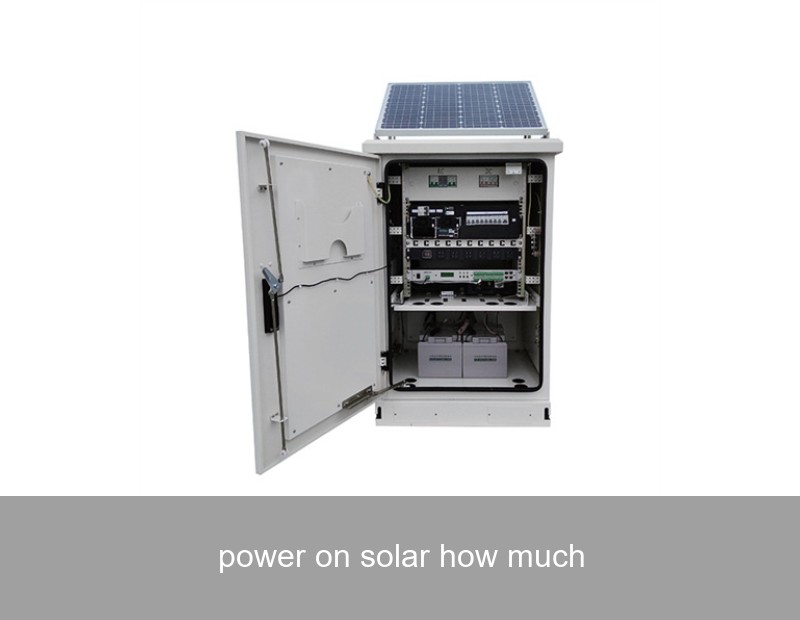
You've seen the solar panels on rooftops and heard the promise of lower bills. But when you're considering making the switch, one question inevitably surfaces: "How much power can I actually get from solar, and will it be enough?" It's a fantastic question that gets to the heart of whether solar is a smart investment for your home or business. The answer isn't a simple number; it's a dynamic equation involving sunlight, technology, and crucially, what you do with the energy once it's produced. This is where the conversation evolves from just "solar panels" to a complete, intelligent energy system.
Table of Contents
- The Phenomenon: Sunshine Isn't Always Power
- The Data: Understanding Your Solar Potential
- The Game Changer: Why Storage is the Missing Link
- A Real Case: The Berlin Bakery's Energy Transformation
- The Highjoule Solution: Intelligent Storage for Maximum Solar Value
- Optimizing Your Solar Power: Key Considerations
- What's Your Energy Independence Goal?
The Phenomenon: Sunshine Isn't Always Power
Here's the core challenge many new solar owners face: solar generation and energy consumption are often out of sync. Your panels are most productive in the middle of the day when the sun is high. But for many households, energy use peaks in the early morning and evening—when the sun is low or down. For businesses, the mismatch can be different but equally impactful. This means without a way to capture that midday surplus, a significant portion of your clean, self-generated power flows back to the grid, often for minimal compensation, leaving you to buy expensive power from the utility when you need it most.

Image Source: Unsplash (Creative Commons)
The Data: Understanding Your Solar Potential
So, how much power can you generate? Let's break it down with some tangible numbers. A typical residential solar panel in the US or Europe has a rating between 350 to 450 watts. In sun-rich Southern California, one 400-watt panel can produce about 2 kilowatt-hours (kWh) per day on average. In Berlin, Germany, with less intense sunlight, that same panel might produce around 1.2 kWh per day. A standard home system might have 20 panels, leading to a daily potential of 40 kWh in California or 24 kWh in Berlin.
But these are theoretical averages. Actual output depends on:
- Location & Orientation: South-facing roofs (in the Northern Hemisphere) with a good tilt angle yield the best results.
- Shading: Even partial shading from trees or chimneys can dramatically reduce a system's output.
- Seasonality: Production in summer can be double or triple that of winter months.
According to the National Renewable Energy Laboratory (NREL), the average U.S. home uses about 30 kWh per day. So, in theory, a properly sized solar array can cover 100% of your needs. The real puzzle is timing.
The Game Changer: Why Storage is the Missing Link
This is where battery energy storage systems (BESS) transform the equation. Think of storage as your personal energy reservoir. Instead of sending excess solar power out, you store it for use when your panels are asleep. This simple shift has profound effects:
- Maximizes Self-Consumption: You use more of the power you generate, sometimes increasing direct solar usage from 30% to 70% or more.
- Provides Energy Security: During grid outages, a stored reserve can keep critical loads running.
- Enables Time-of-Use Arbitrage: In regions with variable electricity pricing, you can avoid buying power during expensive peak periods.
The question "power on solar how much?" thus becomes "power on solar, how much can I use on my terms?"
A Real Case: The Berlin Bakery's Energy Transformation
Consider "Brot & Mehr," a mid-sized artisan bakery in Berlin. They installed a 50 kW solar array on their bakery roof, generating ample clean energy. However, their ovens fired up at 3 AM, and their peak retail hours were in the afternoon—both times with little solar production. They were exporting most of their solar energy and buying high-priced grid power.
Their solution was integrating a Highjoule H4 Commercial Battery System with 120 kWh of storage capacity. The results, monitored over one year, were striking:
| Metric | Before Highjoule BESS | After Highjoule BESS |
|---|---|---|
| Solar Self-Consumption | ~35% | ~85% |
| Grid Energy Purchased During Peak Hours | 100% of peak needs | Reduced by ~80% |
| Monthly Energy Cost Savings | Baseline | €1,200 on average |
| Backup Power During Brief Grid Interruptions | Production halt | Critical cooling and systems remained online |
The bakery didn't just increase how much solar power they used; they gained control, resilience, and significant financial savings. The system paid for itself in under 5 years.
The Highjoule Solution: Intelligent Storage for Maximum Solar Value
At Highjoule, we've been pioneering advanced energy storage since 2005. We understand that the true value of solar isn't just generation—it's intelligent management. Our systems are designed to ensure you harness every possible kilowatt-hour from your solar investment.
For homeowners, the Highjoule HomePower Series offers scalable storage (from 10 to 30+ kWh) with an intuitive energy management app. It seamlessly integrates with new or existing solar arrays, learning your usage patterns to automatically optimize when to store, use, or (if beneficial) export energy.

Image Source: Unsplash (Creative Commons - for representation)
For commercial and industrial clients, our H-Series Modular Storage Platform is a powerhouse. It scales from hundreds of kWh to multiple MWh, providing not just backup and load shifting, but also services like peak shaving and demand charge management. Our AI-driven EnergyOS platform makes complex decisions simple, maximizing your financial return on investment (ROI) across markets in Europe and North America.
Whether it's a residential property seeking independence or a microgrid powering a remote community, Highjoule's smart, efficient, and sustainable solutions are engineered to answer the fundamental question: "How much power can I get from my solar?" with a confident, "As much as you need, when you need it."
Optimizing Your Solar Power: Key Considerations
To truly maximize the answer to "power on solar how much?", follow this logical progression:
- Audit & Size Right: Start with a professional energy audit. Use tools like the NREL PVWatts Calculator to estimate solar production for your specific address. Size your solar array not just for total annual need, but with storage in mind.
- Prioritize Storage from Day One: Design your system as a unified solar-plus-storage solution. This leads to better component compatibility and a more optimal financial setup than adding storage later.
- Choose Technology with Intelligence: Not all batteries are equal. Look for systems with advanced battery management (like Highjoule's Lithium Iron Phosphate chemistry for safety and longevity) and smart software that adapts to weather, usage, and tariff changes.
- Understand Incentives: Markets in the US (Federal ITC) and Europe (various national grants) often offer significant incentives for paired solar and storage installations, improving payback time dramatically.
What's Your Energy Independence Goal?
The journey to maximizing your solar power is personal. For some, it's about financial savings. For others, it's about resilience during storms or reducing their carbon footprint. The technology is here, proven, and more accessible than ever.
So, we leave you with this: If you could design your perfect energy day—where your power comes from, how much it costs, and how reliable it is—what would that look like for your home or business? The first step to answering that is understanding the full potential of the sun on your roof, paired with the right storage partner.
 Inquiry
 Online Chat