


Power Quality Improvement in Microgrids: The Key to Reliable, Clean Energy
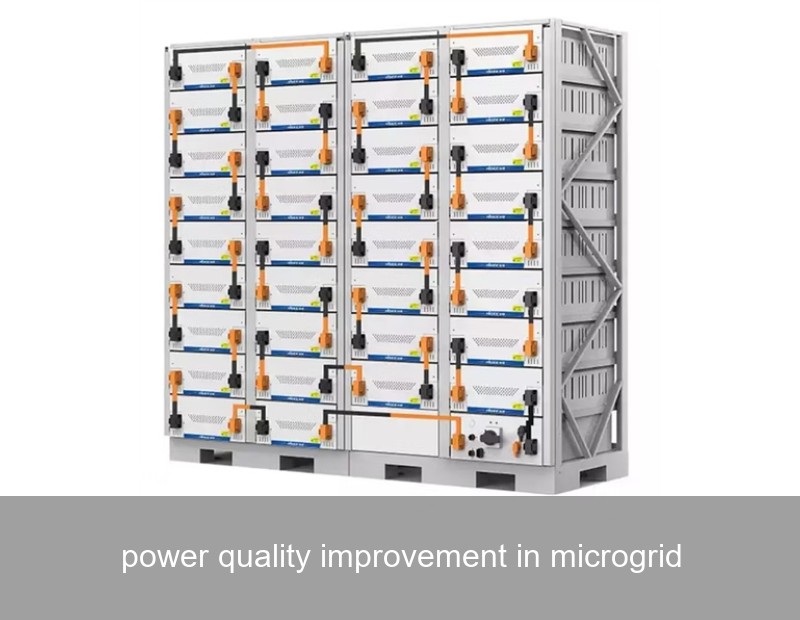
Imagine you're running a precision manufacturing facility or a critical data center on your own microgrid. The sun is shining, your solar panels are producing, and your batteries are charged. Suddenly, sensitive equipment malfunctions, or a voltage dip causes a costly production halt. This, in essence, is a power quality issue. For microgrids—localized energy grids that can operate independently or in conjunction with the main grid—achieving excellent power quality isn't a luxury; it's the fundamental requirement for viability. Power quality improvement in microgrids is the sophisticated engineering process that ensures the electricity powering your operations is stable, clean, and reliable, regardless of the intermittent nature of renewable sources or variable loads. Let's delve into why this matters and how modern technology provides solutions.
What is Power Quality in a Microgrid?
Power quality refers to the characteristics of the electrical power supply that enable equipment to function correctly without failure or stress. In a traditional grid, massive generators provide inherent stability. Microgrids, however, often rely on inverter-based resources like solar PV and battery storage, which don't have the same natural rotational inertia. Key parameters include:
- Voltage Stability: Maintaining voltage within a strict range (e.g., ±5% of nominal).
- Frequency Stability: Keeping the grid frequency at 50 Hz (Europe) or 60 Hz (US).
- Harmonic Distortion: Minimizing "noise" or distortions in the perfect sinusoidal waveform caused by non-linear loads (e.g., variable speed drives, IT equipment).
- Low Flicker: Preventing rapid, visible changes in lighting intensity.
Poor performance in any of these areas leads to inefficiency, equipment damage, data loss, and operational downtime.
Common Power Quality Challenges in Modern Microgrids
The very features that make microgrids attractive also introduce complexity for power quality.
- Intermittent Renewable Generation: Rapid cloud cover over a solar farm can cause sudden voltage dips. Wind gusts can create surges.
- High Penetration of Inverters: While enabling renewable integration, inverters can introduce harmonics and require careful control to maintain grid stability.
- Variable and Sensitive Loads: The sudden start-up of a large motor (a "load step") can strain a microgrid. Simultaneously, modern facilities house more sensitive equipment than ever.
- Islanding Transitions: The moment a microgrid disconnects from the main grid to operate independently is critical, requiring seamless frequency and voltage control to avoid a blackout.

Image Source: Unsplash (Representative image of grid control)
Key Strategies for Power Quality Improvement in Microgrids
Addressing these challenges requires a layered approach, combining hardware, software, and intelligent design.
| Strategy | Technology/Method | Primary Power Quality Benefit |
|---|---|---|
| Advanced Energy Storage | Lithium-ion BESS with fast-response inverters | Voltage & Frequency Regulation, Harmonic Filtering |
| Smart Inverter Functions | Grid-forming & grid-following inverters with IEEE 1547-2018 compliance | Frequency Stability during islanding, Reactive Power Support |
| Power Electronics Devices | Static VAR Compensators (SVCs), Dynamic Voltage Restorers (DVRs) | Ultra-fast Voltage Correction, Mitigate Sags/Swells |
| Predictive Control & AI | Microgrid Energy Management Systems (MG-EMS) with forecasting | Proactive balancing, Optimized dispatch to prevent issues |
How Highjoule's Advanced Systems Elevate Microgrid Performance
At Highjoule, we engineer power quality improvement into the core of our microgrid solutions. Our approach goes beyond simply supplying components; we deliver an integrated, intelligent system designed for resilience. Our HiveMind Microgrid Controller acts as the central brain, continuously analyzing grid conditions in real-time. It orchestrates our GridMax™ Advanced Battery Energy Storage Systems (BESS), which are equipped with grid-forming inverter capabilities. This means our BESS can create a stable voltage and frequency waveform from a black start—acting as the foundational "anchor" for the microgrid—and respond to disturbances within milliseconds.
For commercial and industrial clients, this translates to peace of mind. Whether you're integrating a large rooftop solar array, managing a fleet of EV chargers, or requiring seamless islanding for critical operations, Highjoule's systems are designed to maintain perfect sine waves and stable voltages. Our services include detailed power quality audits, custom system design, and ongoing performance monitoring to ensure your investment delivers not just energy savings, but also unparalleled electrical reliability.
Case Study: Stabilizing an Industrial Microgrid in Germany
Consider a real-world example from Bavaria. A medium-sized automotive parts manufacturer operated a microgrid with 2 MW of rooftop solar and a legacy 1 MW diesel generator. Their goal was to increase solar usage and reduce diesel consumption, but they faced persistent power quality issues: voltage swells during high solar production/low load periods, and harmonic distortion from their welding robots causing interference with precision machinery.
The Solution: Highjoule deployed a turnkey system featuring a 1.5 MWh GridMax™ BESS with advanced power conditioning capabilities and integrated harmonic filters. The HiveMind controller was programmed to prioritize power quality management alongside energy arbitrage.
The Data-Driven Results (after 12 months):
- Voltage Variations: Reduced from ±8% to within ±2% of nominal, well within ITIC (CBEMA) curves for sensitive equipment.
- Total Harmonic Distortion (THD): Lowered from 8.2% to below 3% at the point of common coupling, eliminating equipment interference.
- Diesel Generator Use: Reduced by 92%, now used only for emergency backup.
- Overall Energy Cost Savings: Achieved 34% reduction, partly from optimized self-consumption and avoided demand charges due to smoother load profile.
This case underscores that power quality improvement in microgrids is not just theoretical—it delivers concrete financial and operational returns. You can read more about international microgrid standards from the International Energy Agency (IEA).

Image Source: Unsplash (Representative image of industrial solar)
The Future: AI and Smarter Grid Management
The next frontier for power quality improvement lies in predictive analytics and machine learning. Imagine a system that learns your load patterns, knows the weather forecast, and pre-emptively configures the BESS and inverter setpoints to counteract a predicted voltage dip before it even occurs. This proactive management is becoming a reality. Furthermore, as standards evolve, the role of inverter-based resources in providing synthetic inertia and other grid services will expand, making microgrids not just stable islands, but active supporters of the main grid's health. For a deeper technical dive into inverter functions, the National Renewable Energy Laboratory (NREL) provides excellent research.
Your Microgrid's Foundation
So, when planning or upgrading a microgrid, the question shouldn't just be "How much solar and storage do I need?" but rather "How will I ensure the power quality meets the needs of my most critical load?" The stability of your electrical foundation determines everything built upon it.
Is your organization evaluating a microgrid project, and what are your primary concerns regarding the reliability and cleanliness of the power it will deliver?
 Inquiry
 Online Chat