


Understanding Lithium Battery Cells Price: Trends, Drivers, and Smart Procurement
If you're exploring energy storage for your home, business, or community project, you've undoubtedly encountered the term "lithium battery cells price." It's the fundamental cost driver behind everything from electric vehicles to the home battery system you might be considering. But why do these prices fluctuate so much? Is the current trend your friend or foe? More importantly, how can you navigate this complex market to secure not just a good price, but a truly valuable and sustainable energy solution? Let's demystify the economics of lithium battery cells and explore what it means for your energy independence journey.
Table of Contents
- The Rollercoaster Ride: A Decade of Lithium Battery Price Trends
- Key Factors Driving Lithium Battery Cells Price Up and Down
- Case Study: How a German Industrial Park Navigated Price Volatility
- Beyond the Cell: Why Total System Value Trumps Unit Price
- Highjoule's Approach: Delivering Stability in a Volatile Market
- Future Outlook: What's Next for Battery Cell Economics?
The Rollercoaster Ride: A Decade of Lithium Battery Price Trends
For years, the story of lithium battery cells price was one of remarkable, consistent decline. From 2010 to 2020, prices fell by nearly 90%, a trend celebrated across the renewable energy and EV industries. This was driven by massive scale-up in manufacturing, technological improvements, and competitive pressures. However, the post-2020 landscape painted a different picture. Supply chain disruptions, geopolitical tensions, and soaring demand led to a significant price increase in 2022, the first ever recorded by BloombergNEF.
The good news? The market is correcting. As new mining and refining capacity comes online, alongside a slight moderation in demand growth in some sectors, prices have begun to soften again in 2024. But experts agree we're unlikely to see the steep, predictable drops of the past. The market is maturing, and future cost reductions will come from incremental innovation in chemistry, manufacturing efficiency, and supply chain localization, not just sheer volume.

Credit: Modern battery cell production is key to cost management. Image from Unsplash.
Key Factors Driving Lithium Battery Cells Price Up and Down
To make an informed decision, it's crucial to look beyond the headline price per kilowatt-hour. Several interconnected factors create the final cost:
- Raw Material Costs: The prices of lithium, cobalt, nickel, and graphite are foundational. These are commodity markets subject to mining constraints, geopolitical stability, and environmental regulations.
- Cell Chemistry: Not all lithium batteries are equal. Lithium Iron Phosphate (LFP) cells, for instance, typically have a lower raw material cost than Nickel Manganese Cobalt (NMC) cells, as they don't use cobalt or nickel. LFP also offers superior cycle life and safety, which is why leading providers like Highjoule increasingly utilize them in stationary storage systems.
- Manufacturing Scale & Location: Gigafactories drive down costs through automation and volume. Furthermore, supply chains are shifting. Both the US Inflation Reduction Act and European Green Deal are incentivizing localized cell and pack manufacturing, which may affect regional pricing but enhance security of supply.
- Energy Density & Performance: A cell that stores more energy in a smaller, lighter package often commands a premium. However, for stationary storage where space is less critical, longevity and safety often become the priority over compactness.
Case Study: How a German Industrial Park Navigated Price Volatility
Let's ground this in reality. In 2021, a medium-sized industrial park in Bavaria, Germany, planned a 1 MWh battery storage system to optimize their solar self-consumption and provide grid services. When they received quotes, the lithium battery cells price surge of 2022 had just begun, pushing project budgets beyond feasibility.
Instead of abandoning the project, they partnered with Highjoule's engineering team. The solution was a dual-path strategy:
- System Design Optimization: Highjoule's analysis revealed the initial design over-specified peak power capability. By right-sizing the inverter and battery power ratio, the required cell count was reduced by 15% without impacting core functionality.
- Chemistry Selection: The team proposed a switch to Highjoule's proprietary LFP-based cell architecture. While the per-kWh cell price was still subject to market forces, the LFP chemistry was less volatile than NMC and promised a longer operational lifespan (over 6,000 cycles vs. an industry standard of 4,000-5,000).
The result? The park deployed a 850 kWh Highjoule GridMax Industrial system in Q4 2023. The levelized cost of storage (LCOS) became the key metric, not just the upfront cell price. With a 25-year design life and superior cycle stability, the project achieved a 14% better return on investment than the original NMC-based design, even in a high-price environment. The system now saves them over €120,000 annually in energy costs and grid fees.
Beyond the Cell: Why Total System Value Trumps Unit Price
Focusing solely on the lithium battery cells price is like buying a car based only on the cost of the steel. The true value lies in the complete, intelligent system. Here’s what you should evaluate:
| Component | Cost Consideration | Value Impact |
|---|---|---|
| Battery Cells | Raw commodity & chemistry cost. | Defines core energy capacity and lifespan. |
| Battery Management System (BMS) | Advanced software & hardware. | Critical for safety, longevity, and performance. A weak BMS can ruin expensive cells. |
| Power Conversion System (PCS) | Inverter/charger efficiency and capability. | Determines how effectively you can use stored energy and participate in grid services. |
| Thermal Management | Cooling/heating system complexity. | Directly impacts cycle life, safety, and performance in extreme climates. |
| System Integration & Software | Engineering and AI-driven platform. | Turns a battery into a smart grid asset, maximizing revenue streams and savings. |
This holistic view is where Highjoule's expertise shines. We don't just procure cells; we engineer integrated systems like the HomeStack for residences and GridMax for C&I applications, where every component is optimized to work in concert, ensuring you extract maximum value from every kilowatt-hour stored over decades.
Highjoule's Approach: Delivering Stability in a Volatile Market
At Highjoule, we understand that price volatility is a major concern for our customers. Our strategy to mitigate this focuses on long-term value and partnership:
- Strategic Cell Partnerships: We maintain long-term agreements with top-tier cell manufacturers, giving us better visibility and stability in pricing and supply, which we pass on as predictability in our project quotes.
- Chemistry-Agnostic Design: Our modular system architecture allows us to integrate the optimal cell chemistry for the application—be it LFP for longevity or advanced NMC for specific power density needs—without redesigning the entire platform.
- Focus on Levelized Cost of Storage (LCOS): We guide our clients to evaluate proposals based on LCOS, which factors in upfront cost, lifespan, efficiency, and maintenance. A slightly higher initial lithium battery cells price can yield a far lower LCOS if the system lasts twice as long.
- End-to-End Service: From initial feasibility studies and financial modeling to installation, commissioning, and long-term performance monitoring via our Highjoule Nexus platform, we ensure the asset performs as promised for its entire life.

Credit: Expert monitoring ensures system longevity. Image from Unsplash.
The Highjoule Product Portfolio: Engineered for Value
Our product lines are built with these principles at their core:
- HomeStack Series: Our residential storage solution uses UL-certified LFP cells, an integrated hybrid inverter, and AI-driven energy management. It's designed for a 25-year service life, ensuring homeowners get the most from their investment.
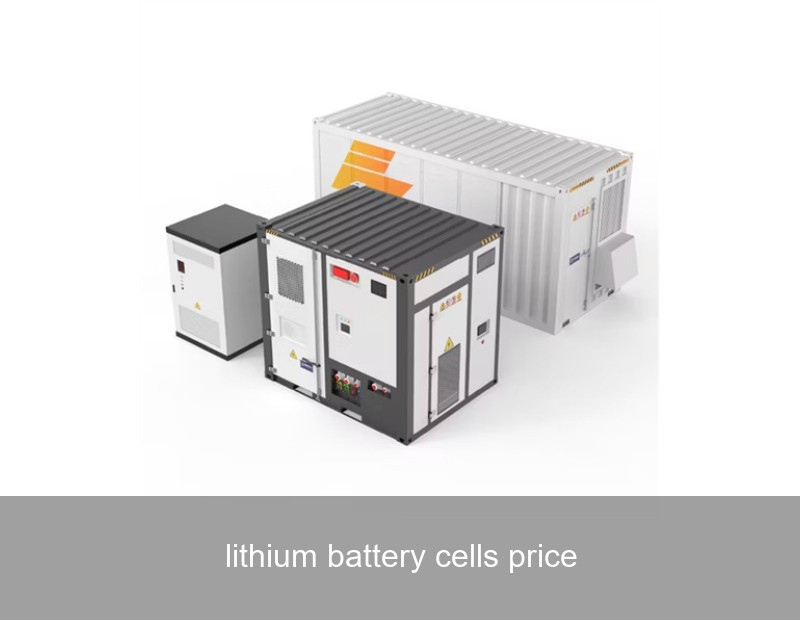
- GridMax Commercial & Industrial: These scalable, containerized or rack-mounted systems are the workhorses for businesses and utilities. They feature advanced liquid cooling, utility-grade grid-forming inverters, and are capable of providing services like peak shaving, frequency regulation, and black start capability.
- Microgrid Controller & Nexus Platform: The true brain of the operation. This software layer seamlessly integrates solar, storage, and backup generators, optimizing energy flows in real-time for economic and resiliency benefits.
Future Outlook: What's Next for Battery Cell Economics?
Looking ahead, the lithium battery cells price will continue to be influenced by innovation. Solid-state batteries, sodium-ion chemistry, and continued improvements in lithium-sulfur tech promise higher energy densities and potentially lower costs in the long term. According to the International Energy Agency, demand for batteries is set to grow exponentially, keeping pressure on the supply chain.
However, the era of easy cost reductions is over. The next frontier is value engineering: making batteries that are not just cheaper, but smarter, longer-lasting, and more recyclable. This aligns perfectly with Highjoule's mission. We are actively involved in R&D for second-life applications and closed-loop recycling programs, ensuring sustainability is baked into the lifecycle cost.
An Open Question to Guide Your Next Step
As you consider your energy storage project, the pivotal question is no longer simply "What is the price per kWh?" but rather: "What is the total cost of ownership and value creation over the lifetime of this system, and how can my partner help me navigate the evolving market to secure that value?" How would you begin to answer that for your specific energy goals?
 Inquiry
 Online Chat