


Power Storage Battery Bank: Your Key to Energy Independence and Resilience
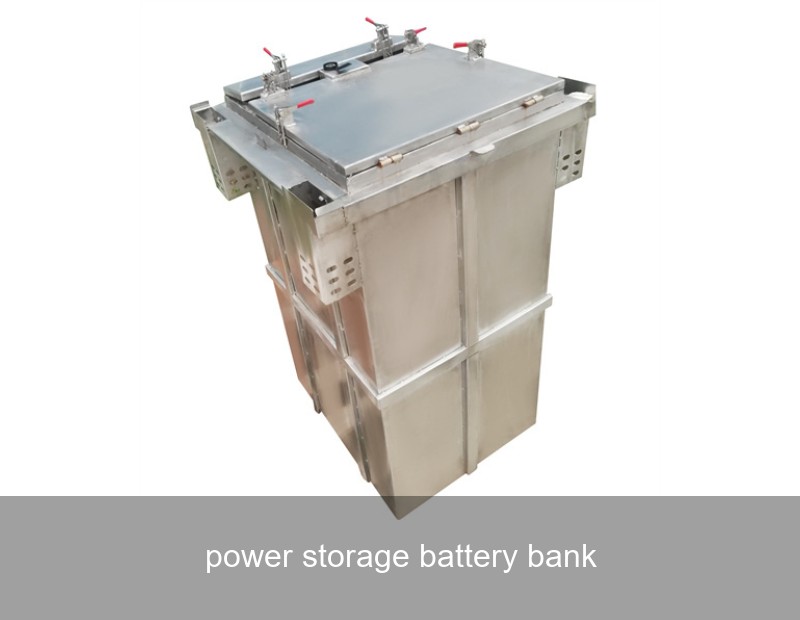
Have you ever watched your electricity meter spin with a sense of helplessness, especially during a peak rate period? Or felt a flicker of anxiety when storm clouds gather, threatening a blackout? You're not alone. Across homes in Europe and the United States, a quiet revolution is taking place in basements, garages, and utility rooms. The hero of this story? The modern power storage battery bank. Far more than a simple battery, it's an intelligent energy hub that is fundamentally changing how we generate, consume, and think about electricity. Let's demystify this transformative technology.
At its core, a power storage battery bank is a system that stores electrical energy for later use. Think of it as a sophisticated "energy savings account" for your home or business. While historically, electricity had to be used the instant it was generated, battery banks break this constraint. They allow you to store surplus energy—most commonly from solar panels—and use it precisely when you need it most: at night, during peak tariff hours, or when the grid fails. For over 18 years, Highjoule has been at the forefront of this innovation, designing intelligent battery storage systems that don't just store power, but optimize it for efficiency, cost savings, and unwavering reliability.
Why the Sudden Surge in Demand? The Data Tells the Story
The global shift towards battery storage isn't just a trend; it's a direct response to several converging phenomena. First, the economics have flipped. The cost of lithium-ion batteries, the heart of most modern systems, has plummeted by over 90% since 2010, making them accessible to millions. Second, energy volatility is a new reality. From extreme weather events straining grids in California and Texas to geopolitical tensions impacting energy prices in Europe, consumers and businesses are seeking control.
Let's look at the numbers. In the U.S., the residential energy storage market saw record installations in 2023, with over 200,000 systems deployed. In Europe, driven by the energy crisis and ambitious decarbonization goals, the market is expected to grow by over 30% annually. Why? Because the logic is compelling:
- Peak Shaving: Utility companies often charge significantly more for electricity during "peak" hours (e.g., 4-9 PM). A battery bank can power your home during these expensive windows, slashing your bills.
- Solar Self-Consumption: Without storage, excess solar energy generated at midday is often sold back to the grid at a low rate. With storage, you save that premium power for yourself, increasing your solar investment's return from ~30% to over 60% or more.
- Backup Power: It provides seamless, automatic backup during outages, keeping lights on, food cold, and critical medical devices running.

Image Source: Unsplash - A modern home integrating solar panels with a wall-mounted battery storage unit.
Key Components of a Modern Power Storage Battery Bank
Not all battery banks are created equal. A high-performance system is an integrated ecosystem of hardware and software. At Highjoule, our EnerCore series for residential and commercial applications is built on this holistic philosophy.
| Component | Function | Highjoule's Approach |
|---|---|---|
| Battery Modules | The core energy storage units, using lithium-ion (e.g., LFP) chemistry for safety & longevity. | Our EnerCore batteries use Lithium Iron Phosphate (LFP) chemistry, renowned for its thermal stability, safety, and cycle life exceeding 6,000 cycles. |
| Battery Management System (BMS) | The "brain" of the battery, ensuring cell balance, temperature control, and safety. | Highjoule's proprietary Adaptive BMS monitors each cell in real-time, optimizing performance and lifespan while preventing overcharge or deep discharge. |
| Power Conversion System (Inverter/Charger) | Converts DC battery power to AC for home use, and AC grid/solar power to DC for charging. | We offer integrated hybrid inverters that manage solar, battery, and grid power in one efficient unit, enabling seamless mode switching. |
| Energy Management System (EMS) | The strategic commander that decides when to charge, discharge, or export based on settings, tariffs, and weather. | Our SmartHub AI software learns your consumption patterns and electricity rates, automatically optimizing for maximum savings and resilience. |
Real-World Impact: A Case Study from Bavaria
Let's move from theory to practice. Consider the Müller family, who run a medium-sized dairy farm in Bavaria, Germany. Their challenges were twofold: high energy costs for cooling and milking equipment, and unreliable grid power in their rural area. In early 2022, they installed a 50 kW solar array paired with a Highjoule EnerCore Commercial 100 kWh power storage battery bank.
The results, monitored over one year, were striking:
- Energy Self-Sufficiency: Their grid electricity consumption decreased by 82% annually.
- Cost Savings: By avoiding peak tariffs and minimizing grid draw, they reduced their annual energy bill by €12,400.
- Reliability: The system provided seamless backup during three grid outages, preventing spoilage of stored milk valued at approximately €8,000 per event.
- ROI: The projected payback period for their entire solar-plus-storage investment is under 7 years, thanks in large part to the battery's ability to maximize solar use.
This isn't just a technical success; it's business continuity and financial predictability enabled by a robust power storage battery bank.

Image Source: Unsplash - A large-scale solar farm coupled with containerized battery storage units.
Choosing the Right Solution for You: Insights from Highjoule Experts
Selecting a power storage battery bank is a significant decision. Based on thousands of installations, here are the key questions we guide our clients through:
- What is your primary goal? Is it bill savings, backup power, increasing green energy use, or a combination? This dictates system size and software settings.
- How much energy do you use, and when? Analyze your utility bill's consumption graph (kWh used per hour/day). Your battery needs to cover your critical "loads" during an outage or peak period.
- What is your existing or planned solar capacity? The battery should be sized to capture a meaningful portion of your daily solar surplus. As a rule of thumb, the U.S. National Renewable Energy Laboratory (NREL) suggests storage capacity often ranges from 1 to 3 times your daily average consumption for effective solar pairing.
- What about safety and warranty? Prioritize systems with non-flammable LFP chemistry, robust certifications (UL, IEC), and a clear warranty covering both performance (e.g., 70% capacity after 10 years) and parts.
This is where a partner like Highjoule adds immense value. We don't just sell hardware; we provide a complete energy resilience audit, custom design, professional installation, and remote monitoring via our platform. Our systems are scalable, allowing you to start with a core unit and expand as your needs grow.
The Future of Energy is Stored: Beyond the Individual Home
The potential of power storage battery banks extends far beyond single properties. Imagine neighborhoods forming resilient microgrids, where communities share stored energy. Utilities are already using aggregated home batteries as "virtual power plants" (VPPs) to stabilize the grid during demand spikes, a concept actively supported by the U.S. Department of Energy. Highjoule is actively involved in such grid-service programs in several markets, allowing our customers to earn additional revenue by contributing tiny fractions of their stored power to community-wide grid support.

Image Source: Unsplash - An engineer monitors a network of distributed energy resources on a digital dashboard.
So, the question is no longer if a power storage battery bank is a viable technology, but how it will integrate into your life and community. It represents a fundamental shift from passive consumption to active energy management. What would you power first to bring peace of mind to your home or business during the next grid interruption?
 Inquiry
 Online Chat