


Navigating Your Energy Future: Why Your PowerHub 300 Supplier is Your Most Strategic Partner
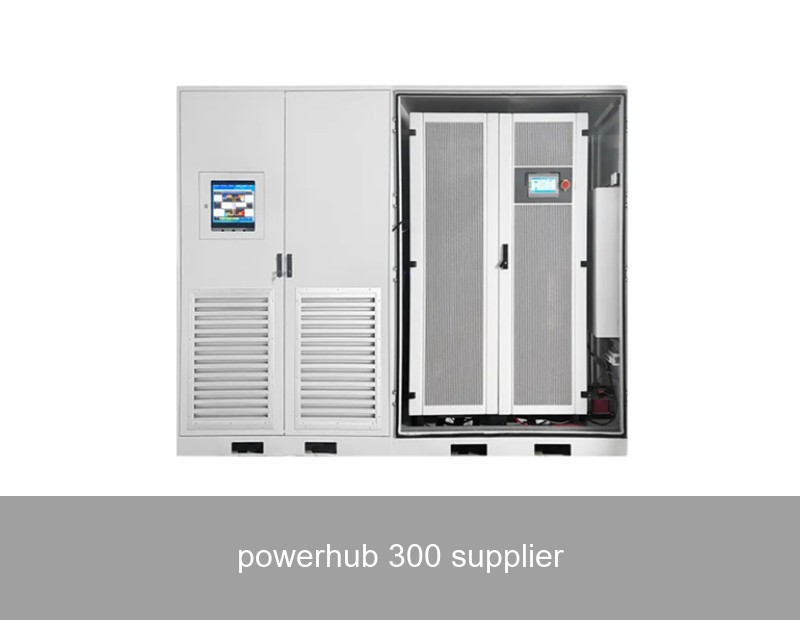
Let's be honest. The conversation around energy has changed. It's no longer just about the price per kilowatt-hour from your utility. For facility managers, business owners, and community developers in Europe and the US, it's now about resilience, control, and sustainability. This is where integrated battery energy storage systems (BESS) like the PowerHub 300 come into play. But here's the crucial insight many discover late in the process: the technology inside the container is only half the story. The expertise, support, and long-term vision of your PowerHub 300 supplier ultimately determine your project's success and ROI. Choosing a partner is as important as choosing the product.
The Energy Shift: From Passive Consumption to Active Management
You've seen the headlines. Grid instability, volatile energy prices, and ambitious decarbonization goals aren't future concepts—they're today's operational realities. A 2023 IEA report starkly notes that massive grid expansion and modernization is essential for clean energy transitions, but it takes time. Meanwhile, businesses are exposed.
This phenomenon creates a pressing need: the ability to generate, store, and manage your own energy on-site. The data is compelling. According to the U.S. Energy Information Administration, commercial electricity prices in the US have seen significant fluctuations, while in Europe, the dependency on gas-driven price spikes has made headlines for years. The logical step for forward-thinking organizations is to invest in an energy hub—a centralized system that acts as the brain and battery for your site's power.

Image Source: Unsplash - A modern facility leveraging on-site energy.
This is the precise role of a PowerHub 300-class system. It's not a simple battery bank; it's a scalable, containerized solution typically in the 300kW to 1MW range designed for commercial and industrial (C&I) applications. It integrates seamlessly with solar PV, wind, or the grid to perform multiple critical functions: peak shaving (reducing demand charges), load shifting (using stored cheap energy during expensive periods), providing backup power, and even generating revenue through grid services in some markets.
Beyond the Battery: What Makes a Truly Intelligent PowerHub 300?
When evaluating a PowerHub 300, looking past the nameplate capacity (e.g., 300kW/600kWh) is essential. The real value is architected in the software and system integration. Here’s what separates a basic storage unit from an intelligent energy asset:
- Advanced Energy Management System (EMS): This is the core intelligence. A superior EMS uses real-time data and predictive algorithms to autonomously decide when to charge, discharge, or hold—maximizing financial return based on your tariff structure and consumption patterns.
- Grid-Forming Capabilities: Increasingly important for microgrids. Unlike traditional grid-following inverters, grid-forming technology allows the PowerHub to "start" a grid, providing stable voltage and frequency if the main grid goes down, enabling seamless islanding operations.
- Thermal Management & Safety Architecture: The longevity and safety of lithium-ion batteries depend heavily on a sophisticated thermal management system (liquid cooling is often industry-standard for this scale) and integrated, multi-layered safety protocols from the cell to the container level.
- Future-Proof Scalability: Can the system's capacity be expanded easily as your needs grow? A modular design from your PowerHub 300 supplier protects your initial investment.
Case Study: A German Logistics Center's Journey to Energy Resilience
Consider the real-world example of a mid-sized logistics hub near Frankfurt, Germany. Facing rising strompreise (electricity prices) and frequent grid congestion warnings, they partnered with a leading PowerHub 300 supplier to deploy a 500kW/1MWh system integrated with their existing rooftop solar.
| Challenge | Solution | Quantified Outcome (First Year) |
|---|---|---|
| High peak demand charges from grid | PowerHub 300 configured for aggressive peak shaving | 28% reduction in demand charges |
| Solar curtailment during low demand | Excess solar generation stored for evening use | Increased solar self-consumption by 40% |
| Need for critical backup for refrigeration | Seamless transition to backup power during 2 grid outages | Zero spoilage of perishable goods |
The total project payback period, factoring in German energy price trends and available subsidies for commercial storage, was calculated at under 7 years on a system with a 15-year+ design life. This tangible outcome underscores that the right supplier delivers not just hardware, but a comprehensive financial and operational outcome.
Choosing Your PowerHub 300 Supplier: A Framework for Decision-Making
With the market expanding, how do you select the right partner? Look for these four pillars:
- Proven Track Record & Local Support: Do they have documented, operational projects of similar scale in your region? Do they have local engineers for commissioning and service? A supplier with a strong presence in Europe and North America will understand regional grid codes and market nuances.
- Technology Agnosticism vs. Vertical Integration: Some suppliers are locked into a single battery chemistry or inverter brand. Others, like Highjoule, act as technology integrators, selecting best-in-class components (cells, inverters, EMS) to create an optimized system for your specific use-case, rather than a one-size-fits-all product.
- Financial Modeling & Regulatory Expertise: Can they provide a clear, transparent ROI analysis based on your actual utility bills? Are they versed in local incentive programs, like the EU's smart grid frameworks or the US Investment Tax Credit (ITC) for standalone storage?
- Long-Term Service & Performance Guarantees: The relationship begins at commissioning. Look for robust O&M (Operations and Maintenance) packages and clear performance warranties that guarantee the system's capacity and throughput over time.

Image Source: Unsplash - Professional monitoring and maintenance of an energy storage system.
The Highjoule Approach: Engineering Confidence into Every System
Since 2005, Highjoule has evolved from a pioneering battery technology firm into a global leader in advanced, intelligent storage solutions. Our philosophy is that a PowerHub 300 should be a cornerstone of your energy strategy, not a black-box commodity. How do we deliver on this?
For our C&I and microgrid clients, our PowerHub solutions are built around our proprietary Helios EMS platform. Helios doesn't just react; it learns and forecasts. By integrating weather data, grid price signals, and your facility's load profile, it optimizes dispatch strategies in real-time for the highest economic gain. We pair this intelligence with meticulously selected, UL/CE-certified components and a modular, containerized design that simplifies installation and future expansion.
Our role as your PowerHub 300 supplier is to be a true partner. From the initial site assessment and detailed financial modeling to grid interconnection support and 24/7 remote monitoring, we ensure your energy storage asset performs as promised—day in, day out, for decades. We provide the technological excellence and the peace of mind that comes with it.
Ready to Transform Your Energy Profile?
The journey to energy independence and resilience starts with a conversation. What is the single biggest energy challenge your facility is facing today—is it unpredictable costs, reliability concerns, or sustainability targets? How could controlling your power flow change your operational landscape tomorrow?
 Inquiry
 Online Chat