


Finding the Best Types of Batteries for Solar Power: Your Guide to Sustainable Energy Independence
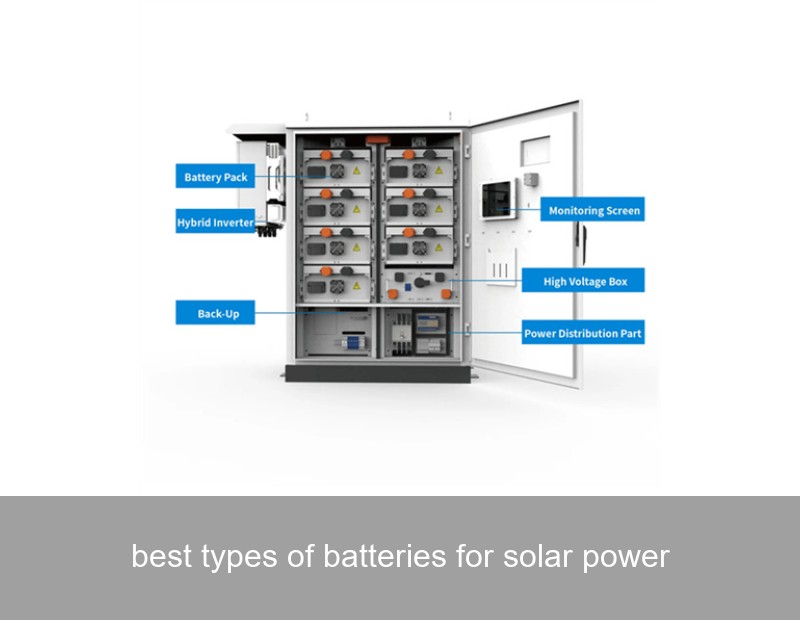
You've made the smart decision to invest in solar panels. Those sleek arrays on your roof are capturing the sun's abundant energy, slashing your electricity bills, and reducing your carbon footprint. But what happens when the sun goes down, or during those cloudy days? This is where pairing your system with the right energy storage becomes crucial. Choosing the best types of batteries for solar power isn't just about backup; it's about maximizing your self-consumption, gaining energy independence, and building a resilient, cost-effective home energy ecosystem. Let's demystify the options and explore how modern technology can unlock the full potential of your solar investment.
Table of Contents
The Challenge: Why Solar Alone Isn't Enough
It's a common scenario for solar homeowners: you produce a surplus of energy during the sunny afternoon, exporting it to the grid for a small credit. Then, in the evening when demand peaks, you draw expensive power back from the utility. This mismatch between production and consumption limits your savings and leaves you vulnerable to grid outages. The phenomenon is so well-documented that in sun-drenched California, the famous "duck curve" illustrates the sharp ramp-up in grid demand just as solar production falls. This is the core problem a solar battery solves—it shifts your solar energy to when you need it most.

Image Source: Unsplash - A modern home solar and battery storage installation.
Key Metrics for Choosing Your Solar Battery
Before diving into chemistry, understand the language of battery specs. Here are the key terms:
- Capacity (kWh): The total amount of energy the battery can store, akin to the size of your fuel tank.
- Power (kW): The rate at which the battery can deliver energy. A high power rating is crucial for running multiple appliances simultaneously during an outage.
- Depth of Discharge (DoD): The percentage of the battery's capacity that can be safely used. A 10kWh battery with a 90% DoD means you can use 9kWh.
- Round-Trip Efficiency: The percentage of energy put into the battery that you can get back out. Higher efficiency means less wasted solar energy.
- Cycle Life: The number of charge/discharge cycles a battery can undergo before its capacity significantly degrades.
These metrics directly impact performance and value. For instance, a battery with high capacity but low power might not be able to start your air conditioner, while one with high power but low capacity might drain quickly.
The Contenders: Pros and Cons of Major Battery Types
Today's market is dominated by a few key technologies, each with its own strengths. Let's break them down.
1. Lithium-Ion (Li-ion): The Modern Standard
This is the technology powering your smartphone and electric vehicles, and it's the undisputed leader for new solar installations. Within Li-ion, two main chemistries are prevalent:
- Lithium Iron Phosphate (LFP): Known for exceptional safety, long cycle life (often 6,000+ cycles), and stability. It's less energy-dense than NMC but is becoming the preferred choice for stationary storage due to its longevity and safety profile.
- Nickel Manganese Cobalt (NMC): Offers higher energy density (more capacity in a smaller space) and excellent power output. Historically common in EVs and earlier home batteries.
Pros: High efficiency (95%+), high DoD, compact size, and requires minimal maintenance. Cons: Performance can degrade in extreme cold, and initial cost, while falling, is still significant.
2. Lead-Acid: The Established Veteran
The traditional technology used for decades in off-grid systems and automotive starting batteries. Flooded lead-acid batteries are cheaper upfront but require ventilation, regular maintenance (watering), and have a lower DoD and shorter cycle life.
Pros: Low upfront cost, widely available, and recyclable technology. Cons: Lower efficiency (~80%), shorter lifespan, requires maintenance, and bulkier size.
3. Emerging and Niche Technologies
Flow Batteries: Excellent for very long-duration storage (e.g., 10+ hours) with virtually no degradation over decades. They are typically large and expensive, making them more suited for commercial or utility-scale applications. Saltwater Batteries: A niche option using non-toxic, fully recyclable materials. They are very safe but have lower energy density and efficiency compared to Li-ion.
| Battery Type | Typical Cycle Life | Round-Trip Efficiency | Best For |
|---|---|---|---|
| Lithium-Ion (LFP) | 6,000+ | 95%+ | Most residential & commercial applications, prioritizing safety & lifespan |
| Lithium-Ion (NMC) | 3,000 - 5,000 | 95%+ | Applications where space is a premium constraint |
| Lead-Acid (Flooded) | 1,000 - 1,500 | 80-85% | Budget-conscious off-grid systems with maintenance capability |
Real-World Impact: A Case Study from California
Let's look at real data. A 2023 analysis by the National Renewable Energy Laboratory (NREL) examined the value of solar-plus-storage in the U.S., highlighting significant benefits. Consider a typical suburban home in Northern California with a 8kW solar array.
- Without Battery: The home exported 65% of its solar generation, relying on the grid at night. Annual savings were capped, and the home was vulnerable to Public Safety Power Shutoffs (PSPS).
- With a 13.5kWh LFP Battery System (like the Highjoule HES Series): Self-consumption of solar power jumped from 35% to over 80%. The homeowner could avoid drawing power during peak rate periods (4-9 PM, where rates can exceed $0.50/kWh). During a 2-day PSPS event, the system kept critical loads (refrigeration, lighting, communications) running seamlessly. The projected payback period, factoring in increased self-consumption, time-of-use arbitrage, and resilience value, was reduced by several years.
This case shows that the best types of batteries for solar power deliver tangible financial and practical resilience benefits, a principle at the core of Highjoule's system design.

Image Source: Unsplash - Conceptual graph of energy load shifting.
Beyond the Battery: The Importance of a Complete System
Choosing the right chemistry is only part of the equation. The battery is the heart, but the brain—the inverter and energy management system—is what makes it intelligent. A truly optimized system integrates seamlessly.
This is where Highjoule's expertise shines. As a global provider since 2005, we don't just supply batteries; we deliver integrated power solutions. Our HES (Home Energy System) series features ultra-safe, long-life LFP battery packs coupled with a hybrid inverter that manages solar, battery, and grid power in one unit. Our AI-powered EnergyOS platform learns your home's energy patterns, automatically deciding when to charge from solar, discharge to avoid peak rates, or hold reserves for an outage, maximizing your savings and comfort without you lifting a finger.
For commercial and industrial clients, our C&I ESS solutions offer scalable, containerized systems that provide demand charge reduction, renewable integration, and backup power, ensuring business continuity and improved sustainability metrics. We understand that the best types of batteries for solar power are those integrated into a system designed for reliability, intelligence, and long-term value.
Making Your Choice: What's Right for Your Home?
So, how do you decide? Ask yourself these questions:
- What is my primary goal? (Bill savings, backup power, energy independence?)
- What are my critical loads during an outage? (Sump pump? Medical equipment?)
- What is my local climate and utility rate structure? (Time-of-use rates? Net metering policy?)
For the vast majority of homeowners in Europe and the U.S. seeking a modern, low-maintenance, and high-performance solution, lithium-ion (particularly LFP) paired with smart management is the clear recommendation. It offers the best balance of safety, lifespan, efficiency, and total cost of ownership.
The energy landscape is evolving rapidly. With innovations in battery technology and smart software, the dream of a truly self-sufficient home is more accessible than ever. But the journey starts with the right foundation. What specific energy challenge in your daily life would solving with a solar battery make the most immediate difference to you?
 Inquiry
 Online Chat