


"Preço de um Inversor Solar": Unpacking the Heart of Your Solar Investment
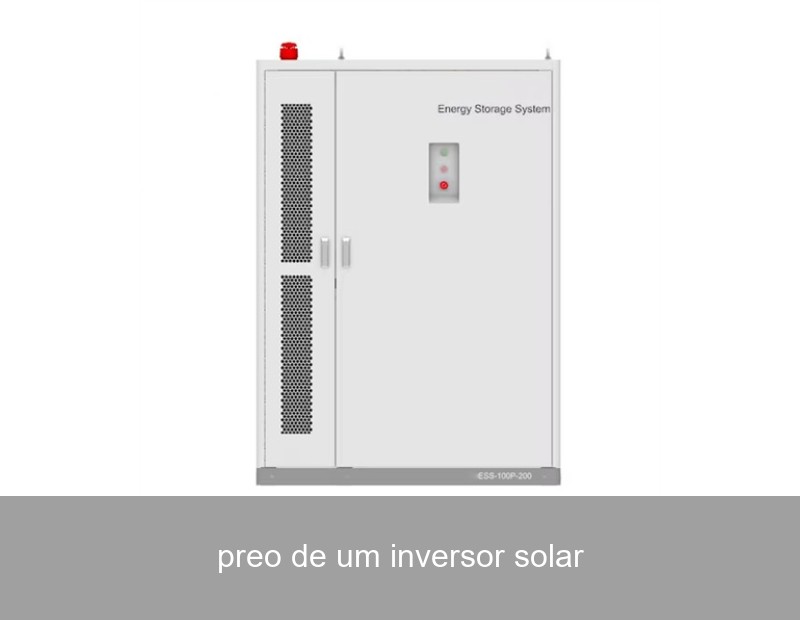
If you're exploring solar energy, you've likely encountered the term "preço de um inversor solar" – the price of a solar inverter. It's a crucial line item in any quote, but focusing solely on that number is like buying a car based only on the engine price. The inverter is the intelligent heart of your photovoltaic (PV) system, converting raw DC power from your panels into usable AC power for your home or business. Its quality, type, and capabilities directly determine your system's efficiency, reliability, and long-term financial return. In this guide, we'll move beyond the basic sticker price to help you understand what you're really paying for and how to make a choice that powers your life for decades.
Key Factors Influencing the Cost of a Solar Inverter
So, why does the "preço de um inversor solar" vary so widely? Several interconnected factors come into play, each affecting performance and, ultimately, your peace of mind.
Inverter Type & Technology
The core technology is the primary cost driver. Here’s a quick breakdown:
- String Inverters: The most common and cost-effective option for standard, unshaded roofs. All panels are connected in series to a single inverter. Prices are lower, but shading on one panel can affect the whole string's output.
- Microinverters: Small units attached to each solar panel. They optimize each panel individually, maximizing harvest in shaded or complex roof setups. The "preço" is higher due to the quantity of units and advanced per-panel monitoring.
- Power Optimizer Systems: A hybrid solution. Optimizers at each panel condition the DC power, which is then sent to a central string inverter. This offers panel-level optimization and safety at a mid-range price point.

Image source: Unsplash - A modern string inverter, a key component in determining the 'preço de um inversor solar'.
Power Rating & Efficiency
Inverters are sized in kilowatts (kW). A system matching your energy needs requires an inverter with a similar AC output rating. A 6kW solar array typically needs a ~6kW inverter. Oversizing or undersizing can impact cost and efficiency. More critically, look for peak and weighted efficiency ratings (like European or CEC efficiency). A 98% efficient inverter versus a 95% one captures significantly more energy over its lifetime, justifying a higher initial cost.
Brand, Features & Warranty
Established brands with proven field reliability often command a premium. This isn't just about the name; it's about robust engineering, quality components, and sophisticated software. Essential features impacting price include:
| Feature | Impact on Cost & Value |
|---|---|
| Advanced Monitoring | Real-time energy tracking via apps adds cost but empowers you to save. |
| Grid Services Readiness | Capabilities for frequency regulation or virtual power plants (VPPs) are future-proof investments. |
| Warranty Length & Terms | A standard 10-year warranty is common, but extendable 15-25 year warranties offer long-term security, often at an added cost. |
| Built-in Safety | Features like arc-fault detection or rapid shutdown meet stringent codes (like NEC in the US) and add value. |
Installation & System Complexity
The "preço de um inversor solar" on a quote includes more than the hardware. Installation complexity—electrical wiring, mounting, grid interconnection paperwork, and system commissioning—affects labor costs. A complex commercial installation with multiple large inverters will have different economies of scale than a simple residential retrofit.
Price Breakdown & Market Perspective
For a residential setting in Europe or the US, you can expect a broad range. A standard quality string inverter for a 5-8kW system might range from €1,000 to €2,500, including basic installation. Microinverter or optimizer systems for the same size could add €1,000 to €3,000 to the total system cost. For commercial and industrial (C&I) projects, the scale changes dramatically. Large three-phase string inverters or central inverters for 100kW+ systems are priced per watt, with costs decreasing significantly with scale, but total investment running into tens of thousands of euros.
It's vital to consider total lifecycle cost. According to the National Renewable Energy Laboratory (NREL), inverter replacement is a key operational cost in a PV system's life. Investing in a more durable, efficient inverter upfront can delay or eliminate a major mid-life expense.
Case Study: Real-World Data from a German Commercial Rooftop
Let's ground this in reality. A medium-sized logistics company in Bavaria installed a 245kWp rooftop PV system in 2021 to offset high daytime energy costs and stabilize their operational budget.
- Initial Challenge: Multiple roof sections with occasional shading from ventilation units. They received quotes using both standard central inverters and distributed string inverter solutions.
- Choice & Data: They opted for a solution featuring 12 units of Highjoule's H-Energy Commercial Series String Inverters. While the per-unit "preço do inversor" was competitive, the total installed cost was slightly higher than the central inverter bid. However, the distributed design minimized shading losses and allowed for independent operation of roof sections.
- Result: In the first two years of operation, monitoring data showed a 5.7% higher specific yield (kWh per kW installed) compared to a neighboring facility using a central inverter on a similar roof. This extra energy production, facilitated by the inverters' high individual efficiency (99.0% weighted) and independent MPPT tracking, is projected to pay back the initial price premium in under 4 years. The system has already withstood several grid voltage fluctuations without fault, thanks to the inverters' robust grid-support features.

Image source: Unsplash - Commercial solar installations require careful inverter selection to maximize ROI.
The Highjoule Solution: Where Value Meets Performance
At Highjoule, we believe the right inverter is an investment, not just an expense. Our product philosophy centers on delivering superior lifetime value, which redefines how you should assess the initial "preço de um inversor solar."
For residential and small commercial clients, our H-Energy Home Hub is more than a string inverter. It's an integrated energy management system. With native hybrid functionality, it seamlessly integrates battery storage—using our own high-density battery systems—allowing you to store excess solar energy for use at night or during outages. Its AI-driven energy forecasting can optimize self-consumption, a feature that turns a simple inverter into a money-saving powerhouse.
For larger C&I and microgrid applications, our H-Energy Commercial Series offers modular, scalable power. These inverters are built for durability and come with industry-leading, extendable warranties. Crucially, they are designed for the future energy grid, with advanced grid-forming capabilities that can help stabilize local networks. This means your investment today continues to add value as grid dynamics evolve. By choosing Highjoule, you're not just buying hardware; you're gaining a partner committed to maximizing your energy independence and return on investment for the next 25 years.
As the International Energy Agency (IEA) notes, secure and resilient supply chains are key for energy infrastructure. Highjoule's vertically integrated manufacturing and stringent quality control ensure product availability and reliability, a critical but often overlooked aspect of long-term cost.
Making the Right Investment for Your Energy Future
When you receive your next solar quote, look beyond the simple line item for the "preço de um inversor solar." Ask your installer: What is the weighted efficiency? What are the warranty terms and extension costs? Is this inverter compatible with future battery storage or VPP programs? How does its software help me actively manage and save on my energy bills?
The most cost-effective inverter is the one that reliably harvests the most solar energy over the longest time, while providing the flexibility to adapt to your future energy needs. So, what will be the first feature you prioritize when evaluating the heart of your solar system?
 Inquiry
 Online Chat