


Batterie für Solaranlage: Your Guide to Energy Independence and Smart Savings
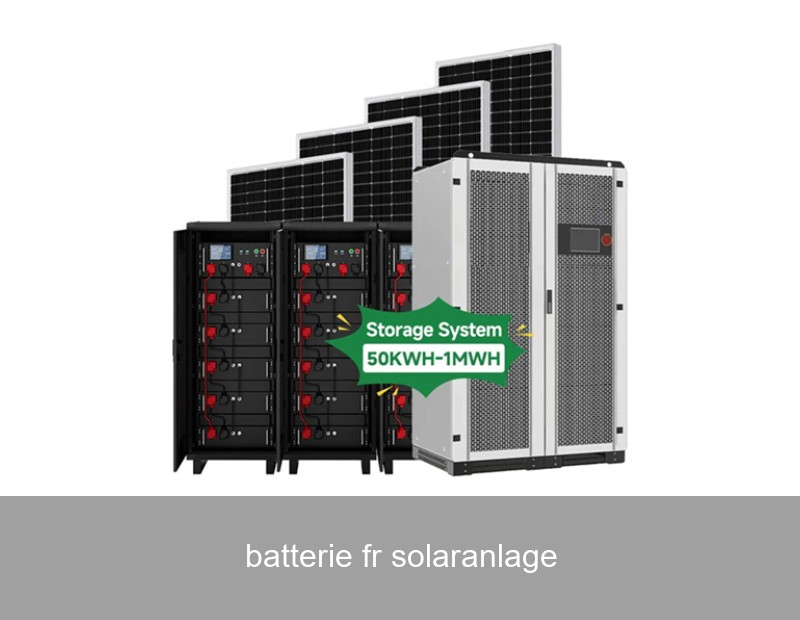
So, you've got solar panels on your roof. You're generating clean energy, reducing your carbon footprint, and watching your electricity meter spin backwards on sunny afternoons. It's a great feeling. But what happens when the sun sets, or during a week of gloomy weather? This is where the critical component, the Batterie für Solaranlage (battery for solar system), transforms your setup from a partial solution to a complete energy independence powerhouse. In this guide, we'll demystify solar batteries, explore why they're becoming essential for homeowners in Europe and the US, and show you how to harness their full potential.
What is a Solar Battery? The Heart of Your Energy Independence
In simple terms, a solar battery storage system is a device that saves the excess electricity your solar panels produce during the day for use later. Think of it as a personal energy reservoir. Without a battery, surplus solar energy you don't use immediately is fed back into the grid—often for a modest feed-in tariff. With a battery, you store that power and use it at night, during peak demand times when grid electricity is most expensive, or as a reliable backup during outages.
Modern systems, like the Highjoule HomePower series, are far more than simple batteries. They are integrated energy management systems. They include the battery modules themselves, a sophisticated inverter/charger, and intelligent software that learns your consumption patterns. This brain decides the most economical moment to store energy, use it, or even sell it back to the grid, maximizing your financial return every single day.
Why You Need a Battery for Your Solar System: Beyond the Obvious
The motivation for adding a Batterie für Solaranlage has evolved dramatically. It's no longer just about backup power; it's about economic optimization and grid resilience.
- Skyrocketing Energy Prices: Across Europe and the US, electricity costs are volatile and trending upward. By using your stored solar energy during evening peak hours, you avoid buying expensive grid power.
- Declining Feed-in Tariffs (FiTs): Governments are phasing out generous subsidies for exporting solar power. In Germany, for instance, the EEG feed-in tariff for new systems is a fraction of what it was a decade ago. It's now more valuable to use your solar energy than to sell it.
- Increased Self-Consumption: A typical home without storage only uses 30-50% of its solar generation directly. Adding a battery can boost this self-consumption rate to 70% or even 90%, dramatically slashing your energy bill.
- Reliability and Backup Power: With increasing extreme weather events, grid stability is a concern. A quality solar battery system provides seamless backup power, keeping your lights on, refrigerator running, and essential devices charged during an outage.

Image Source: Unsplash - A modern, sleek home battery installation.
Key Technologies: Lithium-Ion, LFP, and What It Means for You
Not all batteries are created equal. The technology inside determines its safety, lifespan, and performance.
- Lithium Iron Phosphate (LFP): This is the dominant technology in modern residential storage, and for good reason. LFP batteries, like those used in Highjoule's HomePower series, offer superior thermal and chemical stability. They are inherently safer, have a longer cycle life (often over 6,000 cycles), and maintain performance better over time compared to older lithium-ion chemistries. They are the recommended choice for home energy storage.
- Depth of Discharge (DoD) & Cycle Life: DoD refers to how much of the battery's capacity you can use. A 10 kWh battery with a 90% DoD gives you 9 kWh of usable energy. Cycle life indicates how many charge/discharge cycles the battery can handle before its capacity degrades to a specified level (e.g., 80% of original). These two numbers are the best indicators of long-term value.
| Feature | Older NMC Chemistries | Modern LFP (e.g., Highjoule) |
|---|---|---|
| Safety | Good, requires complex BMS | Excellent, inherently stable |
| Typical Cycle Life | 3,000 - 4,000 cycles | 6,000+ cycles |
| Operating Temperature Range | Narrower | Wider |
| Long-Term Value | Lower | Higher |
Sizing Your System: How to Calculate Your Perfect Fit
Sizing your Batterie für Solaranlage isn't about getting the biggest one; it's about getting the right one. The goal is to cover your critical "nighttime load" or "backup load." Here's a simplified approach:
- Analyze Your Consumption: Check your electricity bill for daily kWh usage. Then, identify how much of that usage occurs after sunset.
- Match Your Solar Production: Your battery capacity should be aligned with your solar array's typical daily surplus. An oversized battery will rarely fill, an undersized one will drain too quickly.
- Define Backup Needs: What appliances must run during an outage (e.g., fridge, lights, modem, a few outlets)? Sum their wattage and estimate how many hours you need coverage. This gives your required backup capacity.
This is where professional consultation is invaluable. Highjoule's design tools and expert partners analyze 12 months of your energy data to model the perfect system size, ensuring optimal payback and performance for your specific home in your specific climate.
A Real-World Case Study: Maximizing ROI with Intelligent Storage
Let's look at a real example from Bavaria, Germany. The Müller family had a 8 kWp solar system installed in 2018. With high feed-in tariffs initially, their setup was profitable. However, as tariffs dropped and grid prices rose, their savings plateaued.
The Challenge: Increase self-consumption, reduce reliance on the grid, and prepare for frequent short grid interruptions.
The Solution: In early 2023, they installed a Highjoule HomePower 10 system with 10.2 kWh of usable LFP storage and an integrated hybrid inverter. The system's AI-driven energy management was configured to prioritize self-consumption and participate in a local utility's flexible tariff program.
The Data-Driven Results (after 12 months):
- Self-Consumption Rate: Increased from 38% to 89%.
- Grid Electricity Purchased: Reduced by 78%.
- Annual Electricity Bill Savings: €1,450 (from a previous net cost of €1,850 to just €400).
- Backup Power: Provided seamless power during 4 grid outages, totaling over 11 hours.
This case, documented in a Fraunhofer ISE study on storage economics, highlights how the right battery system turns solar into a comprehensive financial and resilience solution. The projected payback period for the Müller family's investment is under 7 years, and the battery has a warranty of 10 years or 10,000 cycles.
Choosing the Right Partner: Expertise Matters
Selecting a Batterie für Solaranlage is a significant investment. The brand and installer you choose are critical. Look for a provider with:
- Proven Grid Integration: Systems must comply with local grid codes (like VDE-AR-N 4105 in Germany or UL 9540 in the US).
- Comprehensive Warranty: A strong warranty (covering both performance and defects for 10+ years) is a sign of manufacturer confidence.
- Scalability: Can you easily add more battery modules later if your needs change? Highjoule's modular design allows for easy capacity expansion.
- Smart Software & Services: The real magic is in the software. Look for systems that offer intuitive monitoring apps and future-ready features like integration with time-of-use rates or virtual power plant (VPP) programs.
As a global leader founded in 2005, Highjoule provides not just hardware, but a complete intelligent, efficient, and sustainable power solution. Our systems for residential, commercial, and microgrid applications are designed with this holistic, long-term partnership in mind.
The Future is Bright: Emerging Trends in Solar Storage
The evolution of the Batterie für Solaranlage is accelerating. We're moving towards prosumer ecosystems. Imagine your home battery, your EV charger, and your heat pump all communicating. Your battery could charge your EV with cheap solar power at noon, or use your EV's battery to power your home during a peak evening event—a concept known as Vehicle-to-Home (V2H). Furthermore, aggregated batteries are forming Virtual Power Plants (VPPs), where thousands of home systems provide grid stability services, creating a new revenue stream for homeowners. You can learn more about this grid-supportive role from the U.S. Department of Energy.

Image Source: Unsplash - The integrated home energy ecosystem of the future.
Your solar panels were the first step. Now, the battery for your solar system is the key to unlocking true energy autonomy and maximizing the value of every sunbeam that hits your roof. It's an investment not just in technology, but in predictability, control, and a sustainable lifestyle. What will your first night powered entirely by the sun you captured yesterday feel like?
 Inquiry
 Online Chat