


Pristine Solar: How Much Energy Can Your System Really Produce?
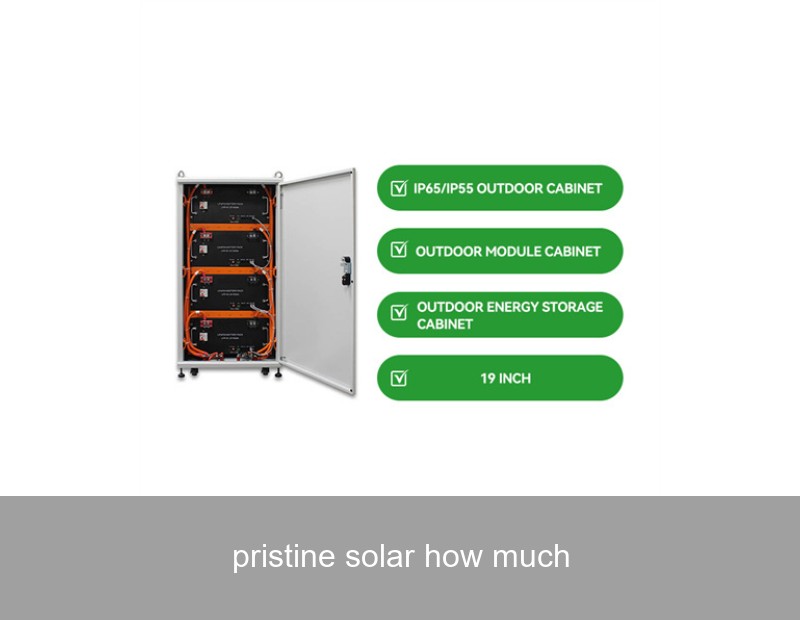
You've invested in pristine solar panels, envisioning a future of clean, abundant, and low-cost electricity. But a common question lingers for many homeowners and businesses: "Pristine solar, how much power will I actually get?" The gap between the theoretical potential of those gleaming panels and the real energy hitting your meter can be frustrating. Let's demystify this, moving from the ideal to the practical, so you can maximize your return on investment.
Table of Contents
The Pristine Promise vs. Reality Gap
Solar panel ratings, like "400W," are established under Standard Test Conditions (STC)—a laboratory "pristine" environment. In the real world, conditions are rarely perfect. According to the National Renewable Energy Laboratory (NREL), system losses can typically range from 15% to 25%. This means a 10 kW system might only deliver an average of 7.5 to 8.5 kW in practice. Where does that energy go?
- Environmental Factors: Dust, pollen, bird droppings, and seasonal shading from trees can significantly reduce light absorption.
- Climatic & Thermal Losses: Contrary to intuition, solar panels become less efficient as they get hotter. A sunny, hot day can see output drop by 10-15% due to temperature alone.
- System Inefficiencies: Energy is lost in wiring, inverters converting DC to AC, and mismatches between panels.

Image source: Unsplash (showing the impact of soiling on solar panels)
Key Factors Determining Your Solar Yield
To move from "pristine solar, how much?" to "my solar, this much," you need to assess key variables. Think of your system's output as a formula:
Actual Output = (Solar Irradiance) x (Panel Area & Efficiency) x (System Health & Configuration)
| Factor | Impact on "How Much" | Mitigation Strategy |
|---|---|---|
| Location & Orientation | A south-facing roof in Arizona will outperform an east-west split roof in Scotland by a factor of 2-3x. | Professional site assessment using tools like PVWatts. |
| Roof Pitch & Shading | Partial shading from a chimney can disproportionately reduce output of an entire string. | Use of power optimizers or micro-inverters; regular tree trimming. |
| Panel Degradation | Panels lose about 0.5%-0.8% of output per year. After 25 years, output may be ~80% of original. | Choose high-quality panels with lower degradation warranties. |
| Inverter Efficiency | Central inverters may peak at 98% but lose efficiency in partial shade. Micro-inverters optimize per panel. | Select an inverter topology that matches your site's constraints. |
The Storage Multiplier: Unlocking True Potential
Here's the pivotal insight: Maximizing solar's value isn't just about generation; it's about consumption. Without storage, excess pristine midday energy is exported to the grid, often at low rates, only for you to buy back expensive power in the evening. This drastically reduces your financial and energy independence.
Adding a battery energy storage system (BESS) transforms the equation. It allows you to:
- Increase Self-Consumption: Store your surplus solar for use at night, boosting your "behind-the-meter" usage from 30-50% to 70-90%.
- Provide Backup Power: Keep essential loads running during grid outages—a growing concern in many regions.
- Participate in Grid Services: In some markets, you can earn revenue by providing grid stability services.
Case Study: A German Bakery's Recipe for Energy Independence
Consider the real-world example of a family-run bakery in Bavaria, Germany. They installed a 50 kWp rooftop solar system. Despite good generation, their early morning oven pre-heat and evening lighting loads relied heavily on the grid due to time-of-use misalignment.
The Challenge: High grid dependency, volatile energy costs, and the need for uninterrupted refrigeration.
The Solution: They integrated a Highjoule HiveStack 50 commercial battery system (50 kWh capacity) with their existing solar. The system's intelligent energy management software was programmed for their specific load profile.
The Data-Driven Result (12-month analysis):
- Solar Self-Consumption Rate: Increased from 41% to 89%.
- Grid Energy Cost Reduction: Achieved 68% savings on electricity bills.
- Backup Assurance: The system seamlessly powers refrigeration and critical lighting for up to 8 hours during grid outages, protecting inventory.
- ROI: Projected payback period of the storage addition was under 6 years, thanks to Germany's high electricity prices and intelligent cycling.
This case moves beyond "pristine solar, how much?" to "managed solar-storage, this much value."
Optimizing Your Output: The Highjoule Intelligent Ecosystem
At Highjoule, we understand that every kilowatt-hour matters. Our mission is to bridge the gap between your pristine solar potential and delivered, usable power. We don't just provide components; we deliver integrated, intelligent systems.
Our product suite is engineered for maximum yield and resilience:
- Highjoule HiveStack Residential & Commercial BESS: Scalable, modular lithium iron phosphate (LFP) battery systems known for safety, longevity (10,000+ cycles), and seamless integration with both new and existing solar arrays.
- Orion AI Energy Manager: The brain of the operation. This platform uses machine learning to analyze your generation, consumption patterns, weather forecasts, and even grid tariff schedules. It autonomously optimizes energy flow—charging batteries, powering loads, or selling back—to maximize your economic return every single day.
- Highjoule Integrator Platform: For installers and developers, this simplifies system design, commissioning, and remote monitoring, ensuring your Highjoule system performs at its peak from day one.

Image source: Unsplash (depicting a modern home energy system with solar and storage)
For microgrid and large-scale C&I applications, our systems are designed to provide grid-forming capabilities, enabling true energy independence and stability. By choosing Highjoule, you're not just asking "how much"; you're ensuring the answer is "the maximum possible."
Your Solar Potential, Realized
The journey from pristine panel rating to meaningful, bill-slashing energy is complex but navigable. It requires a holistic view that marries high-quality hardware with sophisticated software and a deep understanding of your unique energy profile.
So, instead of just wondering about the ideal, let's focus on your optimal. What does your last year of electricity bills reveal about the gap that solar, intelligently paired with storage, could fill for you?
 Inquiry
 Online Chat