


The Production of Solar Panels: A Journey from Sand to Sustainable Power
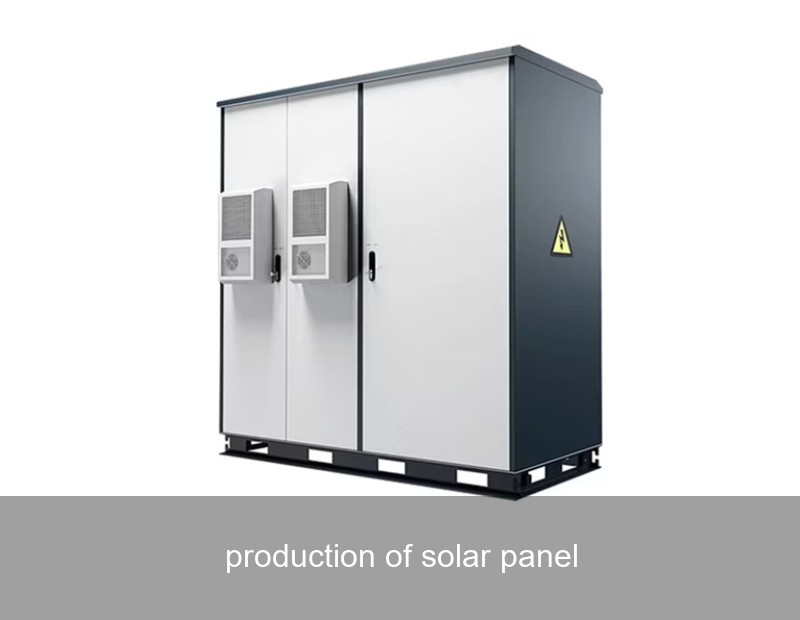
Have you ever looked at the sleek, blue-black array on a neighbor's roof and wondered, "How exactly is that solar panel made?" The production of solar panels is a fascinating tale of human ingenuity, transforming abundant sand into sophisticated devices that capture sunlight. But the story doesn't end at the factory gate. To truly unlock a sustainable future, this clean energy must be stored and managed intelligently. This is where advanced energy storage systems, like those from Highjoule, become the critical partner to solar, ensuring every photon captured delivers reliable power, day and night.
Table of Contents
- The Core Process: From Quartz to Functional Cell
- Key Technologies in Panel Production
- Case Study: A German Factory's Energy Independence
- Future Trends & Sustainable Manufacturing
- Making the Choice for Your Energy Future
The Core Process: From Quartz to Functional Cell
The journey begins with one of Earth's most common materials: silica sand (primarily quartz). The production is a multi-stage marvel of precision engineering.
Step 1: Creating Metallurgical Grade Silicon
Quartz is heated in an electric arc furnace at temperatures over 1800°C with carbon sources. This reaction produces metallurgical-grade silicon (MG-Si), which is about 99% pure. For solar applications, this isn't pure enough.
Step 2: Purification into Polysilicon
MG-Si is converted into a gas (like trichlorosilane) and then distilled and deposited in a chemical vapor deposition reactor. This yields hyper-pure, polycrystalline silicon ("polysilicon") in the form of rods or granules, with purity levels exceeding 99.9999% (so-called "six nines").

Image: The creation of pure polysilicon ingots is the foundational step in solar panel production. Credit: Wikimedia Commons.
Step 3: Ingot, Wafer, and Cell Manufacturing
- Ingot Casting: Polysilicon is melted and crystallized into large, solid blocks called ingots (for monocrystalline) or bricks (for polycrystalline).
- Wafer Slicing: These ingots are sliced into paper-thin wafers using diamond-wire saws. This process aims to minimize material loss, known as kerf loss.
- Cell Fabrication: Wafers undergo cleaning, texturing (to create a light-trapping surface), doping (to create the P-N junction), and coating with anti-reflective layers. Metal contacts are printed on to collect the generated electricity.
Key Technologies: Monocrystalline vs. Polycrystalline vs. Thin-Film
Not all panels are created equal. The crystallization process defines the main types.
| Technology | Production Method | Efficiency | Key Characteristics |
|---|---|---|---|
| Monocrystalline (Mono-Si) | Czochralski process creating a single crystal ingot. | 20-23%+ (commercial) | High efficiency, space-efficient, longer lifespan, typically higher cost. |
| Polycrystalline (Multi-Si) | Molten silicon cast into a square mold with multiple crystals. | 15-18% (commercial) | Cost-effective, blueish hue, slightly lower efficiency and temperature coefficient. |
| Thin-Film (e.g., CdTe, CIGS) | Photovoltaic material deposited in thin layers on glass/metal. | 10-13% (commercial, CdTe) | Lightweight, flexible, lower efficiency, less silicon use, good for large-scale installations. |
According to the National Renewable Energy Laboratory (NREL), ongoing R&D continues to push the boundaries of cell efficiency, with laboratory records for novel multi-junction cells exceeding 47%.
The Missing Link: Why Storage is Half the Solar Equation
Here's a pivotal insight: the sophisticated production of solar panels solves only the generation side of the energy equation. Solar power is inherently intermittent—it stops at night and dips on cloudy days. This creates a fundamental mismatch between when energy is produced and when it's most needed.
This is where companies like Highjoule complete the cycle. Since 2005, Highjoule has been a global leader in providing advanced Battery Energy Storage Systems (BESS) that seamlessly integrate with solar arrays. Think of it this way: the solar panel is the diligent worker harvesting energy, but the Highjoule storage system is the savvy manager, storing surplus energy, managing its release, and ensuring grid stability. For commercial, industrial, and residential applications, this means:
- Maximizing Self-Consumption: Store excess solar power generated at noon for use in the evening peak, drastically reducing reliance on the grid.
- Enhancing Resilience: Provide backup power during grid outages, ensuring business continuity and home security.
- Optimizing Economics: Participate in demand charge management and, in some markets, grid services programs.
Highjoule's intelligent systems, like the Highjoule Commercial PowerStack, are designed with sophisticated energy management software that learns consumption patterns and optimizes the flow between solar production, battery storage, and grid draw. This turns a solar installation from a simple energy saver into a dynamic, profit-optimizing asset.
Case Study: A Bavarian Manufacturing Plant's Journey to Energy Autonomy
Let's look at a real-world example from our European operations. A mid-sized automotive parts manufacturer in Bavaria, Germany, faced volatile energy costs and stringent CO2 reduction targets. They installed a 850 kW rooftop solar array. However, data analysis showed they were exporting over 40% of their solar yield to the grid at low feed-in tariffs, while still drawing expensive power in the early morning and evening.
The Solution: Highjoule integrated a 500 kWh / 500 kW lithium-ion BESS with their existing solar infrastructure. The system was configured for time-of-use shifting and peak shaving.
The Data-Driven Results (12-month period):
- Self-Consumption of Solar: Increased from 58% to 92%.
- Peak Grid Demand: Reduced by 75%, slashing monthly demand charges.
- Energy Cost Savings: Total electricity costs reduced by 68% annually.
- ROI: Achieved in under 5 years, factoring in German subsidy programs for storage.
This case, documented in a Fraunhofer ISE report on photovoltaic trends, exemplifies the synergy of efficient solar production and smart storage. The solar panels provide the clean electrons, but it's the Highjoule BESS that delivers true financial and operational control.

Image: Commercial solar installations achieve their full potential when paired with intelligent storage. Credit: Unsplash.
Future Trends & Sustainable Manufacturing
The industry is innovating not just on efficiency, but on the entire lifecycle. Key trends include:
1. Reduced Silver Dependency & New Cell Architectures
Silver is a costly conductive material in cells. Innovations like busbar-less designs (e.g., heterojunction technology - HJT) and copper plating are gaining traction to reduce costs and supply chain risks.
2. Circular Economy in Panel Production
As early installations reach end-of-life, recycling is crucial. Modern recycling plants can recover over 95% of materials, including glass, aluminum, and precious metals. The EU's WEEE Directive mandates this, pushing producers toward design-for-recycling.
3. Gigafactories and Localized Supply Chains
Both the US (Inflation Reduction Act) and Europe are incentivizing local production of solar panels and storage components to build resilient, domestic clean energy supply chains.
Making the Choice for Your Energy Future
Understanding the production of solar panels empowers you to appreciate the technology on your roof. But to design a truly resilient and cost-effective energy system, you must think about the complete picture: generation, storage, and intelligent management.
Whether you're a homeowner seeking energy independence, a factory manager targeting net-zero operations, or a developer building a microgrid, the principle is the same. The value of solar is magnified exponentially when paired with the right storage partner.
Highjoule's expertise lies in tailoring this integration. Our systems are built on over 15 years of field-proven technology, designed to maximize your investment in solar, whatever the panel type or brand. We provide not just hardware, but a long-term partnership for energy resilience.
So, as you consider the impressive journey from sand to solar cell, we leave you with this question: Is your solar investment working as hard as it could be, or is its potential—like sunlight after dusk—waiting to be unlocked?
 Inquiry
 Online Chat