


Protection of Smart Grid: Why It's the Keystone of Our Renewable Energy Future
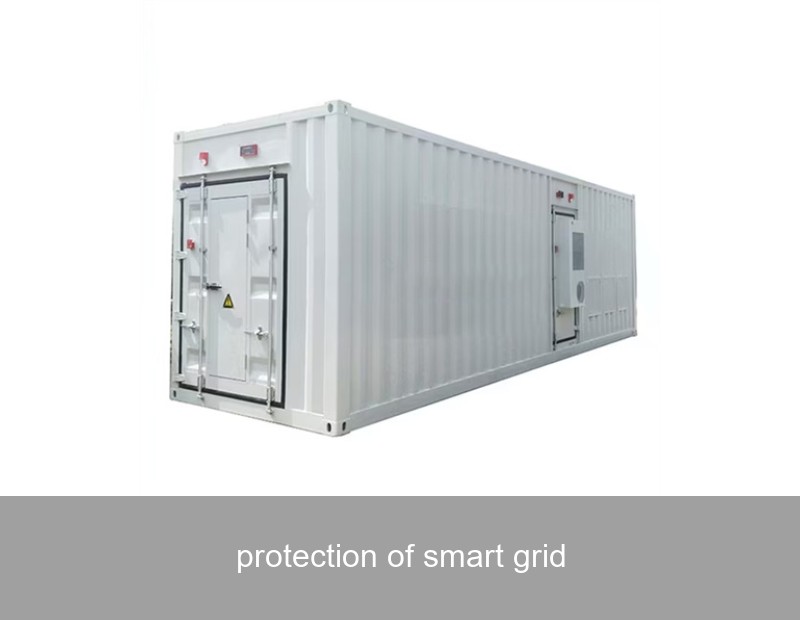
Imagine a future where your lights never flicker during a storm, your factory's production line hums along without interruption, and your community seamlessly shares clean solar power. This is the promise of the smart grid. But this highly intelligent, interconnected network is only as strong as its weakest link. That's why the protection of smart grid infrastructure isn't just an engineering concern—it's the fundamental keystone securing our transition to a sustainable energy future, especially in regions like Europe and North America pushing aggressive renewable targets.
Table of Contents
The New Threat Landscape: More Than Just Storms
Traditional power grids were designed for one-way flow and predictable loads. Their protection schemes focused on physical threats like lightning strikes, equipment failure, or falling trees. The modern smart grid, however, is a dynamic, bidirectional ecosystem. It integrates millions of distributed energy resources (DERs)—rooftop solar, home batteries, electric vehicles—and relies on constant digital communication. This creates a new vulnerability matrix:
- Cyber Threats: Sophisticated attacks can target grid control systems, potentially causing widespread blackouts.
- Intermittency & Fluctuation: A sudden cloud cover over a large solar farm or a lull in wind can cause rapid voltage and frequency swings.
- Reverse Power Flow: Excess solar power from neighborhoods flowing back to substations can overload traditional protection equipment not designed for this scenario.
- Increased Grid Complexity: Every new prosumer (producer+consumer) adds a node that must be monitored and protected.
So, how do we quantify this risk? The data paints a compelling picture of why investment in protection is non-negotiable.
Data: The Stakes Are High
The cost of inaction is staggering. According to a International Energy Agency (IEA) report, global investment in electricity grids needs to double to over USD 600 billion annually by 2030 to meet climate goals and ensure energy security. A significant portion is earmarked for modernization and resilience. In the U.S. alone, the Department of Energy estimates that power outages cost the economy an average of $150 billion annually. In the EU, the push for a Energy Union emphasizes the need for secure, interconnected, and flexible grids as the backbone of its energy strategy.
This isn't just about preventing outages; it's about enabling the future. Without robust protection, grid operators cannot safely integrate the high levels of renewable generation needed to decarbonize our economies. The solution lies in moving from passive, reactive protection to active, predictive defense. Let's look at a real-world example where this shift is happening.
Case Study: From Crisis to Resilience in Texas
Following the devastating winter storm Uri in 2021, which caused cascading grid failures, Texas has become a living laboratory for smart grid protection. A forward-looking municipal utility in Central Texas embarked on a project to future-proof its distribution network against both extreme weather and renewable intermittency.
The Challenge: Integrate 50 MW of new community solar and 10 MW of distributed battery storage without compromising grid stability for its 100,000+ customers. The primary fear was voltage instability and fault current issues during high renewable output periods.
The Solution: The utility deployed an integrated protection and optimization system. This included:
- Advanced Feeder Relays with adaptive protection settings that automatically adjust based on real-time power flow direction (from solar influx).
- A centralized Distributed Energy Resource Management System (DERMS) to orchestrate the discharge of distributed battery systems during periods of stress.
- Grid-forming inverters on key battery storage assets to provide "black start" capability and stabilize grid frequency.
The Result (18 Months Post-Deployment): The utility reported a 40% reduction in momentary outages in the pilot zone and successfully managed a record solar penetration of 65% of local demand without voltage violations. During a subsequent heatwave, the orchestrated battery systems provided 5 MW of peak shaving, preventing a potential overload and deferring a $2 million substation upgrade. This case shows that protection of smart grid is evolving into a holistic strategy of resilience-as-a-service.

Image Source: Unsplash (Representative image of grid control room)
The Advanced Arsenal for Smart Grid Protection
Modern protection leverages digital intelligence, physics, and predictive analytics. Here are the key technologies forming the new defensive line:
| Technology | Function | Protection Benefit |
|---|---|---|
| Phasor Measurement Units (PMUs) | Provide synchronized, high-speed grid measurements (30-120 samples/sec). | Enables wide-area situational awareness, allowing operators to see and respond to grid stress in real-time, preventing cascading failures. |
| AI & Machine Learning | Analyze vast datasets from sensors, weather forecasts, and historical outages. | Predicts equipment failure (transformer overload, line sag) and identifies subtle cyber-attack patterns before they trigger an outage. |
| Grid-Forming Inverters (GFMI) | Advanced power electronics in batteries and solar systems. | They can "create" a stable grid voltage and frequency waveform, essential for grids with high renewable penetration, enhancing stability during disturbances. |
| Microgrids with Islanding Capability | Localized grids that can disconnect from the main grid and operate independently. | Provide the ultimate local protection, keeping critical facilities (hospitals, data centers) powered during widespread main grid outages. |
Highjoule's Role: Building Intelligence into Every Layer
At Highjoule, we don't just see batteries as energy containers; we see them as active protection devices for the modern grid. Our HiveMind Energy Operating System is the brain that transforms our storage systems from passive assets into intelligent grid citizens.
For a commercial client in Germany facing grid connection constraints, our Industrial H-Series battery storage system, governed by HiveMind, does more than shift energy. It provides dynamic voltage support, absorbs reactive power, and can be configured to respond to grid frequency events in milliseconds—functions traditionally handled by dedicated, expensive grid equipment. This turns the customer's storage system into a revenue-generating grid service provider while solidifying local grid protection.
For residential communities in California, our Home+ Ecosystem allows aggregated home batteries to form a virtual power plant (VPP). During wildfire risk days (when utilities may pre-emptively de-energize lines), HiveMind can orchestrate these batteries to island a neighborhood, providing critical protection of smart grid assets at the edge and keeping the lights on safely.

Image Source: Unsplash (Representative image of a battery storage installation)
The Human Element: The Final Layer of Defense
Technology alone isn't the silver bullet. The most advanced protection system requires skilled professionals to design, manage, and interpret it. This highlights a growing need for grid engineers who understand both power systems and data science. Utilities and companies like Highjoule are investing heavily in training and intuitive human-machine interfaces (HMIs) that present complex grid data as actionable insights, empowering operators to make the best decisions during critical events.
 Inquiry
 Online Chat