


Your PV Solar Panel Calculator: The First Step to Energy Independence
So, you're thinking about solar panels. It's a smart move. With energy prices fluctuating and sustainability becoming a priority for homeowners across Europe and the US, the appeal of generating your own clean power is stronger than ever. But the first question that pops up is almost always: "How many solar panels do I actually need?" This is where a reliable PV solar panel calculator becomes your essential starting point. It's more than just a number-crunching tool; it's the blueprint for your energy future, translating your electricity bills into a clear picture of potential savings and system size.
Table of Contents
- The Phenomenon: From Curiosity to Commitment
- Beyond Basic Math: What a Good PV Solar Panel Calculator Really Does
- Case Study: A German Household's Journey from Calculation to Reality
- The Critical Storage Factor: Why Your Calculator is Incomplete Without Batteries
- How Highjoule Integrates Precision Calculation into Sustainable Solutions
- What's Your Next Step After the Calculation?
The Phenomenon: From Curiosity to Commitment
It typically starts with a high electricity bill. You wonder, "Could solar fix this?" A quick online search for a PV solar panel calculator yields millions of results. You input your address, average monthly bill, and roof size. The tool suggests a system size and estimated cost. But here's the catch: many basic calculators provide a generic snapshot. They often overlook crucial local variables like future energy consumption changes, detailed shading analysis, or the profound impact of adding battery storage. The initial number you get is just the tip of the iceberg. The real value lies in understanding the why behind the numbers, which transforms an online estimate into a viable, long-term investment plan.
Beyond Basic Math: What a Good PV Solar Panel Calculator Really Does
A sophisticated PV solar panel calculator acts as a preliminary energy audit. It doesn't just tell you how many panels to buy; it models your energy ecosystem. Let's break down the key data points a robust calculation requires:
- Historical Energy Consumption: Not just your annual kWh, but your usage patterns. Do you consume more in the evenings? This directly impacts battery needs.
- Geospatial Data: Your precise location determines solar irradiance (peak sun hours), which varies significantly between Southern California and Northern Germany.
- Roof Characteristics: Pitch, azimuth (direction), and any shading from trees or chimneys. A south-facing roof in Texas is ideal, but east-west setups in Europe are common and require careful calculation.
- Local Incentives & Grid Policies: Feed-in-tariffs (like in parts of Europe) or net metering rules (common in the US) dramatically affect system economics and optimal size.
- Future-Proofing: Are you planning an electric vehicle, a heat pump, or a home expansion? A good calculator allows for this load growth.
For authoritative data on solar irradiance in your region, resources like the Global Solar Atlas are invaluable for setting realistic expectations.

Image: Precise site assessment goes beyond online calculators. Source: Unsplash
Case Study: A German Household's Journey from Calculation to Reality
Let's look at the Müller family in Stuttgart, Germany. Their initial online PV solar panel calculator estimate, based on a 4,500 kWh annual consumption, suggested a 6 kW system. However, when they consulted with a professional installer using advanced simulation software, the story changed.
The professional analysis considered:
- Partial afternoon shading from a neighboring building.
- Their goal to add a home battery for energy security and maximize self-consumption.
- Plans to switch to an electric heat pump within two years.
The final, optimized design was a 8.2 kW system paired with a 10 kWh battery. The data one year post-installation speaks volumes:
| Metric | Basic Calculator Estimate | Optimized Highjoule System Reality |
|---|---|---|
| System Size | 6.0 kW | 8.2 kW |
| Annual Self-Consumption | 35% (estimated) | 78% (with battery) |
| Grid Independence | ~40% | ~85% (during summer months) |
| Projected Bill Savings | 65% | 92% |
This case, typical of many across Europe, shows that the calculator is the first conversation, not the final answer. The true savings came from integrating storage to capture excess daytime production, a factor most simple tools undervalue. For insights into Germany's energy transition, the Fraunhofer ISE offers leading research.
The Critical Storage Factor: Why Your Calculator is Incomplete Without Batteries
This brings us to the most important evolution in solar planning: storage. A PV solar panel calculator that only sizes panels for offsetting grid consumption is planning for the past. Solar panels produce when the sun shines—often midday when you're not home. Without a battery, that excess energy is sold to the grid at a low rate, only for you to buy it back at night at a higher price.
Integrating a battery from the start changes the entire equation. It allows you to:
- Maximize Self-Consumption: Use your solar power day and night, dramatically increasing the value of every panel.
- Provide Backup Power: Keep essential loads running during grid outages—a growing concern in many regions.
- Future-Proof for Time-of-Use Rates: As utilities move to dynamic pricing, you can store energy when it's cheap and use it when it's expensive.
Therefore, the most pertinent question today is not just "How many panels do I need?" but "What size solar-plus-storage system will achieve my goals for savings, independence, and resilience?"
How Highjoule Integrates Precision Calculation into Sustainable Solutions
At Highjoule, we see the PV solar panel calculator as the inception point for a deeper partnership. Since 2005, we've evolved from a component provider to a holistic energy solution architect. Our process begins with your data but enriches it with nearly two decades of field experience across commercial, industrial, and residential applications in over 30 countries.
Our Hj Energy Planner tool, used by our certified partners, goes beyond basic inputs. It factors in local weather patterns, detailed equipment performance curves (including our own Hj Cube residential battery system and Hj Matrix commercial storage solutions), and complex financial parameters. The result isn't just a system size, but a dynamic financial and performance model for your property.
For example, for a homeowner, we might model the interaction between our high-cycle-life lithium iron phosphate (LFP) batteries and your specific PV inverter, showing the exact payback period. For a business, we can simulate load-shaving strategies to avoid peak demand charges, which often represent up to 50% of a commercial electricity bill. Our technology turns the static result of a simple calculator into a living plan for energy management.

Image: A modern solar-plus-storage installation for a home. Source: Unsplash
Our Core Technology That Makes the Numbers Work
- Highjoule Hj Cube: A scalable, modular home battery system (5-30 kWh) with integrated energy management. Its compact, safe LFP chemistry and smart software ensure the solar energy you calculate is the energy you actually use.
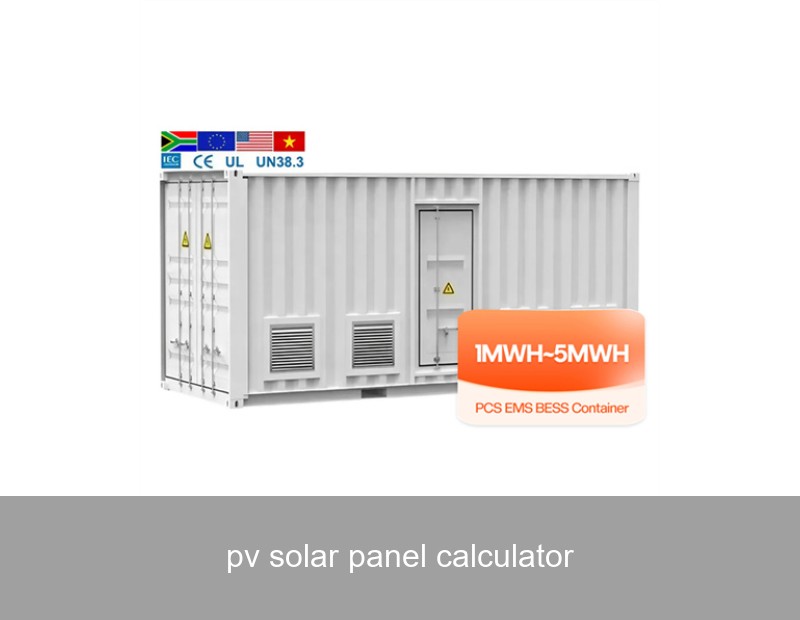
- Highjoule Hj Matrix: For commercial & industrial sites, this containerized or rack-mounted BESS (Battery Energy Storage System) manages massive loads, integrates with microgrids, and provides grid services.
- Hj Energy OS: The brain behind it all. This intelligent platform optimizes every kilowatt-hour, deciding when to store, when to consume, and when to export based on real-time data and weather forecasts, ensuring your calculated savings are realized daily.
What's Your Next Step After the Calculation?
You've used an online PV solar panel calculator and have a preliminary number. The excitement is building. Now what? The journey from a digital estimate to powered-on panels requires a trusted guide. The key is to partner with a professional who uses advanced tools and asks the right questions about your long-term lifestyle and goals.
We invite you to use your initial calculation as a conversation starter. Bring those numbers to a Highjoule-certified installer. Together, you can explore what it truly means to not just generate solar energy, but to own and control it intelligently, 24/7. What specific energy goal—be it total independence, backup security, or maximizing financial return—will you use your solar calculation to achieve?
 Inquiry
 Online Chat