


Understanding the 200 kVA Solar System Price: A Smart Investment Guide
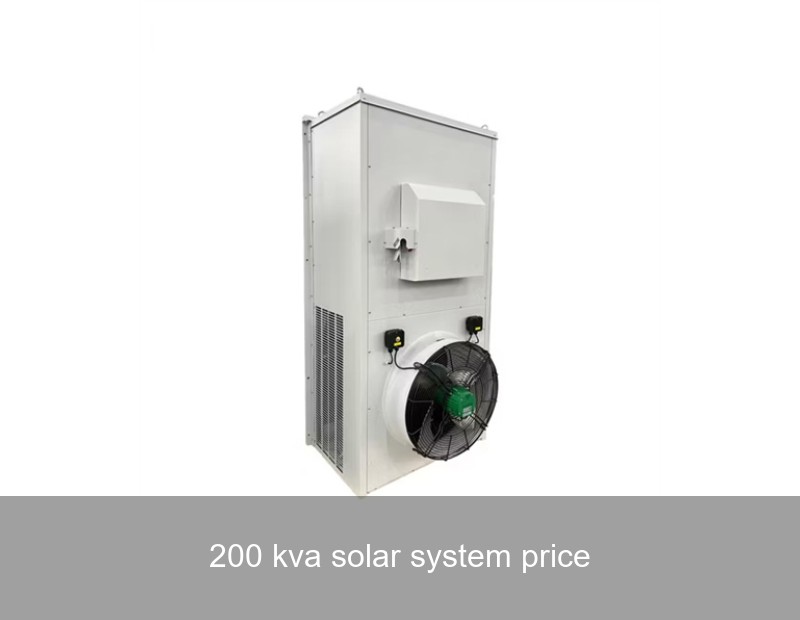
If you're a business owner, facility manager, or exploring large-scale energy independence, you've likely searched for a "200 kVA solar system price." It's a common benchmark for commercial and industrial energy needs. But here's the first insight: focusing solely on the upfront sticker price is like buying a car based only on its showroom cost. The true value lies in the long-term performance, reliability, and intelligent energy management the system provides. In this guide, we'll demystify the costs, components, and critical considerations, helping you see this not as an expense, but as a strategic investment in resilience and predictable energy costs.
Table of Contents
The 200 kVA Solar System Price Breakdown
A 200 kVA (kilo-volt-ampere) system typically translates to a DC solar array capacity of roughly 200-220 kWp (kilowatt-peak), depending on inverter sizing and configuration. In the U.S. and European markets, the all-inclusive price for a commercial-grade system of this scale can range significantly.
| Component Category | Description | Approx. % of Total Cost |
|---|---|---|
| Solar Panels (Modules) | High-efficiency monocrystalline panels are standard for commercial use. | 25-35% |
| Inverters & Power Conversion | Central or string inverters to convert DC to AC power. A key reliability component. | 15-20% |
| Mounting & Racking | Engineered structures for rooftop or ground-mounted installation. | 10-15% |
| Energy Storage System (BESS) | Battery Bank, Battery Management System (BMS), and hybrid inverters. This is a crucial, value-adding add-on. | 20-35% (if included) |
| Balance of System & Installation | Wiring, switchgear, monitoring systems, and professional labor. | 20-25% |
As you can see, the hardware is just part of the story. Professional design, compliant electrical work, and grid interconnection services are vital for a safe, operational system. Crucially, while you might get a preliminary "200 kVA solar system price" quote, the final figure must be tailored to your specific site's energy profile, structural needs, and sustainability goals.
Key Factors Influencing Your System's Cost & Performance
Why such a wide range in pricing? Let's look at the variables that truly matter:
- Site Complexity: A simple, large ground-mount is often cheaper per watt than a complex rooftop with multiple obstructions or requiring structural reinforcement.
- Component Tier: Not all panels and inverters are created equal. Premium brands with higher efficiency, longer warranties, and proven durability command a higher price but offer better lifetime value.
- Grid Services & Incentives: In regions like California or parts of the EU with time-of-use rates or capacity markets, the ability to store and dispatch energy can generate significant revenue, impacting the optimal system design and justifying a higher initial investment.
- Future-Proofing: Are you designing for today's load or anticipating EV fleet charging or plant expansion? A modular, scalable system from the start can save massive costs later.

Image Source: Unsplash (Professional installation is a key cost and quality factor).
Why Energy Storage is No Longer Optional
Discussing a 200 kVA solar system price today is incomplete without considering battery storage. Think of it this way: solar generates energy when the sun shines, but your business operates around the clock. An integrated Battery Energy Storage System (BESS) allows you to:
- Maximize Self-Consumption: Store excess daytime solar energy to use at night, dramatically reducing grid purchases.
- Ensure Resilience: Provide backup power during grid outages, keeping critical operations online.
- Participate in Demand Response: In many markets, you can earn money by discharging stored energy to the grid during peak demand periods when electricity prices are highest.
This is where partnering with a seasoned system integrator like Highjoule becomes critical. Our IntelliBESS platform isn't just a battery box; it's an intelligent energy management system. It autonomously decides when to charge, store, or discharge based on weather forecasts, energy price signals, and your consumption patterns, optimizing your financial return far beyond simple solar.
A Real-World Case Study: From Price to Performance
Let's move from theory to practice. A mid-sized dairy processing plant in Bavaria, Germany, was facing volatile energy costs and sought to lock in long-term price stability. Their primary ask was the "200 kVA solar system price."
Initial Challenge: A basic 200 kWp solar-only quote came in at approximately €280,000. While the payback period was acceptable, it didn't address their evening energy spikes or provide backup for critical cooling processes.
Highjoule Solution: We proposed an integrated 210 kWp solar array coupled with a 240 kWh Highjoule IntelliBESS. The total project price increased, but the value proposition transformed:
- System Design: 210 kWp Solar + 240 kWh Lithium-Iron-Phosphate (LFP) Battery Storage + Advanced Energy Management System.
- Financial Outcome: By leveraging Germany's EEG provisions for self-consumption and avoiding peak grid charges, the projected payback period remained under 7 years. More importantly, the plant now covers over 85% of its annual electricity demand and has 36 hours of backup power for its cold storage facilities.
- Business Impact: Energy cost predictability, enhanced sustainability branding, and operational resilience during grid instability.
This case illustrates how shifting the conversation from component price to total system value unlocks far greater benefits. You can explore more on the importance of storage for grid stability from the U.S. Department of Energy.
The Highjoule Approach: Beyond the Price Tag
Since 2005, Highjoule has evolved from a component supplier to a global provider of intelligent, turnkey energy solutions. When you inquire with us about a system, we don't just send a generic quote. Our process is designed to deliver a solution optimized for your unique financial and operational goals:
- Deep Energy Analysis: We analyze your past utility bills, load profiles, and site conditions to model the optimal system size and storage capacity.
- Technology-Agnostic Design: We select from top-tier, certified components (panels, inverters, batteries) that best match your project's needs, not just our inventory.
- Integrated Smart Platform: Our proprietary energy management software is the "brain" of the installation, ensuring all components work in harmony to maximize ROI.
- Full Lifecycle Support: From permitting and grid connection to 24/7 monitoring, maintenance, and performance guarantees, we are your long-term partner.

Image Source: Unsplash (Representative image of a modern commercial BESS).
For a commercial or industrial entity, this holistic approach mitigates risk and ensures your investment delivers for decades. The 200 kVA solar system price becomes a line item in a comprehensive business case for energy independence.
Making the Right Decision for Your Energy Future
So, how should you proceed? Start by gathering detailed information about your energy consumption (ask your utility for interval data). Then, seek out partners who ask probing questions about your business operations, risk tolerance, and sustainability targets, not just those who provide the fastest bottom-line number.
Remember, the cheapest system per kW today could be the most expensive over 25 years if it underperforms, fails prematurely, or cannot adapt to changing energy markets. The right partner will help you navigate incentives, like the Commercial Clean Energy Credit in the U.S. or various EU state-aid programs, to improve your net investment.
Your Next Step
Are you ready to transform your energy expenditure from a variable cost into a controlled, strategic asset? What would the ability to predict and cap your operational energy costs for the next 25 years do for your business's competitiveness and planning?
 Inquiry
 Online Chat