


Finding the Right PWR Station Supplier: A Guide to Powering Your Future
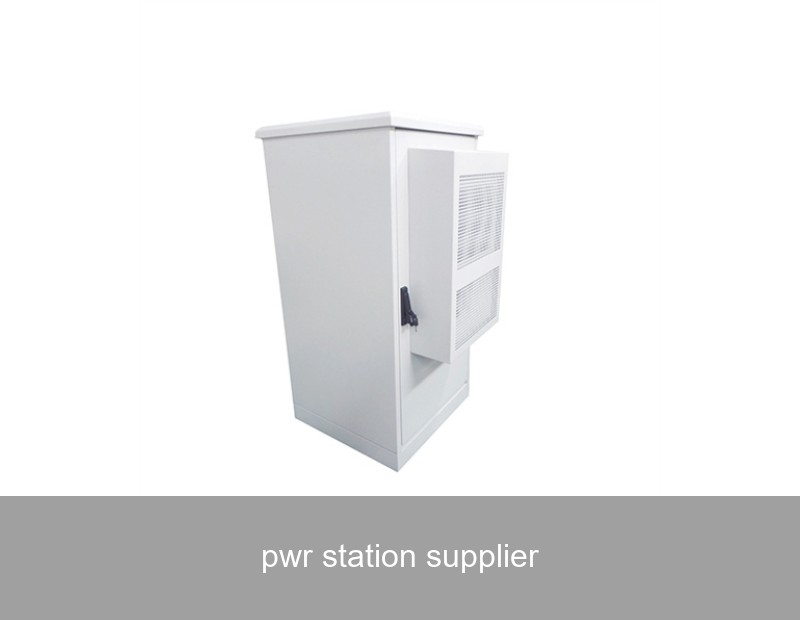
As the global push for energy independence and sustainability accelerates, businesses and communities are increasingly turning to advanced power (PWR) stations. But navigating the market to find a reliable PWR station supplier can be a complex task. It's not just about buying a battery; it's about investing in a resilient, intelligent, and future-proof energy ecosystem. This article will guide you through the critical considerations, from understanding core technology to selecting a partner that aligns with your long-term energy goals.
Table of Contents
- The Rise of the Intelligent Power Station
- Beyond the Battery: Key System Components
- Choosing Your PWR Station Supplier: The 5-Point Checklist
- Case Study: A European Industrial Park's Journey to Resilience
- Future-Proofing with Your Supplier
- What's Your Energy Resilience Priority?

Credit: American Public Power Association / Unsplash. A modern battery storage installation, highlighting the scale and integration required for commercial applications.
The Rise of the Intelligent Power Station
Gone are the days when backup power meant a loud, diesel-guzzling generator. Today's advanced PWR stations are integrated systems combining high-density battery storage, sophisticated power conversion, and smart energy management software. The phenomenon is clear: renewable energy sources like solar and wind are intermittent. To truly harness their power and ensure grid stability, we need intelligent buffers. According to the International Energy Agency (IEA), global grid-scale battery storage capacity is set to multiply 15-fold by 2030, underscoring the critical role of these systems.
This shift means your choice of PWR station supplier is more consequential than ever. You're not just procuring hardware; you're choosing a partner for software updates, system health monitoring, and ensuring your investment adapts to evolving energy markets and regulations.
Beyond the Battery: Key System Components
Think of a PWR station as a team, not a single player. A top-tier supplier like Highjoule focuses on the seamless integration of all these components:
- Battery Modules: The core energy reservoir. Chemistry (like LiFePO4 for safety and longevity), cycle life, and degradation rate are key metrics.
- Power Conversion System (PCS): The "translator" between DC battery power and AC grid/appliance power. Its efficiency dictates how much energy is lost in conversion.
- Battery Management System (BMS): The system's brain, ensuring each cell operates safely, within optimal voltage and temperature ranges.
- Energy Management System (EMS): The strategic commander. This software platform intelligently decides when to store, use, or sell energy based on tariffs, weather forecasts, and consumption patterns.
At Highjoule, with nearly two decades of experience since 2005, we engineer these components to work in perfect harmony. Our IntelliGrid EMS platform is what transforms our hardware from a simple battery into a revenue-generating or cost-saving asset for commercial, industrial, and microgrid applications.
Commercial vs. Residential: A Supplier's Scope
| Consideration | Commercial/Industrial PWR Station | Residential PWR Station |
|---|---|---|
| Primary Goal | Demand charge reduction, backup for critical operations, revenue through grid services. | Self-consumption of solar, backup power for essential home loads, energy bill savings. |
| Scale & Complexity | Often containerized or large-scale rack systems (500kW - 100MW+). Requires complex grid interconnection agreements. | Wall-mounted or floor-standing units (5kW - 20kW typical). Streamlined permitting and interconnection. |
| Supplier Requirement | Deep grid compliance expertise, project management, long-term service-level agreements (SLAs). | User-friendly interface, aesthetic design, straightforward installation partnerships. |
Choosing Your PWR Station Supplier: The 5-Point Checklist
How do you separate the true partners from the mere vendors? Use this framework in your evaluation.
1. Technology Depth & Safety Certifications
Ask about cell chemistry, BMS safety protocols, and relevant certifications (UL, IEC, CE for respective markets). A supplier should be transparent about safety testing, like propagation resistance. Highjoule systems, for instance, are built with multi-layer safety architecture and carry major international certifications, a non-negotiable for insurance and financing.
2. Software Intelligence & Upgradability
The hardware stores energy, but the software creates value. Can the EMS integrate with existing solar inverters? Does it offer automated control strategies like peak shaving? Ensure the software is regularly updated. Our IntelliGrid platform receives remote updates, constantly adding new features like dynamic tariff response based on real-time market data from sources like ENTSO-E in Europe.
3. Proven Track Record & Case Studies
Request detailed case studies from projects similar in scale and geography to yours. Real-world data on performance, ROI, and problem-solving is invaluable.
4. Total Lifetime Value & Support
Evaluate the total cost of ownership, not just upfront price. What is the warranted capacity degradation after 10 years? What remote monitoring and on-site service support is included? A reliable supplier offers comprehensive warranties and clear SLAs.
5. Vision for System Integration & Grid Services
Can the system participate in grid-balancing programs (like Frequency Response in the UK or Wholesale Markets in the US)? A forward-thinking PWR station supplier designs systems that are not just islands but active, grid-supportive assets.

Credit: ThisisEngineering RAEng / Unsplash. The importance of intelligent software and monitoring in modern energy management.
Case Study: A European Industrial Park's Journey to Resilience
Let's look at a concrete example. A large manufacturing park in Northern Germany faced two challenges: skyrocketing demand charges (capacity-based grid fees) and an unreliable local grid causing costly production stoppages.
Phenomenon & Data: Their peak demand was 4.8MW, occurring only a few times per month, but setting a high monthly charge. Grid outages, though short, halted automated lines, costing over €15,000 per hour in lost production.
Solution & Supplier Role: Highjoule was selected as the PWR station supplier for our integrated approach. We installed a 2.5MW/5MWh containerized battery storage system, coupled with our IntelliGrid EMS. The system was programmed for two primary functions: 1) Peak Shaving: The EMS discharges the battery to cap power drawn from the grid at 4.0MW, shaving 0.8MW off their peak. 2) Seamless Backup: Upon grid failure, the system provides uninterrupted power to critical loads for up to two hours, allowing for a graceful production shutdown or until generators stabilize.
Results: The project delivered a 12% reduction in annual electricity costs through demand charge management. More critically, it eliminated production losses from minor grid disturbances. The system also participates in the German primary control reserve market, generating ancillary service revenue that improves the project's payback period. This holistic solution—encompassing hardware, software, and market access—showcases what a full-service supplier provides.
Future-Proofing with Your Supplier
The energy landscape is dynamic. A system installed today must be adaptable. Discuss with potential suppliers their roadmap for:
- V2G (Vehicle-to-Grid) Integration: As electric fleets expand, can your PWR station interact with bidirectional EV chargers?
- AI-Optimized Dispatch: Will machine learning algorithms further enhance your economic optimization?
- Second-Life Batteries: What are the supplier's policies and technologies for battery repurposing or recycling?
Highjoule invests heavily in R&D with these very questions in mind. Our modular design allows for capacity expansion, and our software is built on an open-architecture principle, ready to integrate with future technologies and standards emerging from research bodies like the National Renewable Energy Laboratory (NREL).
What's Your Energy Resilience Priority?
Is it achieving energy independence, locking in long-term electricity costs, or ensuring zero downtime for your operations? The first step is a conversation about your specific goals and constraints. As you evaluate your options for a PWR station supplier, we invite you to consider not just the product, but the partnership. What single energy challenge, if solved, would have the greatest positive impact on your business or community this year?
 Inquiry
 Online Chat