


Energy Storage Systems in Germany: Powering the Energiewende and Beyond
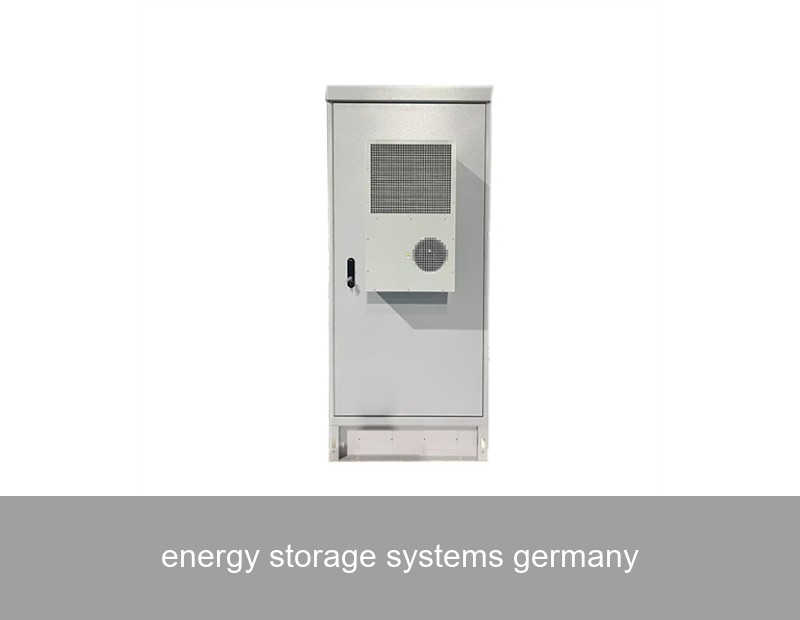
Have you ever wondered how a nation powers itself when the sun doesn't shine and the wind doesn't blow? Germany, a global pioneer in renewable energy, faces this challenge daily. The ambitious Energiewende (energy transition) has led to a massive increase in solar and wind power. But this success story has a crucial plot twist: the need for intelligent energy storage systems in Germany to balance supply and demand, stabilize the grid, and ensure a reliable, clean power supply 24/7. This is where advanced battery storage technology becomes not just helpful, but essential. Let's explore how storage is transforming Germany's energy landscape and how companies like Highjoule are providing the smart solutions needed for this transition.
Table of Contents
- The Challenge: Intermittency in a Renewable-Powered Germany
- The Solution: More Than Just a Battery
- By the Numbers: Germany's Storage Boom
- Case Study: Stabilizing a Bavarian Industrial Park
- Highjoule's Tailored Approach for the German Market
- Future Trends: What's Next for Storage in Germany?
The Challenge: Intermittency in a Renewable-Powered Germany
Germany's energy landscape is unique. On a sunny, windy day, renewable sources can generate over 100% of the country's immediate electricity needs. However, this creates a phenomenon known as the "duck curve"—a deep trough in net demand during midday when solar production peaks, followed by a steep ramp-up in the evening as the sun sets. Without energy storage systems in Germany, this volatility can lead to grid instability, negative electricity prices, and curtailment (wasting) of perfectly good renewable energy.
Think of it like a reservoir during a heavy storm. Without a dam to capture the excess water, it simply overflows and is lost. Battery storage systems act as that dam for electricity, capturing surplus renewable generation and releasing it when it's most needed.
The Solution: More Than Just a Battery
A modern energy storage system is a sophisticated piece of energy infrastructure. It's not just a cluster of battery cells; it's an integrated solution comprising:
- Battery Modules: Typically using lithium-ion technology for high energy density and efficiency.
- Battery Management System (BMS): The "brain" that monitors cell health, temperature, and state of charge for safety and longevity.
- Power Conversion System (PCS): The "interpreter" that converts DC battery power to AC grid power and vice versa.
- Energy Management System (EMS): The "strategist" that decides when to charge or discharge based on electricity prices, grid signals, or consumption patterns.
This combination allows energy storage systems in Germany to perform multiple revenue-generating or cost-saving functions, from peak shaving and self-consumption optimization for businesses to providing critical grid services like frequency regulation.
By the Numbers: Germany's Storage Boom
The data underscores the critical and growing role of storage. According to the German Federal Ministry for Economic Affairs and Climate Action, renewables accounted for over 50% of gross electricity consumption in 2023. To support this, the deployment of battery storage is accelerating rapidly.
| Metric | Data | Significance |
|---|---|---|
| Installed PV Capacity (2023) | Over 82 GW | Creates massive midday generation peaks requiring management. |
| Residential Battery Storage Installations | ~400,000 systems | Shows strong household adoption for self-consumption. |
| Large-Scale Grid Storage Target (2030) | 15 GW | Government recognition of storage's systemic importance. |
This growth is driven by decreasing battery costs, favorable regulatory frameworks, and the sheer economic logic of using stored, self-produced solar power instead of buying from the grid at high prices.
Case Study: Stabilizing a Bavarian Industrial Park
Let's look at a real-world application. A medium-sized manufacturing park in Bavaria, with a 2 MW rooftop solar array, faced two problems: high grid demand charges (fees based on their peak power draw) and occasional grid congestion warnings from their distribution system operator (DSO). Their own solar power often peaked when their machinery load was low, exporting excess to the grid at low prices.
The solution was a custom 1 MWh containerized battery storage system. Here’s how it worked:
- Peak Shaving: The system's EMS predicted daily load patterns and discharged the battery during the park's 30-minute peak consumption window, reducing demand charges by over 40%.
- Solar Self-Consumption Optimization: It stored excess midday solar generation for use during the late afternoon and evening, increasing self-consumption from 35% to over 70%.
- Grid Services: During periods of grid congestion, the system responded to automatic signals from the DSO to absorb excess local renewable generation, earning additional revenue.

Image: A combination of rooftop solar and ground-based storage is common for German industrial sites. (Photo by American Public Power Association on Unsplash)
This project, completed in 2022, delivered a return on investment in under 7 years and continues to provide both financial and grid-stability benefits. It's a perfect microcosm of how energy storage systems in Germany solve multiple problems at once.
Highjoule's Tailored Approach for the German Market
At Highjoule, with nearly two decades of experience since 2005, we understand that the German market requires more than an off-the-shelf product. It demands solutions engineered for specific regulatory, economic, and climatic conditions. Our approach is built on three pillars:
- Intelligent, Software-Defined Systems: Our Highjoule H-Series commercial and industrial storage systems come with our proprietary Adaptive Grid OS™. This EMS can be configured to prioritize different value streams—whether it's maximizing self-consumption under Germany's EEG regulations, participating in primary control reserve markets, or providing peak shaving for complex tariff structures. It's like having a financial and technical energy trader automated within your system.
- Safety and Longevity by Design: The German market has high safety standards. Our systems feature multi-layer protection, from cell-level fusing and active thermal management in the BMS to certified fire suppression compartments. We use high-quality, cycle-stable battery cells to ensure the system delivers on its 10+ year performance warranty, a crucial factor for project bankability.
- Full-Service Partnership: We provide more than hardware. From initial feasibility analysis and financial modeling to grid connection support, installation, and remote monitoring via our Highjoule Pulse platform, we partner with our clients and local installers for the entire lifecycle of the project. This ensures our energy storage systems in Germany perform optimally year after year.
For larger-scale applications like community storage or microgrids supporting municipal utilities (Stadtwerke), our containerized MegaJoule solutions offer scalable, plug-and-play storage in the multi-MWh range, ideal for grid reinforcement and large-scale renewable integration projects.
Future Trends: What's Next for Storage in Germany?
The evolution of energy storage systems in Germany is far from over. We are moving towards:
- Second-Life Batteries: Repurposing EV batteries for stationary storage, a promising avenue for sustainability and cost reduction, as noted by researchers at Fraunhofer ISE.
- Sector Coupling: Integrating storage with electric vehicle charging hubs and green hydrogen production, creating interconnected, flexible energy ecosystems.
- AI-Optimized Virtual Power Plants (VPPs): Aggregating thousands of distributed storage units to act as a single, large power plant, providing grid services and market trading at a national scale.

Image: Advanced monitoring and control are key to maximizing the value of a storage system. (Photo by ThisisEngineering RAEng on Unsplash)
The journey to a fully renewable-powered Germany is a complex engineering and economic puzzle. Energy storage systems are the central piece that makes this vision not only possible but also practical and profitable. As the demands on the grid grow, the question for businesses and communities becomes: How will you integrate intelligence and flexibility into your energy strategy to thrive in this new landscape?
 Inquiry
 Online Chat