


What Do You Need to Make a Homemade Solar Panel? A Guide to DIY Solar
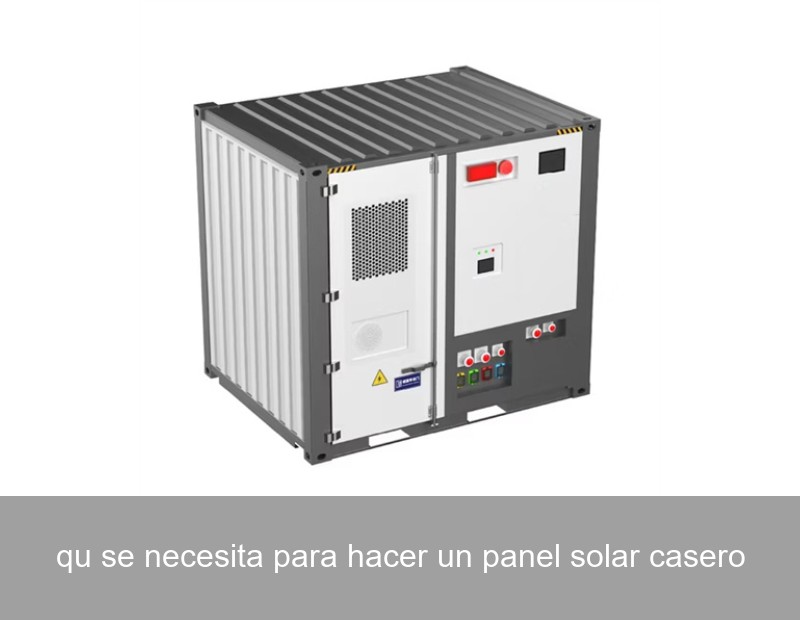
Have you ever looked at your electricity bill, glanced up at the sun, and wondered, "What do I need to make a homemade solar panel?" It's a fascinating project that blends sustainability, hands-on learning, and the promise of clean energy. While building a functional solar panel from scratch is a complex undertaking, understanding the components and process demystifies solar technology and highlights the engineering behind the professional systems powering our homes and businesses. This guide will walk you through the essentials, from basic parts to key considerations, and explore why for most energy needs, partnering with an expert like Highjoule—a global leader in intelligent energy storage since 2005—is the most efficient path to power.
Table of Contents
- The Allure and Reality of DIY Solar
- Core Components: What You Actually Need
- The Assembly Process: A Step-by-Step Overview
- Critical Safety and Performance Challenges
- From DIY to Grid: A Real-World Case Study
- The Professional Alternative: Integrated Systems
- Your Energy Journey: What's the Next Step?
The Allure and Reality of DIY Solar
The dream of crafting your own power source is powerful. For hobbyists and educators, assembling a small solar module offers invaluable insight into photovoltaic (PV) principles. You'll learn how sunlight is converted into direct current (DC) electricity, how cells are interconnected, and the importance of proper encapsulation. However, it's crucial to set realistic expectations. A homemade panel typically has lower efficiency, a shorter lifespan, and lacks the certifications required for grid connection or home insurance in most European and US markets. Think of it as a brilliant educational model rather than a cost-effective home power solution.

Image source: Unsplash. A DIY solar project requires precise handling of fragile cells and tools.
Core Components: What You Actually Need
So, what's on the shopping list for a basic homemade panel? Here are the fundamental parts:
- Solar Cells: Typically monocrystalline or polycrystalline silicon cells, often purchased as "B-grade" or off-spec items. You'll need to connect many in series to achieve a useful voltage.
- Tabbing and Bus Wire: Flat, tin-coated copper wires used to interconnect the solar cells, allowing current to flow between them.
- Substrate and Frame: A rigid backboard (like plywood or aluminum) and a sturdy frame to provide structural support.
- Encapsulation Materials: This is critical for durability. You'll need EVA (ethylene-vinyl acetate) sheets and a transparent front cover, usually tempered glass ("low-iron" glass is best for clarity).
- Junction Box and Diodes: A weatherproof box attached to the back to house the output terminals. Bypass diodes are essential to prevent power loss if part of the panel is shaded.
- Soldering Iron, Flux, and Sealant: Specialized tools for the delicate work of connecting cells and sealing the unit against moisture.
This list underscores a key point: a solar panel is more than just cells. It's a system engineered for decades of exposure to the elements. This systems-thinking is exactly what companies like Highjoule apply on a larger scale, ensuring every component from the PV array to the battery storage works in perfect harmony.
The Assembly Process: A Step-by-Step Overview
The assembly is a meticulous process. First, you solder tabbing wire onto each fragile solar cell to create strings. These strings are then arranged on the substrate and interconnected. Next, you build a protective "sandwich": glass on top, EVA sheets, the cell matrix, more EVA, and a backsheet. This laminate must then be sealed, often using a vacuum bag process or a press, to eliminate air bubbles. Finally, you attach the junction box and frame. Any error in soldering or sealing can lead to premature failure—a risk professional manufacturers mitigate with automated, precision robotics and rigorous quality testing.
Critical Safety and Performance Challenges
Beyond complexity, DIY solar presents significant challenges:
| Challenge | DIY Approach Risk | Professional Solution |
|---|---|---|
| Electrical Safety | High-voltage DC can cause arcs, fire, or shock if improperly handled or insulated. | UL/IEC certified components, integrated safety disconnects, and professional installation. |
| Long-Term Durability | Moisture ingress, delamination, and cell micro-cracks drastically reduce lifespan. | Industrial encapsulation, 25+ year performance warranties, and weatherproof IP ratings. |
| Grid Interconnection | Utilities will not connect an uncertified (e.g., not UL-listed) DIY panel to the grid. | Grid-compliant inverters and full system certification for seamless, permitted interconnection. |
| System Integration | A standalone panel has limited use. Effective energy use requires batteries, inverters, and controls. | Integrated systems like Highjoule's HI-Stack Commercial Battery or HI-Power Home Storage that manage solar charging, grid interaction, and backup power intelligently. |
The gap between a functional prototype and a reliable, safe, grid-integrated system is vast. This is where established expertise becomes invaluable.
From DIY to Grid: A Real-World Case Study
Consider the journey of a small organic farm in Bavaria, Germany. The owner, Markus, started with a DIY solar project to power a toolshed. While educational, its inconsistent output couldn't support his cold storage and irrigation needs. He needed reliable, scalable power. In 2022, he partnered with a local installer to deploy a 50 kW rooftop solar array paired with a Highjoule HI-Stack 50 kWh battery energy storage system (BESS). The results were transformative:
- Energy Independence: The system now manages 85% of the farm's total energy consumption, shifting solar power from daytime to evening use.
- Financial Return: By leveraging Germany's feed-in tariff and avoiding peak grid charges, the system achieved a payback period of under 7 years.
- Resilience: During a regional grid outage, the BESS provided 18 hours of critical backup for refrigeration units, preventing spoilage.
This case, documented in a renewable energy case study library, highlights the shift from a component (a panel) to a solution (managed energy flow). Highjoule's smart energy management software was key, optimizing every kilowatt-hour based on consumption patterns and weather forecasts.

Image source: Unsplash. Commercial solar and storage installations provide reliable, scalable power for businesses.
The Professional Alternative: Integrated Systems
For homeowners and businesses seeking real energy savings, resilience, and sustainability, certified, integrated systems are the answer. Highjoule's approach focuses on the complete ecosystem: high-efficiency solar arrays, advanced battery storage, and intelligent software that ties it all together. For instance, their HI-Power Residential System is designed for seamless integration with new or existing solar panels, offering features like:
- Scalable storage capacity to match family energy needs.
- Storm Guard™ mode that automatically prepares for weather-related outages by charging the battery.
- Grid services compatibility, allowing future participation in virtual power plants (where regulations permit).
This holistic thinking—where the panel is just one part of a smarter energy loop—is what makes modern solar power so effective. It also addresses a key limitation of DIY: system balance and inverter compatibility, which are critical for efficiency.
Your Energy Journey: What's the Next Step?
Exploring "what you need to make a homemade solar panel" is a fantastic way to engage with renewable technology. It builds a deep appreciation for the innovation packed into every commercial product. But for powering your life or business, the most important "thing you need" is a reliable partner with proven technology and deep expertise. Whether your goal is to reduce your carbon footprint, achieve energy security, or simply lower your monthly bills, the journey begins with a clear assessment of your needs. So, we leave you with this question: What energy challenge—be it a fluctuating bill, a desire for backup power, or a sustainability goal—is motivating you to look at the sun for answers today?
 Inquiry
 Online Chat