


Quality Energy & Automation Solutions: The Unseen Engine of a Sustainable Future
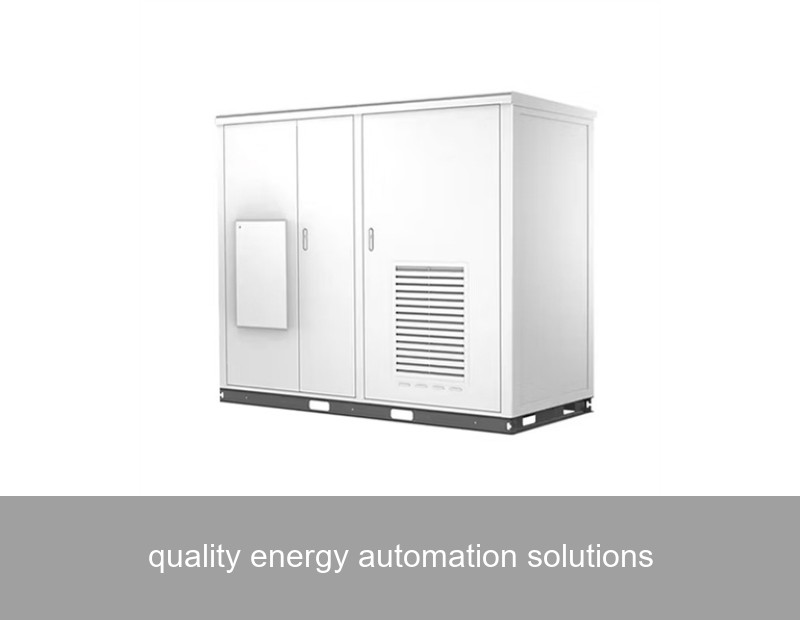
You flip a switch, and the light comes on. A factory hums to life at dawn. A data center cools its servers without a hiccup. This seamless flow of power feels like a given, a modern miracle we rarely question. But behind the scenes, a quiet revolution is underway. The increasing volatility of energy prices, the push for decarbonization, and the rise of intermittent renewables are exposing the limitations of our old, passive grids. The answer? Intelligent, integrated quality energy & automation solutions. These aren't just backup systems; they are the brains and brawn of a new energy paradigm, ensuring reliability, efficiency, and sustainability. For nearly two decades, Highjoule has been at the forefront of designing these sophisticated systems, turning energy challenges into strategic advantages for businesses and communities worldwide.
Table of Contents
- The Phenomenon: Energy Isn't Just a Cost, It's a Core Operational Variable
- The Data: Quantifying the Cost of Inefficiency and the Value of Control
- The Framework: What Constitutes a "Quality" Solution?
- Case Study: A European Manufacturing Plant's Transformation
- The Highjoule Approach: Integrated Intelligence from Solar to Socket
- The Future is Automated: Beyond Basic Storage
The Phenomenon: Energy Isn't Just a Cost, It's a Core Operational Variable
Think about the last major storm that hit your region, or news of a grid congestion warning during a heatwave. For a homeowner, it's an inconvenience. For a business, it's a direct threat to productivity, revenue, and safety. This phenomenon is multifaceted: we have more clean energy than ever, yet grid stability is often more fragile. Solar and wind are fantastic, but they don't always produce when demand is highest. This mismatch creates a dual challenge: how to maximize the use of self-generated renewable energy while also protecting against outages and exorbitant peak demand charges from the utility. This is where simple energy storage crosses over into the realm of automated, intelligent energy management.

Modern facilities require integrated solutions that combine generation, storage, and smart control. (Image source: Unsplash)
The Data: Quantifying the Cost of Inefficiency and the Value of Control
Let's move from the abstract to the concrete. According to the U.S. Energy Information Administration (EIA), commercial electricity prices in the U.S. have seen significant volatility, with demand charges often constituting 30-50% of a large facility's total bill. In Europe, the Ember climate think tank reports that while wind and solar now generate over 25% of the EU's electricity, this variability necessitates flexible backup. A study by McKinsey & Company highlighted that industrial facilities could reduce their energy costs by 10-20% through advanced demand-side management and storage solutions. The data paints a clear picture: passive consumption is a financial liability. The ability to automate when you draw power, when you store it, and when you use it—this is the new frontier for cost control and sustainability reporting.
The Framework: What Constitutes a "Quality" Solution?
Not all systems are created equal. A quality energy and automation solution is defined by its integration, intelligence, and resilience. It's a cohesive ecosystem, not a collection of parts.
- Hardware Excellence: At the foundation are high-efficiency, cycle-stable battery systems (like Lithium Iron Phosphate chemistry), compatible solar inverters, and robust power conversion systems. This is the "body" of the solution.
- Integrated Software Brain: This is the differentiator. A unified software platform that performs real-time monitoring, predictive analytics, and automated dispatch. It considers weather forecasts, utility rate schedules, and on-site generation to make cost-optimal decisions every second.
- Seamless Grid Interaction: The system must be a good grid citizen. It should provide services like frequency regulation or peak shaving automatically, often creating a new revenue stream or avoiding penalties.
- Scalability & Modularity: Quality solutions grow with your needs. You should be able to start with a core system and expand storage capacity or automation features without a complete overhaul.
Case Study: A Bavarian Automotive Supplier's Journey to Resilience
Consider "AutoTeile GmbH" (a representative case based on real deployments). This mid-sized manufacturer faced steep demand charges and had sustainability targets to meet. They had rooftop solar, but much of its midday output was exported to the grid at low rates, only for them to buy expensive power during evening production peaks.
The Solution & Results: Highjoule deployed a turnkey system featuring a 500 kWh Highjoule BESS Cabinet integrated with their existing solar PV. The heart of the installation was the Highjoule Apex Energy Management System (EMS). The Apex EMS automated their entire energy flow. It scheduled non-critical loads, stored excess solar in the batteries, and strategically discharged during peak periods. The results after one year were compelling:
| Metric | Result |
|---|---|
| Peak Demand Charge Reduction | 42% |
| Solar Self-Consumption Rate | Increased from 35% to over 80% |
| Grid Energy Consumption | Reduced by 58% during peak periods |
| ROI Period | Estimated at 4.2 years |
Beyond the numbers, the system provided uninterrupted power during two brief grid disturbances, preventing an estimated €120,000 in production line stoppage costs. This is the power of automation in action.
The Highjoule Approach: Integrated Intelligence from Solar to Socket
Since 2005, Highjoule's philosophy has been that hardware and software must be co-engineered. Our IntelliStack battery storage systems are built from the ground up with our Apex EMS in mind. This native integration eliminates compatibility headaches and unlocks deeper functionality.
For commercial and industrial clients, our solutions go beyond standard peak shaving. We enable sophisticated strategies like arbitrage (buying cheap grid power to store and use later), frequency response readiness, and black start capability for microgrids. For residential and smaller commercial applications, our Home & Business Energy Hub provides the same level of intelligent automation in a scalable, user-friendly package, often managed via a simple smartphone app. Whether it's a warehouse in Texas, a dairy farm in Denmark, or a hospital in California, we provide the quality energy & automation solutions that transform energy from a volatile expense into a predictable, optimized asset.

Engineered systems like Highjoule's IntelliStack are designed for safety, serviceability, and seamless software integration. (Image source: Unsplash)
The Future is Automated: Beyond Basic Storage
The trajectory is clear. As electric vehicles become grid assets (V2G), as carbon accounting becomes mandatory, and as AI optimization grows more sophisticated, the lines between energy, operations, and sustainability will blur completely. Your energy system will not just save you money; it will participate in markets, report its carbon savings in real-time, and autonomously ensure mission-critical operations.
The question for any business or community leader is no longer "Should we consider storage?" but rather "How do we implement an intelligent, automated energy architecture that future-proofs our operations and aligns with our financial and environmental goals?" This is the core conversation Highjoule's experts are having with clients every day. What is the first energy variable in your operation that, if automated, would create the most immediate value and resilience?
 Inquiry
 Online Chat