


Quality Energy: How Much is Truly Reliable, Efficient Power Worth?
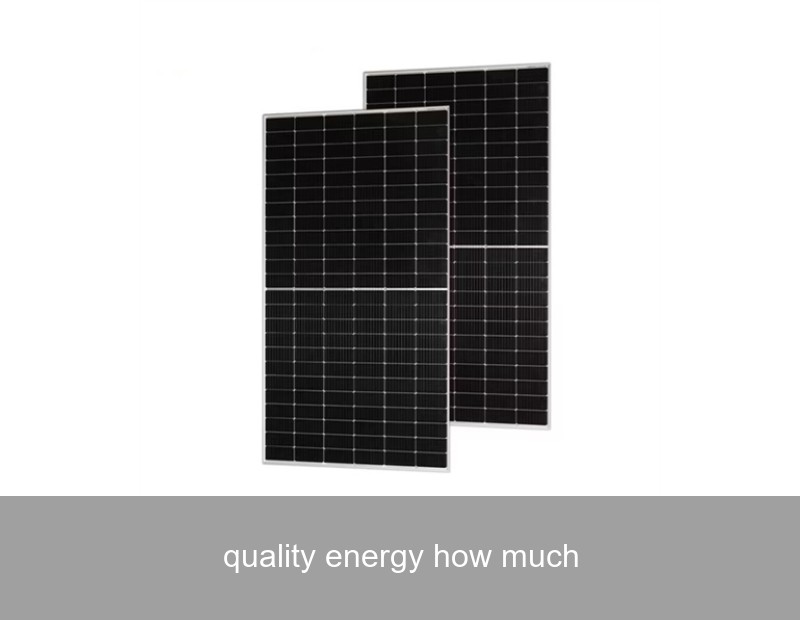
When considering a solar-plus-storage or backup power system, the first question is often, "How much does it cost?" But there's a more critical question hiding in plain sight: "Quality energy: how much is it worth to my business or home?" The initial price tag of a battery system is just one piece of the puzzle. The real value lies in the quality of energy it provides over its entire lifespan—its reliability, efficiency, intelligence, and safety. Let's explore why investing in quality energy solutions pays dividends far beyond the upfront cost.
What is "Quality Energy"? A Deeper Look
In the context of modern energy storage, quality energy isn't just about kilowatt-hours (kWh). It's about delivering power predictably, safely, and intelligently when you need it most. Think of it as the difference between a rugged, all-weather vehicle and a basic scooter. Both can get you from A to B, but their performance, safety, and reliability in challenging conditions are worlds apart. Quality energy ensures your operations run smoothly, your energy bills are optimized, and your assets are protected for 15 years or more.
The True Cost of Low-Quality Power
The market is flooded with options, and a cheaper system can be tempting. However, the phenomenon of "false economy" is prevalent. Lower upfront costs often mask hidden long-term expenses:
- Premature Degradation: Inferior battery cells and poor thermal management can lead to faster capacity loss, meaning your 10-year warranty might cover a system that only delivers useful power for 6-7 years.
- Operational Downtime: Unreliable systems fail during critical peak shaving events or power outages, leading to operational disruptions and lost revenue.
- Higher Operational Expenses: Inefficient systems (lower round-trip efficiency) waste more solar energy during conversion, eroding your expected savings.
- Safety Risks: Compromised safety design and lacking stringent certifications increase the risk of thermal events, potentially leading to catastrophic losses.
The data is clear. According to a 2023 NREL report on battery lifetime, operational strategies and thermal stress are primary factors in long-term degradation. A quality system is engineered to minimize this stress.

Image: A modern industrial facility utilizing integrated solar and storage for quality, reliable power. (Source: Unsplash)
How to Measure Energy Quality for Your Project
So, how do you quantify quality? Look beyond the brochure's peak power rating and examine these pillars:
Reliability & Uptime
This is the cornerstone. It's defined by the system's ability to perform its intended function (backup, arbitrage, peak shaving) over its warranted life. Key indicators include:
| Metric | What it Means | Quality Benchmark |
|---|---|---|
| Cycle Life @ DoD | Number of charge/discharge cycles at a specific Depth of Discharge (e.g., 80%) before reaching 60-70% of original capacity. | 6,000+ cycles at 80% DoD for daily cycling applications. |
| Warranty Terms | The guarantee on retained capacity and/or throughput over time. | 10+ years, with clear end-of-warranty capacity guarantee (e.g., 70% after 10 years). |
System Efficiency & Longevity
Round-trip efficiency (AC-AC) measures how much energy you get back vs. what you put in. A 90% efficient system returns 9 kWh for every 10 kWh stored, while an 85% system wastes 50% more energy. This directly impacts your payback period. Longevity is tied to advanced battery chemistry (like Lithium Iron Phosphate - LFP) and sophisticated Battery Management Systems (BMS) that ensure cell-level balance and optimal temperature control.
Intelligence & Grid Services
Quality energy is smart energy. Can the system autonomously optimize for time-of-use rates, participate in grid-balancing programs like Frequency Regulation, and integrate seamlessly with building management systems? This software intelligence unlocks revenue streams and maximizes ROI. For instance, Highjoule's HarmonyOS™ platform enables commercial clients to stack value streams—from demand charge reduction to virtual power plant (VPP) participation—turning a storage asset into a profit center.
Safety & Certifications
Non-negotiable. Look for UL 9540 (system level) and UL 1973 (battery unit) certifications in the US, and equivalent IEC standards in Europe. These rigorous tests validate safety from cell to system. Highjoule's systems, for example, are built with proprietary Cell-Sentinel™ technology, featuring passive propagation resistance and multi-layer fusing, providing an unmatched safety architecture that gives facility managers and homeowners peace of mind.
Case Study: Quantifying Quality in a German Manufacturing Plant
Let's ground this with a real example. A mid-sized automotive parts manufacturer in Bavaria, Germany, faced volatile energy prices and a corporate mandate to reduce carbon footprint. They evaluated two storage proposals for their 500 kW solar array.
- Option A (Lower Cost): €280,000. Generic LFP system, 92% claimed efficiency, basic 10-year warranty with ambiguous degradation clauses.
- Option B (Highjoule Solution): €345,000. Highjoule's IntelliBESS Commercial Series with HarmonyOS™, 95% certified round-trip efficiency, 10-year warranty guaranteeing 70% capacity retention, and grid-service ready.
The plant chose Option B. Over the first 18 months, the IntelliBESS system's higher efficiency captured an additional 18 MWh of solar energy that would have been wasted. Its intelligent software automatically shifted load and avoided peak grid charges, saving €32,000 annually in demand charges alone. Furthermore, its participation in a local grid stability program generated €8,500 in ancillary service revenue. The premium paid upfront was projected to be recouped in under 4 years, not 7 as initially estimated for Option A. The quality system delivered superior financial performance and rock-solid reliability.

Image: An engineer monitors the intelligent control system of a modern battery storage unit. (Source: Unsplash)
The Highjoule Approach to Premium Energy Solutions
Since 2005, Highjoule has been answering the "quality energy: how much?" question by engineering systems where every component is selected for endurance and performance. Our philosophy is that quality is engineered in, not inspected out.
- For Residential Customers: Our HomeGuard ESS features LFP chemistry, scalable capacity, and integrates with any inverter brand. It's not just a backup; it's a home energy manager that maximizes self-consumption of solar power.
- For Commercial & Industrial (C&I) Clients: The IntelliBESS Series offers containerized or modular solutions. With our HarmonyOS™, these systems perform real-time economic dispatch, ensuring every stored kWh is used or sold at its maximum value.
- For Microgrids & Utilities: Highjoule provides turnkey, utility-scale storage solutions that prioritize grid stability and can integrate diverse renewable sources, ensuring a resilient and sustainable power supply for communities.
Our global service network provides proactive monitoring and support, ensuring your investment performs as promised for decades. As noted by the International Energy Agency (IEA), robust policy and quality technology are key to accelerating storage deployment for a secure energy transition.
Quality Energy: An Investment, Not an Expense
Ultimately, the question shifts from "What does it cost?" to "What is it worth?" A quality energy storage system from a provider like Highjoule is a capital asset that appreciates in value by shielding you from rising energy costs, generating revenue, and future-proofing your operations against grid instability. It's the difference between buying a cost and investing in a solution.
So, we leave you with this: When you assess your next energy project, what hidden costs of "cheaper" power are you willing to risk, and what value would truly intelligent, reliable, and safe energy bring to your bottom line and peace of mind today?
 Inquiry
 Online Chat