


Unlocking Grid Resilience: The Oneida Energy Storage LP and the Future of Large-Scale Batteries
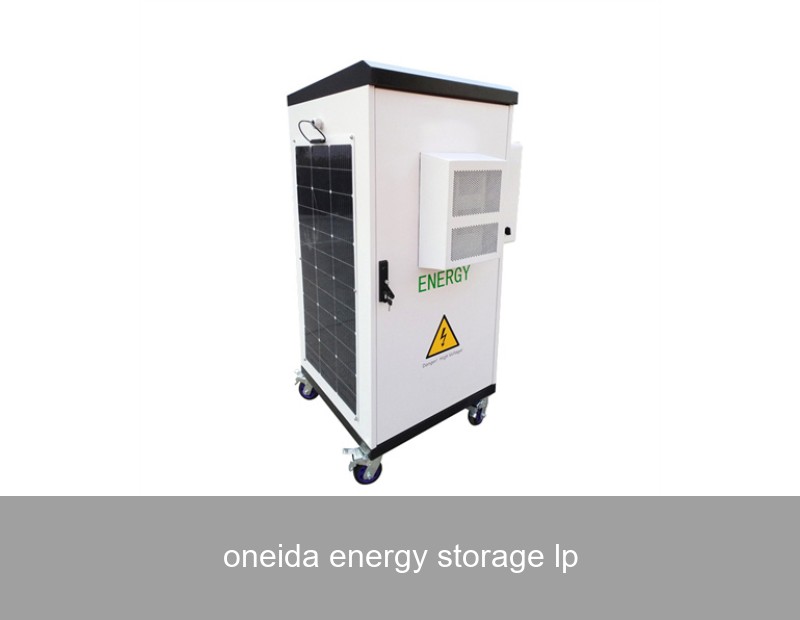
Imagine a power grid that bends but doesn't break. A system where renewable energy isn't just clean, but reliably available even when the sun sets or the wind calms. This is the promise of grid-scale energy storage, and projects like the Oneida Energy Storage LP in Ontario, Canada, are turning that promise into a tangible, grid-stabilizing reality. As one of the largest battery storage facilities in Canada, Oneida represents a critical leap forward. But what does it truly take to build and manage such a massive battery system? The answer lies not just in the scale, but in the sophisticated intelligence and robust engineering behind it—principles that companies like Highjoule have been refining since 2005 to deliver smart, efficient, and sustainable power solutions for commercial, industrial, and utility-scale applications worldwide.
Table of Contents
- The Challenge: A Grid in Transition
- The Solution: Megawatts of Intelligence
- Case Study: The Oneida Energy Storage LP in Action
- Beyond the Battery: The Highjoule Advantage
The Challenge: A Grid in Transition
Our energy landscape is undergoing its most radical shift in a century. Coal plants are retiring, while wind and solar installations are surging. In the U.S., the EIA projects renewables will make up 24% of electricity generation in 2024. Europe is pushing even faster, with ambitious REPowerEU plans. This is fantastic for decarbonization, but it introduces a fundamental technical problem: intermittency. The grid is a precise balancing act—supply must always match demand, instantly. Traditional "baseload" power plants provided a steady, predictable flow. Solar and wind, however, are variable. This creates volatility, leading to potential frequency fluctuations, congestion on transmission lines, and even blackouts during peak demand or sudden generation drops.
Think of the grid like a national highway system. Renewable energy plants are like thousands of new entry ramps, but the traffic flow (sunshine, wind) is unpredictable. Without managed lanes and traffic control (storage and grid services), the entire system risks grinding to a halt. This is where massive battery energy storage systems (BESS) like the Oneida Energy Storage LP come in. They act as ultra-fast, high-capacity buffers, absorbing excess energy when production is high and injecting it back when it's needed most.
The Solution: Megawatts of Intelligence
A grid-scale battery is far more than a collection of cells in a warehouse. It's a complex, software-driven power plant. The core value lies in its ability to provide "ancillary services"—the essential functions that keep the grid stable. These include:
- Frequency Regulation: Responding in milliseconds to tiny dips and surges in grid frequency, acting as a shock absorber.
- Peak Shaving (or Arbitrage): Storing cheap energy during low-demand periods and discharging it during expensive peak hours, saving costs and deferring grid upgrades.
- Renewable Firming: Smoothing out the jagged output of a solar or wind farm, making it behave more like a traditional, dispatchable power source.
- Black Start Capability: Helping to restart the grid after a total outage, a function traditionally reserved for fossil-fuel generators.
The technology of choice for these applications is overwhelmingly lithium-ion, thanks to its high energy density, falling costs, and rapid response times. However, the real differentiator between a simple battery pack and a grid asset is the Power Conversion System (PCS) and the Energy Management System (EMS). The PCS is the muscle, converting DC battery power to AC grid power. The EMS is the brain, constantly analyzing grid conditions, market prices, and battery health to make optimal, split-second decisions on when to charge or discharge.

Credit: Photo by American Public Power Association on Unsplash. Advanced control systems are the brain of any grid-scale storage project.
Case Study: The Oneida Energy Storage LP in Action
Let's ground this in a real-world example. The Oneida Energy Storage LP is a 250 MW / 1,000 MWh facility currently under construction in Ontario. Once operational, it will be one of the largest of its kind, capable of powering approximately 250,000 homes for up to four hours. The project is a joint venture between Northland Power, NRStor, and the Six Nations of the Grand River Development Corporation.
So, what specific problems is Oneida solving? Ontario's grid is already very clean, with a high penetration of nuclear and hydroelectric power. However, these are largely inflexible baseload sources. The province also has growing wind and solar capacity. Oneida's primary role will be to provide contracted grid services to the Independent Electricity System Operator (IESO), enhancing reliability and efficiency. By storing excess low-cost, clean energy (often at night) and discharging it during daily peak periods (like hot summer afternoons), it reduces the need to rely on less efficient, gas-fired "peaker" plants. Financially, the project is backed by a long-term contract with the IESO, providing revenue certainty—a crucial model for attracting investment into large-scale storage.
This project exemplifies the modern approach: it's not just about storing energy; it's about providing a suite of critical, revenue-generating services that make the entire grid more resilient, affordable, and green.
Highjoule's Role in Projects Like Oneida
While Highjoule is not directly involved in the Oneida project, our expertise is precisely in the domain it operates in. For over 18 years, Highjoule has been at the forefront of designing and deploying advanced battery energy storage systems (BESS) for utility and large-scale commercial applications. Our solutions are built with the same core requirements in mind:
- Scalable Architecture: Our containerized BESS solutions, like the HJ MegaStack, are designed for seamless scaling from multi-megawatt to gigawatt-hour projects, offering the flexibility needed for ventures of Oneida's magnitude.
- Advanced Grid Integration: Our proprietary NeuroGrid EMS platform is the intelligence hub, enabling participation in multiple value streams simultaneously—from frequency regulation and capacity markets to renewable energy time-shifting.
- Safety & Longevity: We integrate industry-leading lithium-ion battery cells with our multi-layer safety and thermal management systems, ensuring project longevity and operational safety over a 20+ year lifespan, which is paramount for a financially successful asset like Oneida.
For a developer or utility embarking on a project of this scale, partnering with a technology provider that has deep system integration experience is non-negotiable. It’s the difference between a collection of components and a reliable, bankable grid asset.
Beyond the Battery: The Highjoule Advantage for Commercial & Industrial Partners
The principles proven at the grid scale directly benefit businesses. For commercial and industrial (C&I) facilities across Europe and the U.S., energy costs and reliability are top concerns. A Highjoule storage system transforms these challenges into opportunities.
Consider a large manufacturing plant or a data center. Their energy profile might look like this:
| Challenge | Traditional Approach | With a Highjoule BESS |
|---|---|---|
| High Demand Charges | Pay steep fees based on peak 15-minute usage. | The system "peak shaves," discharging during short consumption spikes to flatten the load and slash bills. |
| Backup Power Needs | Diesel generators that are polluting and slow to start. | Provides seamless, instantaneous backup power, keeping critical operations online. |
| Solar Self-Consumption | Excess solar energy at noon is sold to the grid at low rates. | Stores midday solar excess for use in the evening, maximizing ROI on solar panels. |
| Sustainability Goals | Hard to reduce carbon footprint with grid dependency. | Enables a higher penetration of on-site renewables and reduces grid carbon intensity. |
Our HJ BusinessPower series is engineered for these exact scenarios. It's more than just a battery; it's an integrated energy asset managed by our AI-driven platform, ensuring every kilowatt-hour delivers maximum economic and operational value.

Credit: Photo by Andreas Gücklhorn on Unsplash. Commercial solar plus storage is a game-changer for energy independence and cost control.
The Future of Storage: What's Next for Grid-Scale Projects?
The success of pioneers like the Oneida Energy Storage LP is just the beginning. The U.S. Inflation Reduction Act (IRA) and similar European initiatives are unleashing unprecedented investment. We're moving towards longer-duration storage (8+ hours), new chemistries like sodium-ion, and even more sophisticated virtual power plants (VPPs) that aggregate thousands of distributed assets—including residential systems—to act as a single, grid-scale resource.
This evolution demands technology that is not only robust but also agile. The next generation of storage projects will need to adapt to evolving market rules and climate threats. At Highjoule, our R&D is focused on this very adaptability: ensuring our systems are software-upgradable, chemistry-agnostic where possible, and always focused on delivering the lowest levelized cost of storage (LCOS) for our clients.
A Call to Action for Energy Decision-Makers
The story of Oneida and the rapid rise of grid-scale storage presents a clear question: Is your organization simply watching the energy transition happen, or are you actively positioning yourself to benefit from it? Whether you're a utility planner mapping out the next decade's capacity, a commercial building owner tired of volatile energy bills, or an industrial operator for whom power reliability is existential, the technology to take control is here and proven.
What is the single biggest energy challenge your business or community will face in the next five years, and how could a intelligent storage solution transform that challenge into a strategic advantage?
 Inquiry
 Online Chat