


What Are Solar Energy Sources? A Guide to Harnessing the Sun's Power
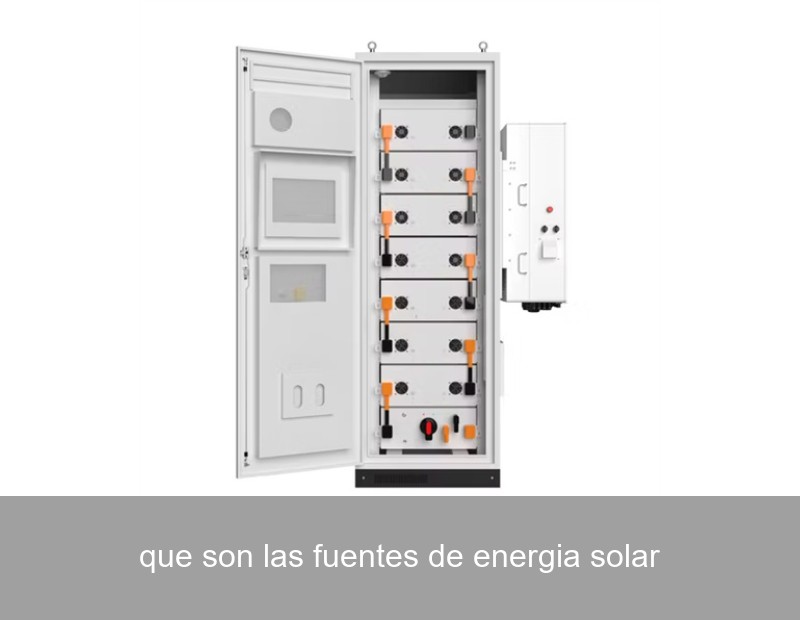
Have you ever looked at your rising electricity bill and wondered, "What if there was a better way?" Or perhaps you've seen more solar panels appearing in your neighborhood and asked yourself, what are solar energy sources really, and how can they work for me? You're not alone. Across Europe and the US, homes and businesses are turning to the sun, not just as a concept, but as a practical, powerful, and intelligent energy solution. It goes far beyond the panels on the roof. True solar power is about capturing, converting, and crucially, storing that energy to use on your terms. This is where modern solar energy systems, integrated with advanced battery storage, are revolutionizing how we think about power.
Table of Contents
Understanding the Sources: More Than Just Panels
When we ask "what are solar energy sources?", we must look at the entire chain. The primary source is, of course, photovoltaic (PV) radiation from the sun. But the technology that captures it is just the beginning.
- Photovoltaic (PV) Solar Panels: The most common sight. These semiconductor-based cells convert sunlight directly into direct current (DC) electricity.
- Concentrated Solar Power (CSP): Often used in large utility-scale plants, CSP uses mirrors to concentrate sunlight onto a receiver, generating heat that drives a turbine for electricity.
- Solar Thermal Collectors: These capture heat for direct use, like heating water for residential or industrial processes.
For most homes and businesses, PV systems are the gateway. But here's the key insight: the solar panels are only the harvesters. The real intelligence of a modern system lies in how the energy is managed, stored, and deployed.

Image Source: Unsplash (Representative image of solar panels)
The Storage Imperative: Why Solar Needs a Battery
Here's the fundamental challenge: the sun doesn't shine on demand. Peak production often happens in the middle of the day when homes are empty and business consumption might be lower. Meanwhile, energy demand peaks in the early morning and evening. Without storage, excess solar energy is fed back to the grid, often for minimal compensation, and you're forced to buy expensive power from the utility when your panels aren't producing.
This mismatch is solved by battery energy storage systems (BESS). Think of it as a pantry for your electricity. You store the abundance from the day to use during the lean hours of the night or during grid outages. According to the International Energy Agency (IEA), global energy storage capacity is set to expand dramatically, driven by the need to integrate more renewables. This isn't just about backup; it's about energy independence and financial optimization.
The Data: Economics of Solar + Storage
| Scenario | Solar Only | Solar + Storage |
|---|---|---|
| Self-Consumption | ~30-50% (varies widely) | 70-90%+ |
| Grid Dependence at Peak | High | Low to None |
| Impact from Net Metering Changes | High Vulnerability | High Resilience |
| ROI in High-Cost Markets | Good | Excellent |
A Real-World Case: The Spanish Manufacturing Shift
Let's look at a concrete example from Valencia, Spain. A mid-sized ceramic tile manufacturer faced two problems: volatile energy prices eroding profit margins and a corporate sustainability mandate. They installed a 2.1 MW rooftop solar array, which covered about 40% of their daytime load. However, the real transformation came when they integrated a 1.5 MWh Highjoule Titan BESS.
The system was programmed for intelligent load-shifting. Excess solar energy from midday was stored instead of exported. Then, during the high-tariff evening hours (from 6 PM to 10 PM), the factory ran primarily on the stored battery power, avoiding the most expensive grid electricity. The results within the first year were compelling:
- 75% increase in self-consumption of solar energy.
- 22% reduction in overall energy costs.
- Payback period for the storage system estimated at under 5 years.
- Significant progress toward their 24/7 carbon-free energy goal.
This case, mirrored by many across Europe and the U.S., shows that understanding "what are solar energy sources" is incomplete without the storage component. It turns a passive generation asset into an active energy management tool.
Highjoule's Integrated Solutions: Intelligence Meets Storage
This is where Highjoule, as a global leader in advanced energy storage since 2005, makes its mark. We don't just supply batteries; we provide intelligent, integrated systems that make your solar investment work harder. Our solutions are designed for the specific needs of residential, commercial, industrial, and microgrid applications.
For the residential market, our Highjoule HOMEsync series is a sleek, wall-mounted battery system with integrated energy management software. It learns your household's consumption patterns, automatically optimizing when to store solar energy, power your home, or even sell back to the grid at the most profitable times. It's the brain that maximizes your solar source.

Image Source: Unsplash (Representative image of a home battery system)
For businesses like the Spanish manufacturer, our Highjoule Titan C&I (Commercial & Industrial) platform is the answer. It's a modular, scalable battery storage system built for durability and high-cycle performance. Coupled with our Gridsync Energy Management System (EMS), it enables sophisticated strategies:
- Peak Shaving: Capping expensive demand charges from the utility.
- Arbitrage: Buying low-cost grid energy to store and use later.
- Microgrid Capability: Providing backup power and grid stability.
Our systems are built with the latest lithium-iron-phosphate (LFP) battery chemistry, known for its safety, long life, and stability. More importantly, the software is what transforms stored electrons into tangible savings and resilience.
How Highjoule's System Complements Your Solar Sources
- Capture: Your solar panels generate DC electricity.
- Convert & Optimize: Our inverters and controllers convert and direct energy. The smart EMS decides in real-time: power the building, charge the battery, or export.
- Store: Excess energy charges the Highjoule BESS with high efficiency.
- Deploy: When needed, the system discharges clean, stored energy on command, whether for nightly use, during a peak rate period, or a grid outage.
The Future Outlook and Your Next Step
The landscape of energy is shifting from a centralized, one-way grid to a decentralized, interactive network. In this new landscape, understanding "what are solar energy sources" means recognizing them as the first link in a smart, self-sufficient energy chain. With supportive policies in the EU like the REPowerEU Plan and the U.S. Inflation Reduction Act's investment tax credits, the economic argument for solar-plus-storage has never been stronger.
The technology is proven, the economics are clear, and the need for energy independence is more pressing than ever. So, the question isn't just about what solar energy sources are, but how intelligent can your energy system become? What would it mean for your home's resilience or your business's bottom line to have a power source that not only generates but thinks and adapts?
We invite you to explore what a truly integrated solar and storage solution could look like for you. What is the one energy challenge you face today that an intelligent system could solve?
 Inquiry
 Online Chat