


Solar Power Net Metering: Maximizing Your Investment and Energy Independence
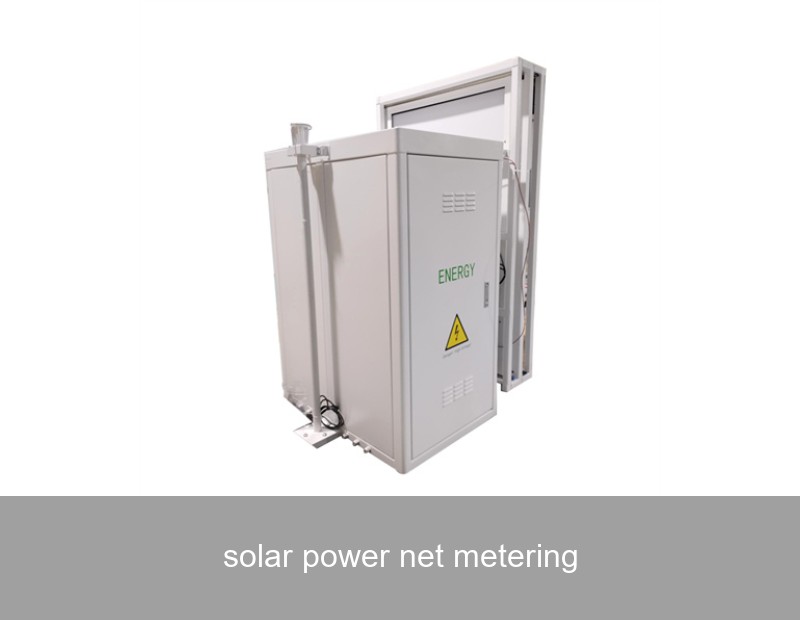
If you've recently installed solar panels, or are considering it, you've likely heard the term "net metering." It's often touted as a key financial benefit, but what does it really mean for your energy bill and your role in the clean energy transition? In essence, solar power net metering is a billing mechanism that credits solar energy system owners for the electricity they add to the grid. Think of the grid as a giant, communal battery. During sunny afternoons, your panels may produce more power than your home consumes. Net metering allows you to send that excess electricity back to the utility company, spinning your meter backwards and building up credits. Then, at night or on cloudy days, you draw power from the grid, using those credits first. It's a simple, elegant system that has fueled solar adoption worldwide. But as grids evolve, so does the conversation around maximizing self-consumption and true energy independence. This is where advanced energy storage systems, like those from Highjoule, are transforming the game.
Table of Contents
- What is Solar Power Net Metering? The Basic Principle
- The Evolving Landscape: Policy Shifts and New Challenges
- What the Data Tells Us: The Financial Dynamics
- Case Study: A California Brewery's Strategic Shift
- Beyond the Meter: The Highjoule Solution for Modern Energy Management
- The Future is Resilient and Intelligent
What is Solar Power Net Metering? The Basic Principle
At its core, net metering is a one-for-one credit system. For every kilowatt-hour (kWh) of solar energy you export, you receive a credit for one kWh to consume later. This process happens automatically through a bi-directional meter installed by your utility. The goal is to "net" your consumption against your production over a billing period, typically a month.
Here’s a simplified breakdown of a daily cycle:
- Daytime (High Production): Your solar panels generate electricity. Power your home first, then send the surplus to the grid, earning credits.
- Evening/Night (Low Production): Your solar production drops or stops. You draw electricity from the grid, using your banked credits to offset the cost.
This model has been incredibly successful. According to the Solar Energy Industries Association (SEIA), net metering is available in some form in most U.S. states and has been a primary driver for rooftop solar, allowing homeowners and businesses to see a clear return on investment.

Image Source: Unsplash - A bi-directional meter is the hardware heart of net metering.
The Evolving Landscape: Policy Shifts and New Challenges
However, the story doesn't end here. As solar penetration increases, utilities and regulators are re-evaluating net metering policies. The central debate often revolves around the value of solar electricity to the grid. Critics argue that traditional one-for-one net metering doesn't account for grid maintenance costs. Consequently, we're seeing a trend towards new policies:
- Reduced Export Rates: Credits for excess solar are paid at a lower rate (the "avoided-cost" rate) rather than the full retail price.
- Demand Charges: Some commercial tariffs add fees based on peak power draw, which net metering alone doesn't address.
- Time-of-Use (TOU) Rates: The value of electricity changes by time of day. Solar exported at noon (when rates may be low) earns less credit than power consumed at peak evening hours (when rates are high).
This shifting landscape, particularly in key markets like California, parts of the EU, and Hawaii, means the economic equation for solar is changing. The new goal isn't just to export surplus energy, but to intelligently manage it.
What the Data Tells Us: The Financial Dynamics
Let's look at the numbers. Under a Time-of-Use rate plan, common in California and spreading across Europe, electricity prices can be three times higher during peak evening hours (e.g., 4-9 PM) compared to midday. A solar-only system under net metering 2.0 or 3.0 rules exports excess at low midday rates but provides no power during the high-cost peak period when the sun is down.
| Scenario | Solar Only (With Net Metering 2.0) | Solar + Highjoule Storage |
|---|---|---|
| Midday (Solar Producing) | Exports surplus at low rate (~$0.08/kWh). | Stores surplus in battery for later use. |
| Evening Peak (No Sun) | Imports power from grid at high rate (~$0.40/kWh). | Draws stored power from battery, avoiding high-cost imports. |
| Grid Outage | System shuts off (no power). | Seamless backup power from battery. |
| Self-Consumption | Typically 30-50%. | Can exceed 80-90%. |
The data clearly shows that adding storage fundamentally changes the value proposition, moving from a simple credit-based model to a strategic energy asset management model.
Case Study: A California Brewery's Strategic Shift
Let's examine a real-world example. "Sunset Brewing Co." in San Diego, California, installed a 200 kW solar array in 2019 under the state's original net metering policy. Their savings were substantial. However, in 2023, they transitioned to the new Net Billing Tariff (NBT), which drastically reduced the value of their midday exports. Concurrently, their utility tariff included a high demand charge based on their highest 15-minute power draw each month.
The Problem: Their brewing process created late afternoon power spikes, coinciding with peak TOU rates. Their solar panels were offline by then, leading to high costs from both demand charges and expensive peak energy imports.
The Solution: In early 2024, Sunset Brewing partnered with Highjoule to integrate a 300 kWh Highjoule C&I Battery System with advanced energy management software. The system was programmed with two primary goals: 1) Peak Shaving to cap power draw from the grid and slash demand charges, and 2) Energy Time-Shifting to store cheap midday solar for use during the expensive peak period.
The Data-Driven Result (First 6 Months):
- Demand Charges Reduced by 62%: The battery automatically discharged during operational spikes, flattening their load profile.
- Peak Period Grid Import Reduced by 89%: The brewery ran almost entirely on stored solar energy from 4-9 PM.
- Overall Energy Bill Savings Increase: Despite lower export credits, total savings increased by 18% compared to the previous year under the old net metering, due to avoided peak costs and demand charges.
- Added Resilience: The system now provides backup power for critical refrigeration, a priceless benefit unattainable with net metering alone.
This case illustrates the paradigm shift: from relying on the grid as a battery (via net metering) to owning and optimizing a private, intelligent energy asset.

Image Source: Unsplash - Modern C&I battery systems like Highjoule's enable strategic energy management.
Beyond the Meter: The Highjoule Solution for Modern Energy Management
At Highjoule, we see the evolution beyond simple solar power net metering as an opportunity. Our advanced battery energy storage systems (BESS) are designed to be the intelligent core of a modern energy strategy, whether for a home, a business, or a microgrid.
Our HES (Highjoule Energy Stack) platform turns a static battery into a dynamic financial and operational asset. For homeowners, our Residential PowerWall series integrates seamlessly with solar inverters. It doesn't just store excess solar; it learns your consumption patterns, weather forecasts, and utility rate schedules to autonomously decide the most economical time to charge or discharge. This maximizes self-consumption of your solar energy and protects you from volatile electricity prices.
For our commercial and industrial clients, like Sunset Brewing, our C&I Modular Rack Systems offer scalable power and capacity. Coupled with our AI-driven energy management software, these systems perform:
- Arbitrage: Buying/store energy when cheap, using/selling it when expensive.
- Peak Shaving: Automatically reducing grid draw during high-cost periods.
- Grid Services: In some markets, systems can even provide grid stability services for additional revenue.
The result is a solution that not only protects the economics of your solar investment in a changing regulatory world but also enhances your energy resilience and control.
The Future is Resilient and Intelligent
The journey from simple net metering to intelligent energy management is well underway. While net metering policies served as a crucial catalyst for solar adoption, the next step is about optimization and independence. It's about treating energy not just as a monthly bill, but as a resource to be actively managed 24/7.
With increasing grid instability due to extreme weather events, the value of having backup power has also skyrocketed. A system that can island your home or business during an outage—powered by your own sun and stored in your Highjoule battery—delivers peace of mind that no net metering credit ever could.
So, as you evaluate your solar options or assess your existing system's performance in light of policy changes, ask yourself this: Is your goal simply to offset your bill with credits, or is it to take true control of your energy costs, carbon footprint, and resilience for the decades to come? What would a 90% energy independence look like for your home or business?
 Inquiry
 Online Chat