


Understanding Your Solar System Quotation: A Guide to Smart Investment
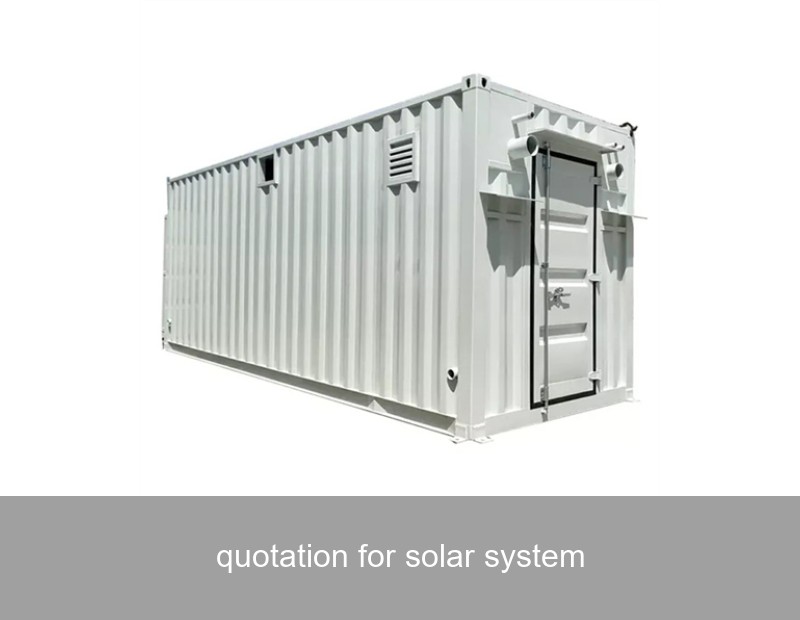
So, you've received a quotation for a solar system. It's an exciting step towards energy independence, but the document can be a maze of technical terms, equipment lists, and—of course—the final price. For homeowners and business leaders across Europe and the U.S., deciphering this quote is crucial. Is it a fair price? What exactly are you paying for? This guide will walk you through a typical solar proposal, not just to help you understand the numbers, but to ensure you're investing in a system built for performance, durability, and true long-term value.
Table of Contents
- Breaking Down the Solar Quotation: More Than Just Panels
- The Hidden "Cost" of a Cheap Quote: System Degradation & Inefficiency
- Case Study: A Bavarian Dairy Farm's Strategic Investment
- The Highjoule Difference: Intelligence Engineered into Your Quote
- Asking the Right Questions Before You Sign
Breaking Down the Solar Quotation: More Than Just Panels
A comprehensive quotation for a solar system should be a transparent blueprint, not just a sales invoice. Let's deconstruct its core components:
1. System Design & Energy Production Estimate
This section details your future system's size (in kilowatts, kW) and projected annual energy output (in kilowatt-hours, kWh). Reputable providers use advanced simulation software like NREL's PVWatts to model production based on your location, roof angle, and local weather patterns. Be wary of estimates that seem overly optimistic.
2. Equipment Breakdown: The Heart of the Quote
This is where quality becomes paramount. A detailed quote should specify:
- Solar Panels: Brand, model, efficiency rating, and power warranty (often 25+ years).
- Inverters: The system's brain. Are they string inverters, or more advanced microinverters/optimizers that maximize each panel's output?
- Mounting & Racking: The unsung hero ensuring structural integrity for decades.
- Monitoring System: Your window into system performance.
3. The Financials: Costs, Incentives & Payback
Here you'll find the total gross cost, followed by applicable incentives like the U.S. federal Investment Tax Credit (ITC) or European subsidies. The net cost and a calculated "payback period" are key metrics. A shorter payback is attractive, but it shouldn't come at the expense of system longevity.
| Quote Component | What to Look For | Red Flag |
|---|---|---|
| Panel Efficiency | Clear brand/model, efficiency >20% for premium panels | Generic "Solar Panel 400W" listing |
| Inverter Type | Technology specified (e.g., string with optimizers, hybrid) | No mention of inverter brand or module-level power electronics |
| Warranty | Separate warranties for equipment, performance, and workmanship | A single, short-term blanket warranty |
| Production Guarantee | A promise of annual kWh output, often with a remedy | Vague statements like "estimated production" with no guarantee |
The Hidden "Cost" of a Cheap Quote: System Degradation & Inefficiency
The initial price is just one part of the equation. The real cost of a solar system is measured over its 25-30 year lifespan. A lower-priced quote often uses Tier-2 or generic components that may degrade faster. According to a long-term study by the National Renewable Energy Laboratory (NREL), the median degradation rate for solar panels is about 0.5% per year, but lower-quality panels can degrade at 1% or more. This means a system that loses 1% annually will produce 22.5% less power in year 25 compared to its first year, while a system degrading at 0.5% will only lose 12%. That's a significant difference in lifetime energy yield and savings.

Image: A quality installation with robust racking is a long-term asset. (Photo by American Public Power Association on Unsplash)
Case Study: A Bavarian Dairy Farm's Strategic Investment
Let's look at a real-world example from our work at Highjoule. A dairy farm in Bavaria, Germany, received two starkly different quotes. The cheaper quote proposed a basic 100kW system with standard string inverters at a compelling upfront price. Our quotation for a solar system included a 105kW system integrated with Highjoule's HI-Stack commercial battery storage and advanced energy management software. The initial investment was 40% higher.
However, our analysis projected the following over 10 years:
- Cheaper System: Relied heavily on the grid during expensive evening hours for milk cooling. Estimated savings: ~€12,000/year.
- Highjoule System: Used stored solar energy to power nighttime operations and participate in Germany's grid-balancing markets. Estimated savings/net income: ~€28,000/year.
The farm chose our solution. After two years of operation, data shows they are exceeding projections, achieving 76% grid independence and an annual financial benefit of €31,500. The higher initial quote delivered a superior return on investment (ROI) by transforming their system from a simple saver into a revenue-generating asset.
The Highjoule Difference: Intelligence Engineered into Your Quote
At Highjoule, we believe a quotation for a solar system should be the first step in a long-term energy partnership. Our quotes reflect our holistic approach to power resilience.
For residential clients, our EverHome series isn't just about solar panels. It's an integrated ecosystem featuring our high-density lithium ferro phosphate (LFP) batteries and the AI-driven HomePower OS. This system doesn't just store energy; it learns your consumption patterns, weather forecasts, and utility rate schedules to autonomously optimize your energy flow, maximizing self-consumption and protecting you from outages.
For commercial and industrial applications, like the Bavarian farm, our HI-Stack modular battery energy storage system (BESS) is a game-changer. It seamlessly integrates with new or existing solar arrays, providing critical load management, peak shaving, and even the ability to generate revenue through grid services. When you receive a Highjoule quote, you're seeing a blueprint for a dynamic, adaptive energy asset.

Image: Modern battery storage systems, like Highjoule's HI-Stack, turn solar energy into 24/7 power security. (Photo by ThisisEngineering RAEng on Unsplash)
Asking the Right Questions Before You Sign
Armed with this knowledge, your conversation with any provider should be more productive. Here are essential questions to ask:
- Beyond the Panels: "How does your system design ensure optimal production during partial shading or panel mismatch?"
- On Battery Storage: "Is storage a pre-wired option for future expansion, and what is the true cycle life of the battery under real-world conditions?"
- On Long-Term Value: "Can your system's software adapt to future utility rate changes or new revenue programs like virtual power plants (VPPs)?"
- On Support: "What does your performance guarantee cover, and what is the process if my system underperforms?"
Your choice in a solar provider will resonate for decades. Does your current quotation for a solar system feel like a transaction for hardware, or does it feel like a strategic plan for a smarter, more resilient, and financially empowering energy future?
What single energy goal—be it complete outage protection, maximizing financial return, or reducing your carbon footprint—is most critical for your home or business, and how should that priority shape the ideal system design for you?
 Inquiry
 Online Chat