


Redundant Battery System: The Unseen Guardian of Your Energy Resilience
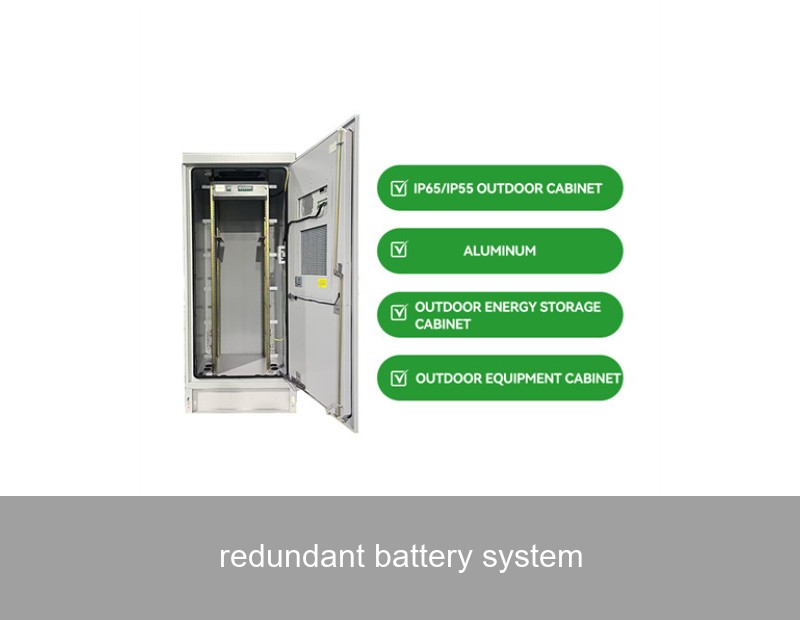
Imagine this: a critical surgical procedure in a hospital is interrupted by a sudden blackout. Or a data center hosting millions of online transactions goes dark. The cost? Unthinkable. For businesses and communities, power reliability has evolved from a convenience to a non-negotiable pillar of modern life. This is where the concept of a redundant battery system moves from an engineering specification to a strategic asset. It's not just about having backup power; it's about having a backup for your backup, ensuring seamless, fail-safe energy continuity. Let's explore why redundancy is becoming the gold standard in energy storage.
Table of Contents
- The Single Point of Failure Problem
- How Redundant Battery Systems Work: More Than Just Spare Parts
- The Data: Quantifying the Cost of Downtime
- Case Study: A European Microgrid's Lesson in Resilience
- Highjoule's Approach: Intelligent Redundancy for Peace of Mind
- Is Redundant Battery Storage Right for Your Operation?
The Single Point of Failure Problem
Traditional energy storage systems often rely on a single, large battery bank. While this is a significant step forward from having no storage at all, it introduces a critical vulnerability: a single point of failure. If one component within that bank—a battery module, a cooling fan, or an inverter—fails, the entire system can go offline. In mission-critical applications, this isn't an option. Redundancy solves this by designing the system so that no single component's failure can cause a total shutdown. Think of it like the engines on a modern aircraft; if one fails, the other ensures a safe journey to the destination.
How Redundant Battery Systems Work: More Than Just Spare Parts
A truly redundant battery system is architected with parallel, independent pathways. It's not merely about having extra batteries sitting idle.
- N+1 or 2N Architecture: In an N+1 design, you have the exact number of units needed (N) plus one extra unit to take over if one fails. In more critical 2N designs, you have a fully mirrored, duplicate system running in parallel, offering near-100% fault tolerance.
- Decentralized Power Electronics: Instead of one large central inverter, redundant systems use multiple, smaller inverters or power conversion systems (PCS). If one trips, the others instantly pick up the load without interruption.
- Independent Battery Strings: The battery storage is divided into isolated strings or clusters, each with its own management system. This isolation prevents a fault in one string from cascading to others.
- Advanced Battery Management System (BMS): The brain of the operation. A sophisticated BMS continuously monitors the health, state-of-charge, and temperature of each module, proactively isolating faults and redistributing load to healthy units.
This layered approach creates a resilient energy ecosystem that can self-heal during internal issues and provide unwavering support during external grid disturbances.
The Data: Quantifying the Cost of Downtime
Why invest in such robust engineering? The numbers speak for themselves. According to a Ponemon Institute study, the average cost of a data center outage has soared to over $9,000 per minute. For a manufacturing facility, even a brief power dip can ruin a batch of products, costing hundreds of thousands. The U.S. Department of Energy emphasizes that grid disturbances and outages cost the U.S. economy billions annually. A redundant battery system acts as an insurance policy against these catastrophic costs, ensuring operational continuity and protecting the bottom line.
Downtime Cost by Sector (Per Hour)
| Sector | Estimated Cost Range (USD) | Primary Risks |
|---|---|---|
| Data Centers & IT | $300,000 - $1,000,000+ | Data loss, service contracts, reputation |
| Healthcare/Hospitals | $100,000 - $1,000,000+ | Patient safety, critical procedures, regulatory compliance |
| Manufacturing | $50,000 - $500,000 | Production loss, equipment damage, scrap material |
| Telecommunications | $200,000 - $600,000 | Network outage, customer credits, lost calls |
Case Study: A European Microgrid's Lesson in Resilience
Consider a real-world example from Northern Europe. A remote island community in Norway transitioned to a renewable-powered microgrid, combining local hydropower, wind, and a primary lithium-ion battery system (1.5 MWh) for stability. For two years, the system performed flawlessly. Then, during a severe winter storm in 2022, a critical fault in the battery system's main inverter caused the entire storage unit to disconnect. The microgrid, now reliant solely on variable generation, experienced frequency instability and had to resort to diesel generators.
The Solution & Outcome: The community partnered with Highjoule to redesign their storage core. We implemented a redundant battery system featuring two independent 1 MWh battery strings, each paired with its own modular inverter. The system was configured in an N+1 architecture for the power conversion. Just months after commissioning, a similar fault occurred in one inverter. This time, the Highjoule system's controller detected the failure within milliseconds, isolated the faulty unit, and seamlessly transferred the full load to the remaining inverters. The microgrid's power quality never wavered; residents didn't even notice a glitch. The redundancy investment paid for itself by preventing a guaranteed 8+ hour outage and the cost of emergency fuel delivery.

Image Source: Unsplash (Representative image of a battery storage installation)
Highjoule's Approach: Intelligent Redundancy for Peace of Mind
At Highjoule, we believe redundancy shouldn't mean complexity or inefficiency. Our H-Series Commercial & Industrial (C&I) Energy Storage Systems are designed with intelligent redundancy from the ground up. We don't just add spare parts; we engineer systems that are inherently fault-tolerant.
- Modular, Scalable Architecture: Every Highjoule H-Series unit is built with independent power and battery modules. You can start with what you need and scale redundancy as your critical load grows.
- Predictive Health Analytics: Our cloud-based monitoring platform, Highjoule Nexus, goes beyond simple alerts. It uses AI-driven analytics to predict potential component wear, scheduling maintenance before a failure can occur, transforming redundancy from reactive to proactive.
- Graceful Degradation: In the rare event of a multi-point issue, our systems are designed for "graceful degradation." Instead of a sudden blackout, the system strategically sheds non-critical loads, prioritizing power to your most essential operations for as long as physically possible.
For mission-critical applications like hospitals, semiconductor fabs, or financial trading floors, our 2N Fully Mirrored Systems offer the highest level of assurance, effectively providing two separate storage systems working in tandem. Since 2005, Highjoule has been deploying these resilient solutions globally, ensuring that businesses can focus on their core work, not on worrying about their power.

Image Source: Unsplash (Representative image of system monitoring)
Is Redundant Battery Storage Right for Your Operation?
The question isn't necessarily "Can I afford a redundant system?" but rather "Can I afford the risk of not having one?" To evaluate this, ask yourself:
- What is the true hourly cost of a power interruption to my business or service?
- Do I have loads that are sensitive to even millisecond power sags (e.g., sensitive machinery, IT servers)?
- Is my facility in an area with an aging grid infrastructure or increasing weather volatility?
- Are there regulatory or contractual obligations for uptime that I must meet?
If you answered "yes" to any of these, a conversation about redundancy is crucial. Modern energy storage isn't just about cost savings through energy arbitrage; for many, its primary value is in risk mitigation.
As you plan your energy resilience strategy, what single operational process in your organization would benefit most from the absolute certainty of an uninterruptible, redundant power supply?
 Inquiry
 Online Chat