


Powering the Future: How Biopower Sustainable Energy Corp is Redefining Renewable Energy
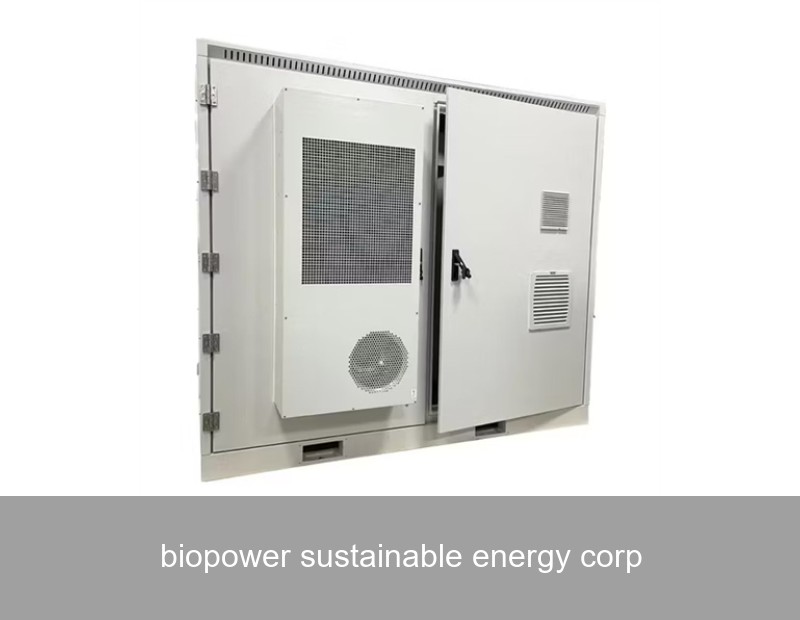
Imagine a power source that's not only renewable but actively helps manage our waste. That's the promise of biopower, a cornerstone of a truly circular economy. As companies like Biopower Sustainable Energy Corp push the boundaries of converting organic material into clean electricity, a critical question emerges: how do we ensure this valuable, dispatchable green power is available precisely when and where it's needed? The answer lies at the intersection of advanced biopower generation and next-generation energy storage. This is where intelligent storage solutions, like those pioneered by Highjoule, become the indispensable partner, transforming biopower from a promising alternative into a pillar of grid reliability.
Table of Contents
What is Biopower and Why is it a Game-Changer?
Biopower, or bioenergy, refers to electricity generated from organic materials—biomass. This includes agricultural residues (like straw and manure), forestry by-products, dedicated energy crops, and the organic fraction of municipal solid waste. Pioneers like Biopower Sustainable Energy Corp utilize processes such as anaerobic digestion (which produces biogas) and direct combustion to create energy.
Its sustainability credentials are profound. According to the International Energy Agency (IEA), modern bioenergy is the largest source of renewable energy globally, accounting for roughly 55% of all renewable energy and about 6% of the world's total energy supply. Unlike solar and wind, biopower is dispatchable; it can be generated on-demand to meet baseload or peak power requirements. Furthermore, it provides a vital waste management solution, reducing landfill use and methane emissions from decomposing organic matter.

Image Source: Unsplash (Representative image of a biogas facility)
The Inherent Challenge: Biopower's Intermittency & Grid Demand
While more controllable than sun or wind, biopower generation isn't without its variability. Feedstock supply can fluctuate seasonally, and planned maintenance on generators requires downtime. More importantly, the economics of biopower are maximized when the plant can operate continuously, but electricity prices and grid demand peak at specific times of the day.
This creates a mismatch: a biogas plant might be producing steady power overnight when demand and prices are low, but unable to ramp up further during the evening peak. This is where the strategic integration of battery energy storage systems (BESS) becomes a masterstroke. By storing excess bio-generated electricity during low-demand periods and discharging it during high-value windows, storage supercharges the plant's revenue and grid-support potential.
The Data Behind the Need for Storage
Let's look at some numbers. In Germany, a leader in biogas, the levelized cost of electricity (LCOE) from biogas plants is competitive, but their value is enhanced through flexibility. A study by the German Energy Agency (dena) highlights that hybrid systems combining biogas with storage can increase the value of generated electricity by up to 30% by enabling participation in balancing markets and peak shaving.
| Benefit | Without Storage | With Integrated BESS |
|---|---|---|
| Revenue Streams | Primarily feed-in tariff or baseload PPA | + Peak pricing, grid services (frequency regulation), capacity markets |
| Grid Integration | Limited flexibility, may face curtailment | Enhanced dispatchability, reduces grid congestion |
| Plant Utilization | Must follow feedstock/generation cycle | Decouples generation from dispatch, optimizes generator runtime |
Case Study: Stabilizing a European Biogas Plant with Battery Storage
Consider a real-world scenario from Northern Italy. A 1 MW agricultural biogas plant, running on manure and crop silage, faced two issues: volatile grid frequency in its rural location, and limited ability to capitalize on high afternoon energy prices due to its steady-state operation.
The solution was the integration of a 500 kW / 1 MWh containerized battery storage system. The BESS was tasked with two primary functions:
- Frequency Response: Automatically injecting or absorbing power within milliseconds to stabilize grid frequency, creating a new revenue stream.
- Energy Arbitrage: Storing excess plant output during low-price morning hours and discharging during the high-price evening peak (typically 6-9 PM).
- Annual Revenue Increase: €85,000 from frequency regulation services alone.
- ROI Acceleration: The storage system's payback period was reduced by an estimated 40%.
- Grid Support: The local distribution system operator (DSO) reported improved voltage stability in the area, reducing the need for infrastructure upgrades.
This case exemplifies the tangible synergy between consistent bio-generation and flexible storage—a synergy that companies like Biopower Sustainable Energy Corp can leverage for their projects.
The Highjoule Advantage: Intelligent Storage for Bioenergy
This is where Highjoule's expertise becomes critical. Since 2005, we've evolved from a battery provider to a global advanced energy storage system architect. For bioenergy partners, we don't just supply hardware; we deliver an intelligent energy management layer that unlocks the full potential of their assets.
Our H-Series Commercial & Industrial (C&I) Energy Storage Systems are engineered for this exact challenge. They feature:
- Adaptive Power Conversion: Seamlessly interfaces with biogas generator outputs, managing bidirectional flow for charging and discharging.
- AI-Powered Energy Management System (EMS): The brain of the operation. Our EMS continuously forecasts energy prices, grid demand, and plant output to autonomously optimize dispatch, maximizing revenue across multiple streams (arbitrage, grid services, behind-the-meter consumption).
- Ultra-Safe LFP Chemistry: Utilizing Lithium Iron Phosphate batteries for unparalleled safety, long cycle life (over 6,000 cycles), and stable performance, crucial for 24/7 industrial applications.
- Modular, Containerized Design: Pre-assembled and tested for rapid deployment alongside existing biogas infrastructure, minimizing downtime and installation complexity.

Image Source: Unsplash (Representative image of a containerized BESS)
For a microgrid incorporating biopower—such as a remote agricultural processing facility or an eco-industrial park—our Microgrid Controller integrates the biogas generator, solar PV, battery storage, and loads into a single, resilient, and cost-optimized system. This ensures the biopower asset acts as a firm, dispatchable anchor for the entire local network.
The Future Synergy of Biopower and Advanced Storage
The path forward for sustainable energy isn't about a single technology winning. It's about intelligent integration. The work of Biopower Sustainable Energy Corp and similar innovators provides a crucial, carbon-managing, baseload-capable renewable source. When paired with Highjoule's intelligent storage, its value proposition transforms.
Looking ahead, we see emerging trends like green hydrogen production using surplus biogas electricity, further enhanced by storage's ability to manage electrolyzer load. The U.S. Department of Energy emphasizes the role of hybrid systems in achieving deep decarbonization. The future grid will rely on these flexible, multi-technology hubs where bioenergy provides the fuel and storage provides the timing.
An Open Question for Energy Decision-Makers
As you evaluate your organization's or community's renewable energy strategy, ask yourself this: Are we viewing our potential bioenergy assets as standalone generators, or as core components of a flexible, revenue-maximizing, and grid-supporting energy system? The difference between these two perspectives is precisely where the next level of sustainability and economic return is found.
What specific challenge in balancing your energy supply and demand could a tailored bioenergy-plus-storage solution solve for you?
 Inquiry
 Online Chat