


The Essential Role of a Registered Energy Manager in Modern Energy Systems
Have you ever wondered who ensures that the lights stay on efficiently, sustainably, and cost-effectively in a large commercial building or an industrial plant? In today's complex energy landscape, the answer increasingly points to a pivotal professional: the Registered Energy Manager (REM). As businesses across Europe and the US grapple with volatile energy prices and ambitious decarbonization goals, the strategic oversight of a REM has evolved from a "nice-to-have" to a critical business imperative. This article explores the indispensable role of the REM and how their expertise, combined with advanced technology like intelligent energy storage, is shaping a more resilient and profitable energy future.
Table of Contents
- Who is a Registered Energy Manager?
- The Data Challenge: From Consumption to Control
- Case Study: A Transformative Project in Bavaria
- Technology as the Ultimate Enabler
- Highjoule: Your Partner in Intelligent Energy Management
- Navigating the Future Energy Landscape
Who is a Registered Energy Manager and Why Do You Need One?
Think of a Registered Energy Manager as the conductor of your organization's energy orchestra. They are certified professionals, often accredited by bodies like the Association of Energy Engineers (AEE), who possess the holistic skills to analyze, plan, and optimize energy use. Their mandate goes far beyond simply reading utility bills. A REM is responsible for developing and implementing an energy management strategy that aligns financial savings with sustainability targets, ensures regulatory compliance, and mitigates operational risks.
For a manufacturing facility, a commercial real estate portfolio, or a microgrid operator, the REM is the central figure turning raw energy data into actionable intelligence. They answer the tough questions: Where is our energy waste? How can we leverage on-site generation like solar? Is our battery storage system operating at peak efficiency? And crucially, how do we future-proof our energy assets?
The Core Responsibilities of a REM
- Strategic Planning & Auditing: Conducting detailed energy audits to establish baselines and identify saving opportunities.
- Financial Analysis: Calculating ROI, managing energy budgets, and securing funding for efficiency projects.
- Technology Integration: Specifying and overseeing the implementation of energy monitoring systems, renewable assets, and storage solutions.
- Performance Monitoring & Reporting: Continuously tracking key performance indicators (KPIs) and reporting on progress towards goals.
- Stakeholder Engagement: Educating staff and communicating the value of energy management to leadership and investors.
The Data Challenge: From Consumption to Control
The modern REM's toolkit is powered by data. The phenomenon is clear: energy systems are becoming more distributed and complex. A facility might have solar PV panels, a battery storage system, EV charging stations, and legacy grid supply all operating simultaneously. The challenge? Making these disparate assets work in harmony.
Here’s where the data tells a compelling story. According to the International Energy Agency (IEA), digital tools and energy management systems could unlock over 10% energy savings in commercial and industrial buildings globally. However, without a skilled professional to interpret this data and define control strategies, the potential of smart technology remains largely untapped. Raw data on its own is just noise; a REM transforms it into a symphony of efficiency.

Image Source: Unsplash - A professional analyzing complex energy data.
Case Study: A Transformative Project in Bavaria
Let's look at a real-world example that illustrates the REM's impact. A mid-sized automotive parts supplier in Bavaria, Germany, was facing a dual challenge: skyrocketing electricity costs and pressure from its parent company to reduce its carbon footprint. Their on-site 500 kWp solar array was underperforming against forecasts, and they had no strategy for the surplus energy generated on weekends.
The company hired a Registered Energy Manager to lead a complete overhaul. The REM's first action was a comprehensive audit, which revealed two key issues: 1) suboptimal solar inverter settings, and 2) a lack of load-shifting capability. The REM's solution was a phased integration of a smart Battery Energy Storage System (BESS).
The results, monitored and verified over 12 months, were significant:
| Metric | Before REM Intervention | After REM Intervention | Change |
|---|---|---|---|
| On-Site Solar Consumption | 35% | 78% | +123% |
| Grid Peak Demand | 850 kW | 650 kW | -23.5% |
| Annual Energy Costs | €285,000 | €198,000 | -€87,000 (-30.5%) |
| Carbon Footprint | 412 tCO2e | 288 tCO2e | -124 tCO2e (-30%) |
The REM didn't just recommend a battery; they designed a system where the BESS was dynamically controlled by an energy management system (EMS) to perform peak shaving, solar self-consumption optimization, and even participate in a grid flexibility program. The financial savings paid for the technology investment in under 4 years, while the sustainability gains bolstered the company's green credentials.
Technology as the Ultimate Enabler: The Storage Revolution
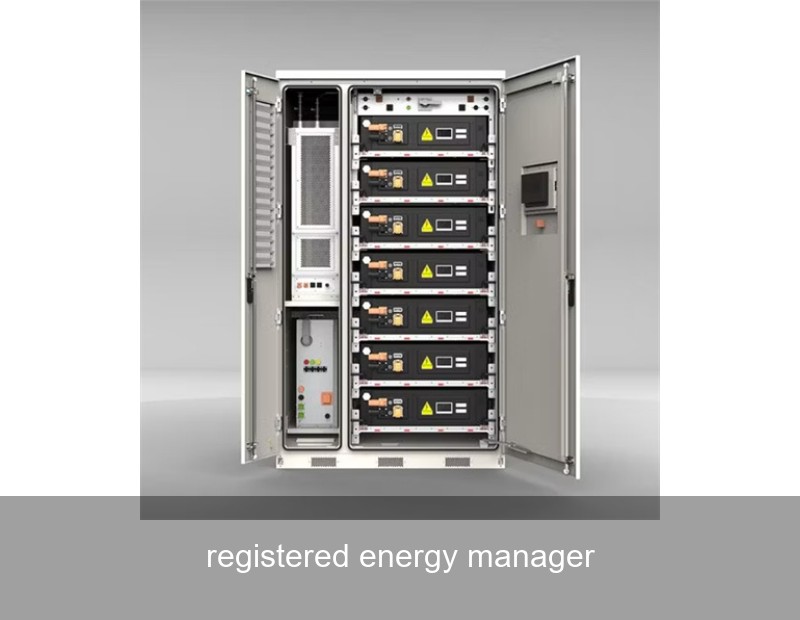
This case study highlights a critical insight: the REM's strategic vision is made physically possible by advanced energy storage. A modern BESS is the REM's most versatile physical tool. It acts as a buffer, a reservoir, and a shock absorber for the entire energy system.
For a REM, the choice of storage technology is paramount. They need a system that is not just a battery in a box, but an intelligent, software-driven asset. Key considerations include:
- Intelligence & Software: Can the BESS be seamlessly integrated into an EMS and respond autonomously to price signals or grid conditions?
- Safety & Reliability: Does it have robust, certified safety systems for thermal management and fault protection?
- Scalability & Flexibility: Can the solution be tailored and scaled to the specific site's load profile and future expansion plans?
- Total Cost of Ownership (TCO): Beyond the upfront price, what are the long-term costs related to efficiency, degradation, and maintenance?

Image Source: Unsplash - A modern battery storage installation.
Highjoule: Empowering the Registered Energy Manager
This is precisely where Highjoule's mission aligns with the goals of every forward-thinking Registered Energy Manager. Since 2005, Highjoule has been at the forefront of providing intelligent, efficient, and sustainable power solutions. We understand that a REM needs a technology partner, not just a vendor.
Our H-Series commercial and industrial battery storage systems are engineered to be the perfect physical extension of a REM's strategy. With our proprietary JouleMind AI-driven energy management platform, REMs gain an unparalleled level of control. They can:
- Set custom, multi-layered optimization goals (e.g., "maximize solar self-consumption first, then perform peak shaving, then participate in demand response").
- Monitor system health and performance in real-time from a single pane of glass.
- Access predictive analytics for maintenance and energy market forecasting.
- Seamlessly integrate third-party assets like solar inverters and building management systems.
For microgrid and utility-scale projects, Highjoule's containerized MegaJoule solutions offer the scalability and grid-forming capabilities that REMs require for islanding and grid support services. Our systems are designed with safety as the core principle, featuring multi-level protection architecture that gives REMs and facility managers peace of mind.
Navigating the Future Energy Landscape
The role of the Registered Energy Manager is set to become even more strategic as we move towards a 100% renewable grid. With the rise of electric vehicles, hydrogen electrolysis, and real-time energy markets, the complexity of managing a site's energy flows will multiply. The REM will be the key decision-maker in orchestrating these assets for maximum economic and environmental benefit.
The synergy between human expertise and technological capability has never been more important. A REM provides the strategy, the economic rationale, and the operational oversight. A partner like Highjoule provides the reliable, intelligent hardware and software platform to execute that strategy flawlessly.
As you consider your organization's energy resilience and cost profile, what is the first piece of data you would task your Registered Energy Manager to investigate, and what potential do you see for an intelligent storage system to transform that data into savings?
 Inquiry
 Online Chat