


Smart and Energy Storage Cabinet: The Intelligent Heart of Modern Power Management
Imagine your business's electricity bill suddenly drops by 30%, your operations become immune to grid blackouts, and you seamlessly integrate a growing fleet of solar panels. This isn't a vision of the distant future; it's the reality enabled by today's smart and energy storage cabinet. More than just a battery box, this technology is the intelligent core of a resilient, efficient, and sustainable energy strategy. For facility managers, business owners, and forward-thinking homeowners, understanding this system is key to unlocking energy independence and significant cost savings. As a global leader, Highjoule has been at the forefront of this evolution since 2005, designing intelligent storage solutions that turn power from a simple utility into a strategic asset.
Table of Contents
- What is a Smart and Energy Storage Cabinet?
- The Driving Forces: Why Smart Storage is Essential Now
- Real-World Impact: A Case Study from California
- Choosing the Right Smart Energy Storage Cabinet
- The Future is Intelligent and Decentralized
What is a Smart and Energy Storage Cabinet?
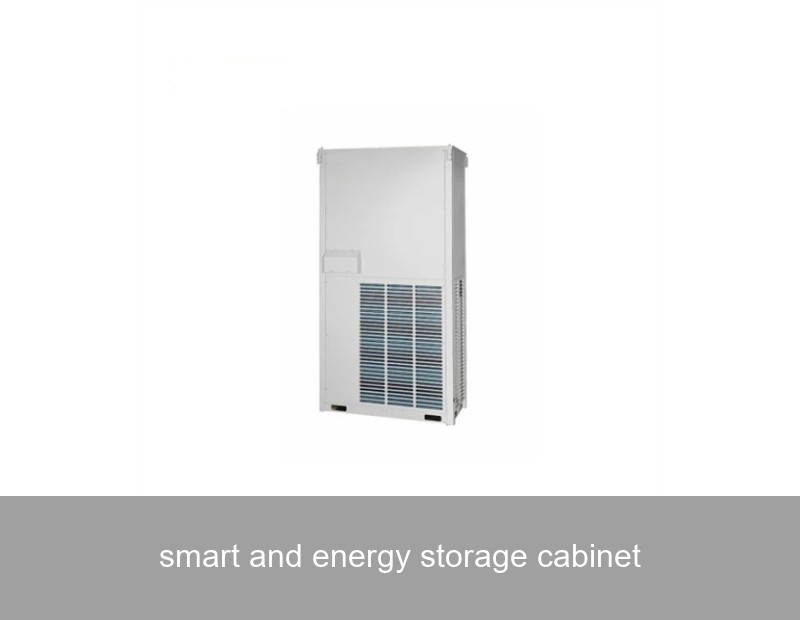
Let's break it down. A traditional energy storage cabinet is essentially a container for batteries. A smart and energy storage cabinet, however, is a fully integrated system. It combines advanced lithium-ion battery modules with a built-in brain: an intelligent energy management system (EMS). This cabinet doesn't just store DC power; it converts it to usable AC power, constantly monitors its own health and performance, and makes autonomous decisions based on electricity rates, consumption patterns, and grid conditions.
Think of it as the difference between a basic cell phone and a modern smartphone. One makes calls; the other connects to the internet, runs apps, and learns your habits. Highjoule's H-Cube Commercial Series is a prime example of this intelligence. It's not a single product but a scalable, containerized solution featuring our proprietary battery management system (BMS), bi-directional inverter, and cloud-connected monitoring platform—all housed in a sleek, safety-certified cabinet.

Image Source: Unsplash - Representative image of a modern energy storage system installation.
The Driving Forces: Why Smart Storage is Essential Now
The shift towards smart storage isn't just a trend; it's a response to concrete global challenges and opportunities.
- Volatile Energy Prices: In Europe and the US, electricity prices are increasingly unpredictable. A smart cabinet can "charge" when prices are low (often at night or during peak renewable output) and "discharge" to power your operations when prices peak, a process known as arbitrage.
- Grid Instability & Resilience: From heatwaves in Texas to winter storms in the Northeast, grid reliability is a concern. A smart storage system provides instant backup power, keeping critical operations running.
- The Renewable Integration Imperative: Solar and wind are intermittent. Without storage, excess solar power at noon often goes to waste. A smart cabinet stores that excess for use in the evening, maximizing your self-consumption and ROI on solar panels.
- Policy and Incentives: Governments are actively encouraging storage. In the US, the Investment Tax Credit (ITC) now applies to standalone storage, while in Europe, programs like the EU's Energy Storage Strategy are accelerating deployment.
How a Smart Energy Storage System Works: The PAS Framework
Let's use the PAS (Problem-Agitate-Solution) framework and a logical ladder to explain its operation.
Phenomenon: The Duck Curve
A clear phenomenon, especially in sunny regions, is the "Duck Curve." This chart shows a deep dip in net grid demand during the day (when solar floods the grid) and a sharp spike in the evening (when solar stops but demand remains). This steep ramp is costly and challenging for grid operators.
Data & The Problem
The data is stark. According to the U.S. Energy Information Administration, commercial electricity rates have risen steadily. Meanwhile, the levelized cost of lithium-ion batteries has fallen by over 90% in the last decade. The problem? Businesses are paying more for power while missing the chance to capitalize on cheaper, self-generated energy due to a lack of intelligent storage.
The Smart Cabinet Solution
This is where the intelligence of a system like Highjoule's H-Cube shines. It doesn't just react; it predicts and optimizes.
| Time | Grid Condition / Price | Smart Cabinet Action | Result for Your Business |
|---|---|---|---|
| Midday | High solar production, low prices | Charges from excess solar or grid | Stores cheap, clean energy |
| 4 PM - 9 PM | High demand, peak pricing | Discharges stored energy to power facility | Avoids peak demand charges, lowers bill |
| Grid Outage | Power loss | Islands from grid in milliseconds, powers critical loads | Business continuity ensured |
Our cloud-based platform, Highjoule Insight, provides a dashboard to monitor these flows in real-time, set custom strategies, and track savings—all from a smartphone.
Real-World Impact: A Case Study from California
Let's move from theory to tangible results. Consider a mid-sized food processing plant in Fresno, California. Facing time-of-use rates with very high peak charges and frequent grid "flex alerts," their goals were clear: reduce energy costs and ensure refrigeration never failed.
The Solution: Highjoule deployed a 500 kWh / 250 kW H-Cube Commercial Series smart energy storage cabinet, integrated with their existing rooftop solar.
The Data-Driven Outcome (12-month period):
- Peak Demand Charge Reduction: 40% decrease, saving over $2,500 monthly.
- Solar Self-Consumption: Increased from 60% to over 90%, drastically reducing grid imports.
- Total Bill Savings: 34% reduction in overall electricity costs.
- ROI: Achieved in under 5 years, accelerated by California's SGIP incentive.
- Resilience: Successfully rode through 3 grid outages, preventing spoilage of inventory.
This case exemplifies the multi-faceted value proposition of a truly smart system—it's an ROI generator and an insurance policy.

Image Source: Unsplash - Commercial solar installation paired with ground-mounted storage.
Choosing the Right Smart Energy Storage Cabinet
Not all cabinets are created equal. Here are key considerations, drawing from Highjoule's decades of engineering experience:
- Intelligence & Software: The EMS is the differentiator. Can it integrate with your building management system? Does it offer predictive algorithms and remote updates?
- Safety & Certification: Look for UL 9540 certification in the US and CE marking with relevant IEC standards in Europe. Highjoule designs feature multi-layer protection, including thermal runaway propagation prevention.
- Scalability & Flexibility: Can you start with a smaller system and expand later? Our modular design allows for capacity upgrades without replacing the entire cabinet.
- Service & Warranty: A 10-year performance warranty is standard, but ensure the provider offers robust remote monitoring and local service support. Highjoule's global network provides proactive maintenance alerts.
The Future is Intelligent and Decentralized
The trajectory is clear. As noted by research from the National Renewable Energy Laboratory (NREL), the future grid will be a network of decentralized, intelligent nodes—microgrids formed by solar, storage, and smart management. The smart and energy storage cabinet is the foundational building block of this new energy architecture.
It transforms energy from a passive expense into an active, manageable resource. For a business, it's a step towards operational and financial resilience. For a community, it's a step towards a stable, clean grid.
Is your organization ready to audit its energy flow and discover where a smart energy storage cabinet could start building your resilience and cutting costs today?
 Inquiry
 Online Chat