


Finding the Right Reliable Solar kW Supplier for Your Energy Transition
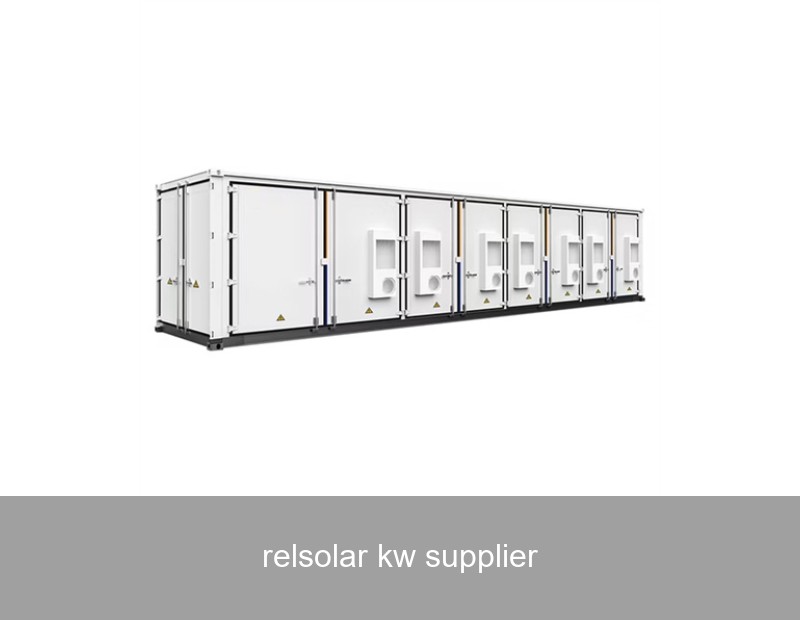
You've decided to make the switch to solar. The motivation is clear: energy independence, rising electricity costs, and a genuine commitment to sustainability. But here's where many projects stall or underperform: the critical step of selecting a reliable solar kW supplier. It's not just about buying panels; it's about securing a resilient, high-yield power generation asset. A trustworthy supplier delivers the promised kilowatts consistently, year after year, backed by robust warranties, transparent performance data, and system intelligence. This article will guide you through the essential criteria, using real-world insights, to ensure your solar investment is built on a foundation of reliability.
Table of Contents
- The Solar kW Paradox: More Panels Don't Always Mean More Power
- The Three Pillars of a Reliable Solar kW Supplier
- Case Study: A Bavarian Brewery's Recipe for Reliable Solar Power
- Beyond Generation: The Role of Intelligent Storage
- The Highjoule Approach: Engineering Reliability into Every kW
- Key Questions to Ask Your Potential Solar kW Supplier
The Solar kW Paradox: More Panels Don't Always Mean More Power
Imagine two identical rooftops. Both install a 50 kW solar array. On paper, they are equal. Yet, at the end of the year, System A produces 55,000 kWh, while System B lags at 48,000 kWh. That's a 12.7% deficit—a significant financial loss over the system's lifetime. Why does this happen? The answer lies in the nuance of reliability. A reliable solar kW supplier understands that a system's output is a complex equation involving component quality, environmental compatibility, design precision, and ongoing performance management. Simply sourcing the cheapest panels per watt is a common pitfall that compromises long-term yield and ROI.

Image: Not all kilowatts are created equal. System design and component integration are key. (Photo by American Public Power Association on Unsplash)
The Three Pillars of a Reliable Solar kW Supplier
To navigate the market, evaluate suppliers against these three non-negotiable pillars.
1. Component Integrity & Performance Transparency
A reliable supplier is transparent about the pedigree of every component. This goes beyond the panel brand to include:
- Inverter Efficiency and Durability: The inverter is the heart of the system. Look for models with high efficiency across a wide load range, proven performance in local climate conditions, and long manufacturer warranties.
- Balance of System (BOS) Quality: This includes mounting structures, wiring, and connectors. Corrosion-resistant racking for coastal or harsh winter environments (common in Northern Europe and the Northern US) is crucial.
- Independent Certification: Demand products with certifications from recognized bodies like TÜV or UL, and performance ratings from the National Renewable Energy Laboratory (NREL).
2. Engineering-Led System Design
Off-the-shelf designs fail to capture site-specific variables. Reliable suppliers employ sophisticated software to model:
| Design Factor | Impact on Reliability |
|---|---|
| Hyper-local Irradiance & Weather Data | Predicts annual yield accurately, avoiding over- or under-sizing. |
| Shading Analysis (Hourly, Year-Round) | Prevents power losses from nearby structures or vegetation. |
| Thermal & Wind Load Calculations | Ensures structural integrity and safety over decades. |
| Electrical String Optimization | Maximizes inverter efficiency and minimizes clipping losses. |
3. Performance Monitoring & Proactive Support
The relationship begins at installation, not ends. A true partner provides:
- Real-Time Monitoring Platforms: Access to a dashboard that shows not just total production, but per-string or even per-panel performance to quickly pinpoint issues.
- Proactive Alerts: Automated notifications for performance dips below expected thresholds.
- Predictive Maintenance: Using data trends to schedule maintenance before a failure causes extended downtime.
Case Study: A Bavarian Brewery's Recipe for Reliable Solar Power
Let's look at a concrete example. A mid-sized, family-owned brewery in Bavaria, Germany, aimed to decarbonize its energy-intensive cooling and brewing processes. Their primary concern was not just the initial cost, but guaranteed performance to match their 24/7 production schedule. They partnered with a reliable solar kW supplier who presented a holistic solution.
The Challenge: Limited roof space, high and consistent base load, need for stable power costs.
The Solution:
- A meticulously designed 280 kW rooftop array using high-efficiency bifacial panels, chosen for their better performance in diffuse light conditions common in the region.
- Advanced inverters with a 99% efficiency rating and integrated rapid shutdown safety features.
- Crucially, the system was integrated with a Highjoule HI-Cube 500 battery energy storage system (BESS).
The Results (Data after 18 months):
- Solar Generation: Exceeded first-year P50 estimates by 4.2%, producing 292,000 kWh.
- Self-Consumption Rate: Increased from 35% (solar only) to over 85% with the Highjoule BESS storing excess daytime power for evening use.
- Grid Independence: The brewery now covers 78% of its total annual electricity demand with its solar+storage system, shielding it from volatile market prices.
- ROI Acceleration: Projected payback period reduced by 2.3 years due to optimized self-consumption and reduced peak demand charges.

Image: Industrial facilities like breweries benefit immensely from reliable, high-yield solar. (Photo by J. Kelly Brito on Unsplash)
Beyond Generation: The Role of Intelligent Storage
As the brewery case shows, the modern definition of a reliable solar kW supplier must extend into storage. Solar generation is intermittent; demand is often not. To truly maximize the value and reliability of every solar kilowatt-hour, coupling generation with smart storage is essential. This transforms a solar array from a daytime-only contributor into a 24/7 resilient power asset. It allows for:
- Peak Shaving: Discharging stored energy during expensive grid peak periods, dramatically cutting utility demand charges—a major cost for commercial and industrial users.
- Backup Power: Providing seamless emergency power during grid outages, ensuring business continuity.
- Grid Services: For larger installations, participating in frequency regulation or virtual power plants for additional revenue streams.
The Highjoule Approach: Engineering Reliability into Every kW
At Highjoule, our mission since 2005 has been to provide not just components, but guaranteed performance. We act as your partner in building a truly reliable energy asset. For solar generation projects, we partner with tier-1 module and inverter manufacturers, but our core value is delivered through integration and intelligence.
Our HI-Smart Energy Platform is the cornerstone of this promise. This proprietary software doesn't just monitor; it optimizes. It intelligently manages the flow of energy between your solar array, Highjoule battery storage (like our scalable HI-Pack for commercial or HI-Home for residential applications), your loads, and the grid. It makes real-time decisions to maximize self-consumption, protect your equipment, and optimize for financial return based on your specific utility rate structure.
For microgrid and large-scale industrial applications, our HI-Cube containerized BESS solutions provide utility-grade reliability and scalability. Every Highjoule system is backed by comprehensive performance guarantees and a dedicated support team that uses data from your platform to offer proactive, not just reactive, service.
Key Questions to Ask Your Potential Solar kW Supplier
To separate the true partners from the simple vendors, bring this checklist to your next consultation:
- Can you provide detailed system-level performance modeling (P90/P95 estimates) for my specific location, not just panel specs?
- What is your process for ongoing performance validation, and what tools do I get to see this data?
- How do you engineer systems for extreme weather events relevant to my region (heavy snow, high heat, hurricanes)?
- Do you offer integrated storage solutions, and how do you control the interplay between solar and battery for my economic benefit?
- Can you share a case study with verifiable production data from a system you've installed in a similar climate and application?
Your journey to energy independence is too important to leave to chance. The right partner makes all the difference. What's the first energy load in your home or business you'd want a 100% reliable, solar-powered solution to handle?
 Inquiry
 Online Chat