


Renewable Energy Companies in Zambia: Powering a Sustainable Future
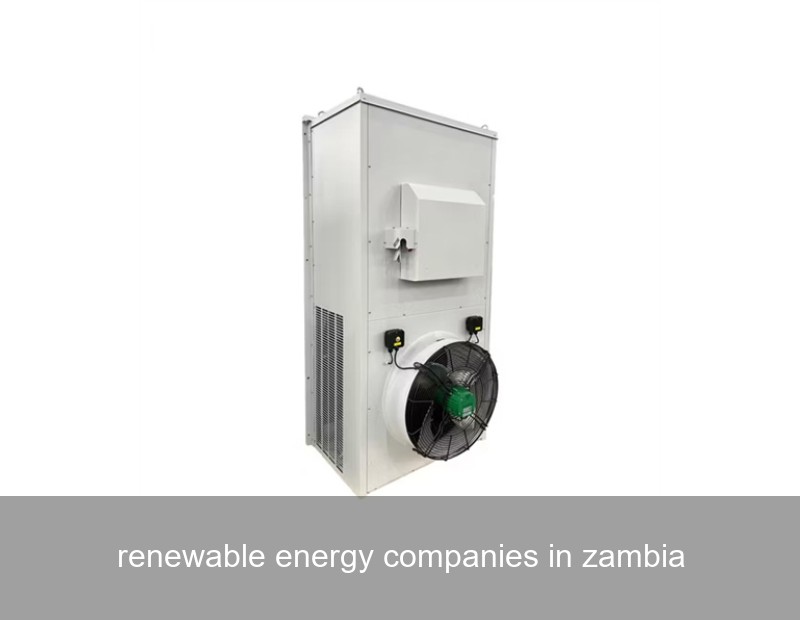
When you think of Zambia, you might picture the mighty Victoria Falls. But beyond its natural wonders, this Southern African nation is embarking on another transformative journey: a clean energy revolution. For businesses and communities across Zambia, the question is no longer *if* to switch to renewables, but *how* to do it reliably and cost-effectively. This is where innovative renewable energy companies in Zambia are stepping up, partnering with global technology leaders to turn abundant sunshine into stable, 24/7 power. The challenge? Solar and wind are intermittent. The solution, and the real game-changer, lies in integrating advanced energy storage systems to ensure the lights stay on when the sun goes down.
Table of Contents
The Zambian Energy Landscape: A Catalyst for Change
Zambia's energy story has historically been dominated by hydropower, which supplies over 80% of its electricity. However, recurring droughts, exacerbated by climate change, have made this source increasingly unreliable, leading to severe load-shedding that stifles economic growth. The International Renewable Energy Agency (IRENA) reports that Zambia possesses immense solar potential, with average solar irradiation levels significantly higher than in many European countries. This presents a phenomenal opportunity.
But here’s the phenomenon many early adopters faced: installing solar panels alone solved only half the problem. Energy generation was clean but mismatched with demand—peak sunshine hours didn't align with peak evening energy use in homes and factories. This mismatch created a "duck curve" effect, straining the grid and limiting the usable share of renewables. The data is clear: without storage, a significant portion of this clean, free energy goes to waste, and reliability remains a dream.
The Storage Imperative: Beyond the Solar Panel
This is the pivotal moment for renewable energy companies in Zambia. Their role is evolving from simple installers to comprehensive energy solution architects. The key component? Advanced Battery Energy Storage Systems (BESS).
Think of BESS as a high-tech "energy bank." It stores excess electricity generated during sunny periods and dispatches it precisely when needed—at night, during peak tariffs, or during grid outages. The benefits are quantifiable:
- Grid Stability: Storage provides frequency regulation and smooths out the variable output from solar farms.
- Energy Security: For industrial and commercial users, it acts as an uninterruptible power supply (UPS) on a massive scale, protecting sensitive machinery and data.
- Cost Optimization: Businesses can avoid expensive peak-time grid power by using stored energy, dramatically reducing their electricity bills.

Image: A modern solar-plus-storage installation. Credit: Unsplash.
Case Study: Mining Giant Secures Operations with Solar-Plus-Storage
Let's look at a real-world example. A major copper mining operation in the Kalumbila district faced crippling downtime due to grid instability. Diesel generators were a noisy, polluting, and expensive backup. In 2022, they partnered with a leading Zambian renewable energy developer to deploy a hybrid power plant.
The solution included a 30MW solar PV array coupled with a 15MW / 30MWh battery storage system. The results, published in their sustainability report, were transformative:
| Metric | Before Storage | After Storage Deployment |
|---|---|---|
| Grid Dependency During Peak | 100% | Reduced by over 40% |
| Diesel Fuel Consumption | ~5 million liters/year | ~1.8 million liters/year |
| Carbon Emissions | High | Reduced by ~64% |
| Power Reliability | Frequent interruptions | Over 99.5% uptime for critical loads |
This case is a microcosm of Zambia's potential. The storage system didn't just save money; it de-risked the core business operation, making it sustainable in every sense of the word. It's a powerful blueprint for other industries, from agriculture to manufacturing.
How Highjoule Partners with Renewable Energy Companies in Zambia
As a global leader in advanced energy storage since 2005, Highjoule doesn't just sell hardware; we empower local renewable energy companies in Zambia with the intelligence and resilience their projects demand. Our role is to provide the core technology that turns a renewable installation from a complementary source into a primary, reliable power asset.
For Zambian partners, we offer:
- Highjoule H-Series Commercial & Industrial (C&I) ESS: Scalable, containerized solutions designed for harsh environments. Their advanced liquid cooling and intelligent battery management ensure longevity and safety under the Zambian sun, maximizing return on investment.
- Intelligent Energy Management Software (EMS): The true brain of the system. Our AI-driven EMS predicts energy generation and consumption patterns, automatically deciding the most economical time to charge or discharge. This is crucial for navigating complex tariff structures and ensuring every kilowatt-hour is used optimally.
- Microgrid Solutions: For remote communities or agricultural hubs beyond the national grid, we provide fully integrated microgrid controllers that seamlessly blend solar, storage, and existing backup generators into a stable, mini-grid.
Our partnership model is collaborative. We provide the technological backbone, comprehensive training, and long-term support, enabling Zambian companies to lead the installation, maintenance, and client relationship. This knowledge transfer builds local capacity and ensures sustainable project success.

Image: Technician monitoring an advanced energy storage control system. Credit: Unsplash.
The Future is a Resilient, Decentralized Grid
The path forward for Zambia is not merely to add more megawatts, but to build a smarter, more flexible energy architecture. The vision is a network of decentralized, resilient hubs—factories, farms, schools, and hospitals—that can generate, store, and manage their own clean power, while also supporting the national grid when needed.
This transition is supported by progressive policies and international investment. The World Bank Group and other institutions are actively funding renewable projects with storage components, recognizing their role in climate adaptation and economic development. The opportunity for renewable energy companies in Zambia has never been larger.
Your Energy Independence Journey
Whether you're a hotel owner in Lusaka tired of generator noise, a factory manager in Ndola looking to lock in energy costs, or a developer planning a new utility-scale solar farm, the equation has changed. The missing link to true energy independence and operational resilience is now here, proven, and economically compelling.
What would the ability to control your energy costs and secure your power supply for the next 20+ years mean for your business or community?
 Inquiry
 Online Chat