


Why Renewable Energy Storage Systems Are the Unsung Heroes of the Clean Power Revolution
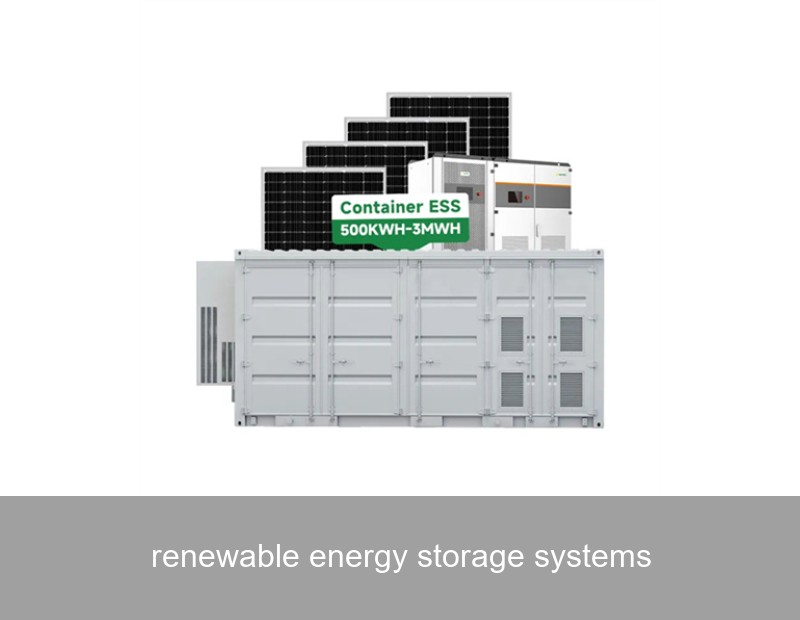
You've seen the headlines: solar panels are popping up on rooftops everywhere, and wind turbines are becoming a familiar part of the landscape. The transition to clean power is in full swing. But have you ever stopped to wonder what happens when the sun isn't shining or the wind isn't blowing? This is where renewable energy storage systems step into the spotlight. They are the critical, often overlooked, component that transforms intermittent renewable sources into a reliable, 24/7 power solution. For businesses, communities, and homeowners, understanding and implementing these systems is no longer a luxury—it's a necessity for energy independence and grid stability.
Table of Contents
- The Intermittency Challenge: More Than Just a Cloudy Day
- The Solution: How Renewable Energy Storage Systems Work
- Inside the Box: Key Technologies Powering Storage
- From Theory to Practice: A Real-World Case Study
- Highjoule's Role: Intelligent Storage for a Sustainable Future
- The Future of Storage: What's on the Horizon?
The Intermittency Challenge: More Than Just a Cloudy Day
The phenomenon is clear. We're generating more green electricity than ever before. In the U.S., renewables provided a record 22% of electricity generation in 2022, and Europe saw similar milestones. Yet, this success creates a new problem: mismatch. Solar production peaks at midday; demand often peaks in the early evening. A windy night might produce excess power that goes unused if there's no demand.
This isn't just an engineering puzzle—it's an economic and reliability issue. Grid operators face the constant challenge of balancing supply and demand. Without a buffer, they must rely on fossil-fuel-powered "peaker plants" to ramp up quickly during shortages, which are expensive and carbon-intensive. The data is stark: this mismatch can lead to curtailment (wasting perfectly good renewable energy) and higher costs for consumers.
The Solution: How Renewable Energy Storage Systems Work
Think of a renewable energy storage system as a sophisticated energy bank. Its primary function is straightforward: store energy when production exceeds consumption and discharge it when needed. But the intelligence behind this simple concept is what makes it revolutionary. Modern systems do much more than just charge and discharge. They:
- Balance Loads: Shift energy usage from peak to off-peak hours, saving significantly on utility bills.
- Provide Backup Power: Act as an uninterruptible power supply (UPS) during grid outages, keeping critical operations running.
- Stabilize the Grid: Offer services like frequency regulation, helping to maintain the grid's delicate balance 60 times per second.

Image Source: Unsplash - A modern battery storage installation.
Inside the Box: Key Technologies Powering Storage
While several technologies exist, lithium-ion batteries currently dominate the market due to their high energy density, efficiency, and rapidly declining costs. However, not all lithium-ion systems are created equal. The choice of chemistry, system design, and software intelligence are paramount.
| Technology | Key Advantages | Ideal Use Case |
|---|---|---|
| Lithium Iron Phosphate (LFP) | Superior safety, long cycle life, stable chemistry | Commercial, industrial, and residential storage |
| Lithium NMC | High energy density, good performance across temperatures | Electric vehicles, some grid applications |
| Flow Batteries | Long duration (4+ hours), easy scalability | Utility-scale long-duration storage |
For most commercial and industrial applications, LFP chemistry, as utilized in Highjoule's H-Series commercial storage systems, has become the gold standard. Its inherent safety—it's far more thermally stable than other chemistries—makes it ideal for installations near people and equipment, while its longevity ensures a strong return on investment.
From Theory to Practice: A Real-World Case Study
Let's move beyond theory to see the tangible impact. Consider a mid-sized dairy processing plant in Bavaria, Germany. The facility had invested heavily in a rooftop solar array, covering 80% of its daytime base load. However, it faced two problems: it was exporting excess solar power at low feed-in tariffs in the summer, and it was drawing expensive grid power in the early mornings and evenings for refrigeration and lighting.
The Data-Driven Outcome: In 2022, the plant integrated a 500 kWh / 250 kW battery storage system. The results after one year were compelling:
- Self-Consumption Rate: Increased from 35% to over 85%.
- Grid Dependence: Reduced peak grid draw by 70%.
- Cost Savings: Achieved a 40% reduction in overall electricity costs, with a projected payback period of under 6 years.
- Resilience: Gained 8+ hours of backup power for critical refrigeration units.
This case, mirrored by thousands of businesses across Europe and North America, illustrates the triple win of storage: economic savings, increased sustainability, and operational resilience.
Highjoule's Role: Intelligent Storage for a Sustainable Future
As a global leader founded in 2005, Highjoule has witnessed this evolution firsthand. Our mission is to provide more than just hardware; we deliver intelligent, integrated power solutions. We understand that a renewable energy storage system is only as good as the brain that controls it.
That's why our Energy Management System (EMS) is the core of every installation. This AI-driven platform doesn't just react—it predicts. By analyzing weather forecasts, electricity price signals, and consumption patterns, it optimizes every charge and discharge cycle to maximize financial return and efficiency. For a commercial client, this might mean automatically discharging the battery during the most expensive "peak demand" hours set by the utility.
Our product suite is designed to scale with your needs:
- H-Series for Commercial & Industrial: Modular, containerized solutions from 100 kWh to multi-MWh scales, built with LFP batteries for maximum safety and lifespan.
- Home Energy Hub: An integrated system for residences that combines solar, storage, and intelligent management for true energy independence.
- Microgrid Controllers: For campuses, remote communities, or industrial parks, our technology can island from the main grid and run independently on renewable generation and storage.

Image Source: Unsplash - Advanced control systems are key to storage performance.
The Future of Storage: What's on the Horizon?
The innovation curve is steep. We're moving towards even longer-duration storage (think 10+ hours) using new chemistries, which will be crucial for managing seasonal variations. Furthermore, the concept of virtual power plants (VPPs) is gaining traction. As noted by the National Renewable Energy Lab (NREL), VPPs aggregate thousands of distributed storage systems, like those in homes and businesses, to act as a single, dispatchable resource for the grid. This turns individual assets into contributors to broader grid stability and creates new revenue streams for system owners.
Making the Decision: It's About More Than Just Batteries
Choosing a storage system is a strategic decision. It requires evaluating your energy consumption profile, local utility rates and incentives, sustainability goals, and resilience needs. The right partner will conduct a detailed feasibility analysis, not just sell you a box of batteries.
So, as you look at your own energy bills, sustainability targets, or operational risks, ask yourself this: Is your renewable energy strategy complete without a plan to store and intelligently manage the power you generate? What would unlocking the full potential of your solar or wind investment mean for your bottom line and your environmental impact?
 Inquiry
 Online Chat