


Choosing the Right Renewable Energy Supplier: A Guide to Powering Your Future
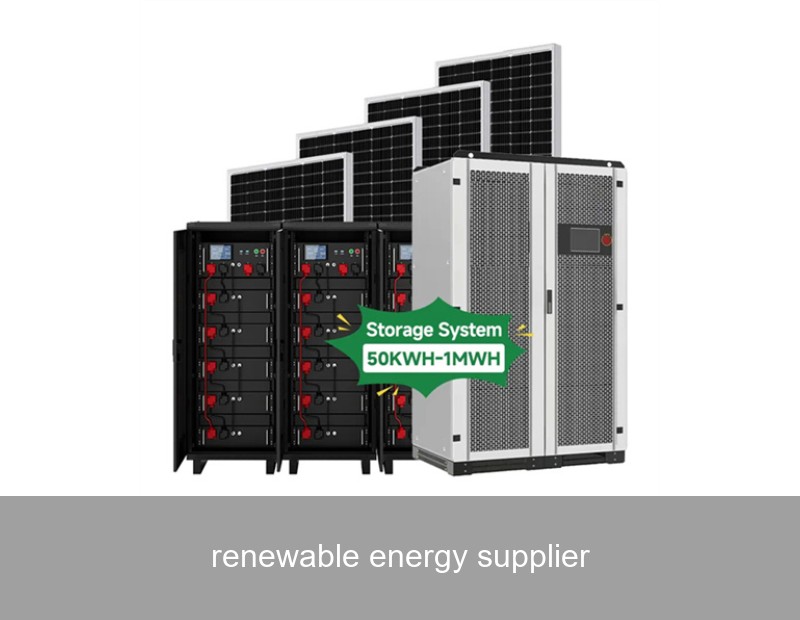
As electricity bills remain volatile and climate goals become more urgent, homes and businesses across Europe and the US are looking beyond their utility bills. They are seeking a true renewable energy supplier—a partner that does more than just source green electrons. The modern expectation is for a solution that provides independence, control, and resilience. This shift isn't just about buying cleaner energy; it's about generating, storing, and managing it intelligently on-site. The real question has evolved: How do you transition from a passive consumer to an active power manager?
Table of Contents
- The Shift: From Passive Consumer to Active Prosumer
- The Data Reality: Intermittency and the Need for Firm Power
- Case Study: A German Manufacturing Plant's Journey to Resilience
- Beyond Generation: The Core Capabilities of a Modern Energy Supplier
- The Highjoule Approach: Intelligent Storage as the Keystone
- Making the Choice: Key Questions for Your Renewable Partner
The Shift: From Passive Consumer to Active Prosumer
Traditionally, a renewable energy supplier was a utility company offering a tariff backed by wind or solar farms. Your role was simple: pay the bill. Today, technology has empowered us to become "prosumers"—both producing and consuming energy. Rooftop solar is the entry point, but it's only half the equation. The true transformation happens when you can capture that abundant midday solar power and use it when you need it most: during expensive evening peak rates, during a grid outage, or on a cloudy day. This requires a sophisticated ecosystem of generation, storage, and software. A leading renewable energy supplier now must provide this integrated, hardware-and-software solution.
The Data Reality: Intermittency and the Need for Firm Power
The sun doesn't always shine, and the wind doesn't always blow. This intermittency is the fundamental challenge of renewables. According to the International Energy Agency (IEA), successfully integrating high shares of variable renewable energy requires flexible resources like energy storage to balance supply and demand in real-time. Let's look at a typical solar-powered home without storage:
| Time of Day | Solar Production | Home Energy Demand | Grid Reliance |
|---|---|---|---|
| Midday (Sunny) | High | Low | Exports surplus, often at low value |
| Evening (Peak) | None | High | Imports expensive power, straining the grid |
This mismatch is why pairing generation with intelligent battery storage is non-negotiable for true energy independence and cost optimization. It turns variable green power into firm, dispatchable power.

Image Source: Unsplash (Representative image of a residential solar-plus-storage system)
Case Study: A German Manufacturing Plant's Journey to Resilience
Consider the real-world example of a mid-sized automotive parts manufacturer in Bavaria, Germany. Their goals were clear: reduce soaring energy costs, secure production against grid outages, and meet corporate sustainability targets. Simply installing a large rooftop solar array wasn't enough, as their machinery ran 24/7. They needed a solution that aligned production with consumption.
They partnered with Highjoule to design and deploy a turnkey microgrid solution. The system included a 1.2 MWp solar carport, but the centerpiece was a 2.4 MWh containerized Highjoule Hercules BESS (Battery Energy Storage System) and advanced energy management software. Here’s the impact after one year:
- Energy Cost Reduction: By storing excess solar energy and discharging it during peak price hours (4-9 PM), they slashed their grid electricity purchases by 68% during those periods.
- Self-Consumption Rate: The fraction of solar energy used directly on-site jumped from 35% to over 90%, maximizing their ROI on solar panels.
- Reliability: The system provides seamless backup power for critical assembly lines during grid disturbances, preventing downtime losses estimated at €15,000 per hour.
This case illustrates that for commercial and industrial entities, a modern renewable energy supplier must deliver tangible financial and operational resilience, not just kilowatt-hours of green energy.
Beyond Generation: The Core Capabilities of a Modern Energy Supplier
So, what should you look for? The benchmark has moved. Your partner should offer:
- Integrated System Design: Seamless compatibility between solar inverters, battery systems, and existing electrical infrastructure.
- Advanced Energy Management Software (EMS): The "brain" that predicts energy production and consumption, optimizes storage cycles for cost savings, and can participate in grid services like frequency regulation.
- Deep Storage Expertise: Not all batteries are equal. Expertise in battery chemistry (like LiFePO4 for safety and longevity), thermal management, and system scaling is critical.
- Ongoing Support & Monitoring: Remote performance monitoring, proactive maintenance, and warranty support to ensure the system delivers for its entire 15-20 year lifespan.
The Highjoule Approach: Intelligent Storage as the Keystone
At Highjoule, we believe the intelligent battery system is the cornerstone of the modern energy ecosystem. Founded in 2005, we've evolved from a storage technology innovator to a full-service renewable energy supplier for commercial, industrial, residential, and microgrid applications. Our solutions are built around our modular, scalable battery storage systems, which are managed by our proprietary Neuron OS platform.
For homeowners, our Residential Energy Hub integrates seamlessly with leading solar inverters, allowing users to maximize self-consumption, secure backup power, and even optimize for time-of-use rates with a simple app. For businesses and utilities, our Hercules BESS and Microgrid Controllers enable complex energy arbitrage, demand charge reduction, and grid stability services. We act as your long-term partner, providing the technology and intelligence to transform your energy profile from a cost center into a strategic, resilient asset.

Image Source: Unsplash (Representative image of a containerized battery storage system)
Making the Choice: Key Questions for Your Renewable Partner
As you evaluate potential partners, move the conversation beyond price-per-watt for solar. Ask these strategic questions:
- How does your solution specifically address intermittency and ensure power availability when I need it?
- Can you provide a detailed financial model showing payback period and lifetime value, factoring in energy arbitrage and potential grid service revenue?
- What is the expected degradation rate of your battery system over 10 years, and what does the warranty cover?
- Can I see real performance data and case studies from similar projects in my region (like the European Union or North America)?
- Who is responsible for long-term system health monitoring and maintenance?
The journey to true energy independence is exciting. It's a step towards financial predictability, operational resilience, and a tangible contribution to a sustainable grid. The right renewable energy supplier will be your guide on that journey, providing not just components, but certainty.
What is the single biggest energy challenge—cost, resilience, or sustainability—that your home or business needs to solve in the next two years?
 Inquiry
 Online Chat