


Unlocking the Full Potential of Community Solar with Intelligent Battery Storage
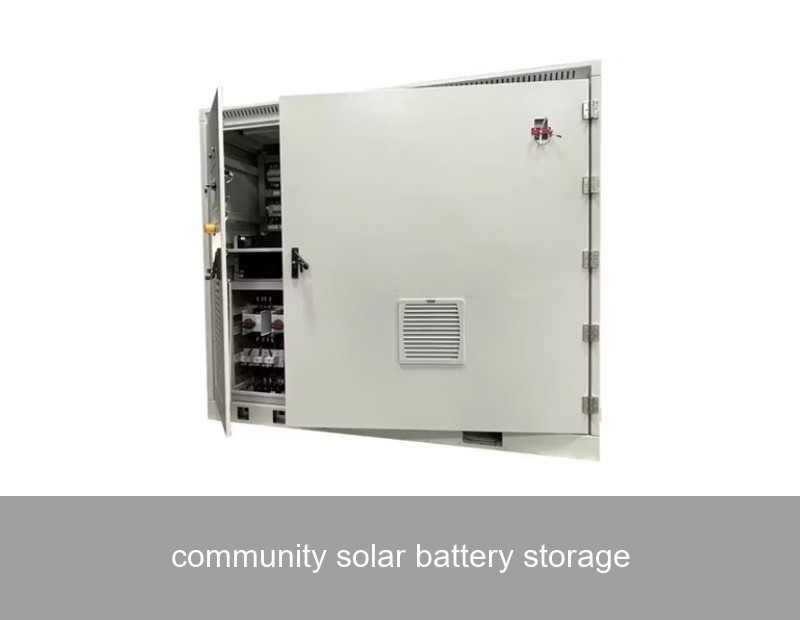
Imagine a neighborhood where the sun powers not just homes, but the shared spirit of energy independence and resilience. This is the promise of community solar. But what happens when the sun sets, or on cloudy days? The answer lies in a game-changing addition: community solar battery storage. By pairing shared solar arrays with advanced energy storage systems, communities can capture every kilowatt-hour of clean energy and use it precisely when needed, transforming a good idea into a robust, reliable, and economically superior solution. Let's explore how this powerful combination is reshaping energy access.
Table of Contents
- The Challenge: Solar's Intermittency in a Shared Model
- The Solution: How Community Solar Battery Storage Works
- Key Benefits: Resilience, Savings, and Grid Support
- A Real-World Case: Brooklyn's Resilient Solar Garden
- Highjoule's Role: Intelligent Storage for Community Projects
- The Future Outlook and Your Next Step
The Challenge: Solar's Intermittency in a Shared Model
Community solar allows multiple participants—renters, homeowners, businesses—to subscribe to a portion of a larger, off-site solar array. They receive credits on their electricity bills for the power their share generates. It's a brilliant model for democratizing solar access. However, it inherits a fundamental characteristic of solar power: intermittency. Generation peaks midday, often when community demand is lower, and drops to zero in the evening peak. This mismatch can lead to:
- Lost Value: Excess solar energy fed back to the grid may be compensated at lower rates (net metering variations).
- Missed Opportunities: The community cannot use its own clean energy during critical peak hours or power outages.
- Grid Strain: Unmanaged solar influx can sometimes challenge local grid stability.
This is where adding a battery energy storage system (BESS) becomes not just an add-on, but a critical enabler for maximizing value and control.
The Solution: How Community Solar Battery Storage Works
A community solar battery storage system acts as the heart of the project. Think of it as a collective energy bank. The solar panels generate electricity. Instead of sending all of it immediately to the grid, a portion—or all—is used to charge a large-scale, on-site battery storage system. This stored energy is then dispatched based on intelligent software algorithms that prioritize the community's needs.

Image: A modern solar farm paired with battery storage units. Source: Unsplash (Credit: American Public Power Association)
The operational logic follows a smart, multi-layered approach:
| Time | Solar Generation | Battery Action | Community Benefit |
|---|---|---|---|
| Midday (Sunny) | High | Charges from excess solar | Captures low-cost, clean energy for later |
| Evening Peak (6-9 PM) | Low/None | Discharges stored energy | Offsets expensive grid power, reduces bills |
| Grid Outage | Variable | Islands the community, provides backup | Ensures critical power for subscribers |
| Night | None | Discharges or remains on standby | Provides overnight clean energy use |
Key Benefits: Resilience, Savings, and Grid Support
The integration of storage elevates a community solar project on multiple fronts.
Enhanced Economic Value
By storing solar energy and using it during peak tariff periods, subscribers can maximize bill savings. The battery effectively performs arbitrage—buying (storing) energy when it's cheap and using it when it's expensive. Studies show that adding storage can increase the value of solar energy by 20-50% depending on local utility rates and market structures (NREL, 2021).
Reliability and Resilience
This is a game-changer. A community solar battery storage system can be configured to provide backup power to critical community loads or even the entire subscriber base during grid outages. This transforms the project from a pure financial tool into a source of energy security, a feature increasingly valued in the face of climate-induced extreme weather.
Grid Services and Stability
Aggregated, large-scale storage can provide valuable services to the wider electricity grid, such as frequency regulation and voltage support. This can create an additional revenue stream for the project, potentially lowering costs for all subscribers. It turns the community into a proactive grid citizen.
A Real-World Case: Brooklyn's Resilient Solar Garden
Let's look at a concrete example from the U.S. market. The Bronx Community Solar + Storage Project in New York City is a pioneering model. This 3.2 MW community solar farm is paired with a 1.2 MW / 3.6 MWh battery storage system.
- Scale: Serves over 600 low-to-moderate income households.
- Function: The battery stores excess solar to shift energy to evening hours, but its most critical role is resilience. In the event of a grid outage, it can island and provide backup power to a designated emergency shelter within the community.
- Impact: The project demonstrates how community solar battery storage directly addresses energy equity and climate resilience. It provides bill savings of ~15% to subscribers while ensuring a haven during blackouts. You can read more about its policy framework from the New York State Energy Research and Development Authority (NYSERDA).

Image: A technician performing maintenance on a large battery energy storage system. Source: Unsplash (Credit: Science in HD)
Highjoule's Role: Intelligent Storage for Community Projects
As a global leader in advanced energy storage solutions since 2005, Highjoule is at the forefront of enabling robust community solar battery storage projects. Our expertise lies in providing the intelligence and hardware that make these systems not just functional, but optimal.
For community solar developers, we offer our GridSynergy Modular BESS. This scalable, containerized solution is ideal for the demands of shared solar projects:
- Intelligent Energy Management (EMS): The true brain of the operation. Our EMS automatically optimizes dispatch for maximum economic return (considering time-of-use rates, demand charges) while prioritizing resilience settings.
- Scalability & Safety: Built with lithium iron phosphate (LFP) battery chemistry for enhanced safety and long cycle life, our systems can be scaled from hundreds of kWh to multiple MWh to match any community solar array.
- Grid Integration: Seamless integration with solar inverters and the utility grid, including advanced capabilities for grid services if required by the project's business model.
Highjoule doesn't just sell hardware; we provide a full suite of services from initial feasibility and system design to commissioning and long-term performance monitoring. We understand that the success of a community solar battery storage project depends on reliable performance over decades, and we engineer our solutions accordingly.
The Future Outlook and Your Next Step
The synergy between community solar and battery storage is undeniable. With policies like the U.S. Inflation Reduction Act (IRA) offering significant investment tax credits for standalone storage and solar-plus-storage, the economic feasibility is stronger than ever. In Europe, the drive for energy security and the REPowerEU plan are accelerating similar adoptions.
The future community is not just a consumer of energy, but a self-optimizing prosumer community—producing, storing, and managing its clean power. The technology is here, the economics are improving, and the need for resilient, local energy is clear.
Is your community, development firm, or municipality considering how to build a solar project that is truly future-proof? What specific resilience or economic goals would you want a community solar battery storage system to achieve for your stakeholders?
 Inquiry
 Online Chat