


Rockwill China: How Much? Unpacking the True Value of Advanced Battery Storage
If you're a project developer, energy manager, or business leader in Europe or the U.S. researching large-scale battery energy storage systems (BESS), you've likely come across "Rockwill China" in your supplier searches. And the immediate, pressing question is almost always: "Rockwill China, how much?" While the instinct to focus on the price per megawatt-hour is understandable, this single figure tells a very incomplete story. In today's dynamic energy landscape, the true cost of a BESS isn't just its purchase price; it's a complex equation of performance, longevity, safety, and the intelligence of its software. This article moves beyond the simple quote to explore what you're really buying and how to assess value for your commercial, industrial, or microgrid project.
Rockwill China's Energy Ambitions: More Than Just a Price Tag
China, as a global manufacturing powerhouse, is home to numerous battery and storage system integrators, Rockwill among them. This proliferation of options can make the market seem overwhelmingly price-driven. However, a 2023 report by Wood Mackenzie highlighted a crucial shift: while upfront cost remains a factor, global buyers are increasingly prioritizing bankability, proven track records in their region, and advanced grid-service capabilities [Source: Wood Mackenzie]. The initial "how much" is being replaced by "how well will it perform over 15+ years?" This is where the conversation needs to start. A system that costs 20% less upfront but degrades faster or lacks crucial safety certifications can become a significant financial and operational liability.

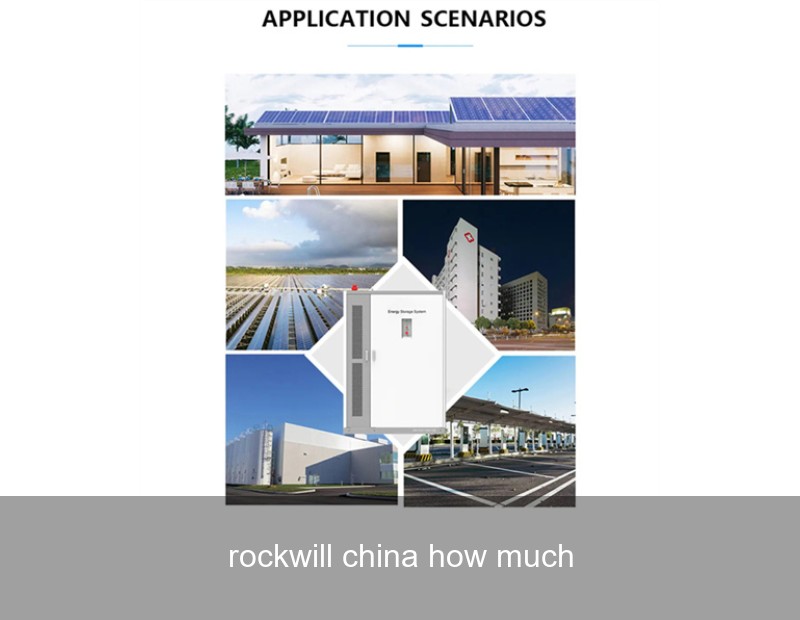
Image: A modern BESS installation requires robust design for long-term value. (Source: Unsplash, representative image)
The Real Cost of a Megawatt: Decoding BESS Pricing
Asking "how much for a Rockwill system?" is like asking "how much for a house?" The answer depends entirely on the specifications. For BESS, key price drivers include:
- Cell Chemistry: Lithium Iron Phosphate (LFP) is now the dominant choice for stationary storage due to its longer cycle life, thermal stability, and avoidance of cobalt/nickel price volatility.
- System Scale & Configuration: Costs per kWh typically decrease with scale, but balance-of-plant costs (containers, HVAC, fire suppression, grid interconnection) form a significant portion.
- Power Conversion System (PCS): The bidirectional inverter's efficiency and ability to provide grid-forming services add value and cost.
- Energy Management System (EMS): This is the "brain." A sophisticated, AI-driven EMS that can optimize for revenue streams (like frequency regulation or arbitrage) is a critical value adder, not just a line item.
Therefore, a comparison based solely on a $/kWh number from a supplier website is often misleading. The real metric should be Levelized Cost of Storage (LCOS)—the total lifetime cost divided by the total useful energy output. A higher-quality system with a lower degradation rate often has a superior LCOS, even with a higher initial price.
A Case Study from Germany: The True Measure of Value
Let's ground this in reality. Consider a mid-sized manufacturing plant in Bavaria, Germany. Facing volatile energy prices and seeking to maximize its on-site solar PV self-consumption, it needed a 500 kWh / 250 kW storage system.
- Phenomenon: They received three bids, including one from a low-cost Asian integrator (similar to a Rockwill quote) that was 25% cheaper than the nearest competitor.
- Data & Analysis: The cheaper system used lower-grade LFP cells with a published cycle life of 4,000 (to 80% capacity) and a simpler EMS. The more expensive option, from Highjoule, used premium Tier-1 cells rated for 8,000+ cycles and featured its proprietary Adaptive Grid Intelligence (AGI) software.
- Case Outcome: The plant chose Highjoule. Over the first two years, the AGI software's predictive algorithms increased the effective solar self-consumption rate from an estimated 70% to over 88%, dramatically reducing grid imports. Furthermore, the system's grid-forming capability provided the local DSO with voltage support, generating a small additional revenue stream. The higher initial investment is projected to pay back in 6.5 years, compared to an 8+ year estimate for the cheaper system when factoring in faster degradation and lost revenue opportunities.
This case underscores that the right question isn't "Rockwill China, how much?" but "Which system delivers the lowest total cost of ownership and highest operational value for my specific needs in my market?"
Highjoule's Approach: Delivering Value Beyond the Initial Quote
At Highjoule, with nearly two decades of experience since 2005, we engineer systems with the total lifecycle in mind. For commercial and industrial clients in Europe and the U.S., this means:
- Highjoule H-Series Commercial Systems: Our modular, containerized solutions are built with automotive-grade LFP battery modules. They come standard with our CellSentry™ thermal runaway prevention and AGI EMS, enabling participation in grid service markets like FFR (Fast Frequency Response) or California's CAISO programs.
- Unmatched Software Intelligence: Our platform doesn't just store energy; it optimizes it for multiple value streams simultaneously—solar smoothing, demand charge reduction, backup power, and grid services—maximizing your ROI.
- Localized Support & Compliance: We don't just ship containers. We provide full project support, ensuring compliance with local codes like UL 9540 in the U.S. or VDE-AR-E 2510-50 in Germany, and offer long-term service agreements for performance peace of mind.
We position ourselves not as the cheapest supplier, but as the most valuable long-term partner for your energy resilience and profitability.
| Evaluation Factor | Low-Cost / Commodity BESS | High-Value / Engineered BESS (e.g., Highjoule) |
|---|---|---|
| Primary Focus | Lowest upfront $/kWh | Lowest Levelized Cost of Storage (LCOS) |
| Battery Cells | Variable quality, often shorter cycle life warranty | Tier-1, long-cycle LFP with performance warranty |
| System Intelligence | Basic charge/discharge logic | AI-driven EMS for multi-revenue optimization |
| Grid Integration | Grid-following only | Grid-forming capable for stability services |
| Safety & Certification | May meet basic standards | Designed to exceed local fire & grid codes (UL, VDE, etc.) |
| Long-Term Partner | Transaction-based supplier | Lifecycle service and support partner |
Key Factors That Truly Determine Your System's Worth
When evaluating proposals, move beyond price and demand clear answers on these value drivers:
- Degradation Warranty: What is the guaranteed energy retention after 10 years? (e.g., 70% remaining capacity?).
- Round-Trip Efficiency: A few percentage points difference significantly impacts annual energy yield and revenue.
- Grid Service Capabilities: Can the system provide frequency regulation, voltage support, or black start? This unlocks revenue.
- Local Service & Warranty Support: Who will respond if there's an issue, and what is the guaranteed response time?
From Inquiry to Installation: A Strategic Partnership
Starting your project with a detailed technical and economic feasibility study is crucial. Highjoule's process begins with modeling your load profile, local energy rates, and grid requirements to design a system that maximizes financial return, not just one that fills a space. We co-engineer the solution with you, ensuring it integrates seamlessly with your existing solar assets or microgrid controls.

Image: Intelligent software dashboards are key to unlocking storage value. (Source: Unsplash, representative image)
So, while the question "Rockwill China, how much?" might get you a starting number, the journey to a successful storage project requires deeper inquiry. It's about partnership, performance, and the peace of mind that comes from a system engineered for the long haul.
What specific energy challenge—whether it's demand charge spikes, renewable intermittency, or seeking new revenue—are you hoping a battery storage system will solve for your business?
 Inquiry
 Online Chat