


How Much for an All-in-One Solar System? Unpacking the True Cost of Energy Freedom
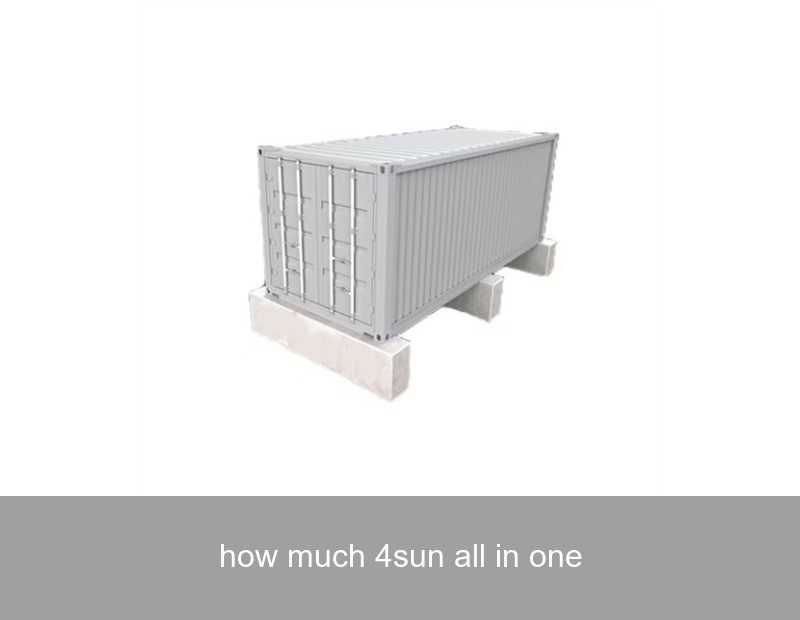
If you're a homeowner or business leader in Europe or the US looking at solar, you've likely heard the buzz: "all-in-one solar storage systems." It sounds like the ultimate convenience—a single, sleek box that captures sunshine, stores it, and powers your life. But the first question that naturally comes to mind is, how much does a 4kW all-in-one solar system actually cost? The short answer is, it's more complex than a single number. The price you see isn't just for hardware; it's an investment in a resilient, intelligent, and sustainable energy ecosystem for your property. Let's peel back the layers of cost, value, and technology to give you a clear picture.
Breaking Down the Cost: What's "All-in-One" Really Made Of?
An all-in-one system, often called a hybrid or integrated system, typically combines solar inverters, battery storage, and advanced energy management software into a single, pre-engineered unit. Unlike piecemeal setups, this integration boosts efficiency, simplifies installation, and provides a unified monitoring interface. So, when you ask "how much for a 4kW all-in-one system?", you're pricing a complete energy solution. Key components that influence cost include:
- Solar Panels (Photovoltaics): The number and efficiency of panels needed to achieve ~4kW of generation.
- Integrated Power Conversion System: The brain of the operation, converting DC solar power to AC for your home and managing battery charging/discharging.
- Battery Storage Capacity: Measured in kilowatt-hours (kWh), this determines how much excess solar energy you can save for later use, like at night or during outages.
- Advanced Energy Manager: The software that intelligently decides when to use solar, store power, or draw from the grid, optimizing for self-consumption and cost savings.
- Installation & Grid Compliance: Professional installation, permitting, and ensuring the system meets local utility and safety standards (like UL 9540 in the US or CE marks in Europe).
For a typical 4kW solar array paired with a moderate 10-15kWh storage capacity in an all-in-one configuration, total installed costs in markets like Germany or California can range significantly. According to industry benchmarks, you might be looking at a broad range of $15,000 to $25,000+ before incentives. Why such a range? It comes down to product quality, battery chemistry, smart features, and the depth of integration.
The Data Behind the Dollars
A 2023 report by the National Renewable Energy Laboratory (NREL) highlights that while solar PV costs have fallen dramatically, the addition of storage adds a significant but value-driven premium. The key metric is no longer just "cost per watt" for solar, but "cost per cycle" for the entire system—how cheaply it can deliver reliable power over its 15-20 year lifespan.
Case Study: A Hamburg Bakery's Recipe for Energy Independence
Let's move from theory to a real-world example. "Bäckerei Schmidt," a family-run bakery in Hamburg, Germany, faced rising energy costs and needed backup power for its refrigeration units. Their goal was to maximize self-consumption of solar energy and ensure no spoilage during grid interruptions.
They installed a 4.2kW solar array with a fully integrated all-in-one storage system featuring 13.5kWh of usable capacity. The system was designed to prioritize powering their ovens during the day with direct solar and keeping the cold stores running at night from the battery.
| Metric | Before Installation | After 1 Year |
|---|---|---|
| Grid Electricity Consumption | 100% | 35% |
| Self-Consumption of Solar | N/A | Over 80% |
| Estimated Annual Savings | €0 (Baseline) | €2,800 |
| Outage Protection | None | Critical loads backed for 10+ hours |
The total installed cost was approximately €24,000. With Germany's supportive policies and a federal grant, the net investment was reduced by nearly 30%. The bakery's owner noted that beyond savings, the predictable energy cost and resilience were priceless for business continuity. This case illustrates that the "cost" transforms into a strategic asset with a clear financial and operational return.

Image Source: Unsplash (Representative image of commercial solar installation)
The Highjoule SunNexus 4: A Benchmark in Integrated Energy
At Highjoule, with nearly two decades of experience in advanced energy storage, we've engineered our SunNexus 4 All-in-One Energy System to directly address the cost-value equation. It's not just another container for parts; it's a pre-synergized platform designed for the needs of European and American homes and businesses.
So, what defines the SunNexus 4's value proposition? It starts with deep integration. Our proprietary Adaptive Core™ technology seamlessly orchestrates between high-efficiency PV conversion, lithium-iron-phosphate (LFP) battery cycling, and grid interaction. This reduces energy losses that are common in disaggregated systems, meaning you harvest and use more of every sunray that hits your roof.
- Scalable Storage: Start with a base 10kWh battery unit, expandable up to 30kWh to match your growing needs. AI-Powered Energy OS: The system learns your consumption patterns and automatically shifts between solar, battery, and grid to minimize your bills, leveraging time-of-use rates where applicable.
- Built-in Grid Services Ready: In many regions, systems like the SunNexus 4 can participate in virtual power plant (VPP) programs, potentially generating revenue by supporting grid stability.
- Professional Installation Network: Highjoule works with a certified network of installers, ensuring precise commissioning and long-term support, which is a critical but often overlooked part of the total cost of ownership.
When evaluating how much a 4kW all-in-one system like the SunNexus 4 costs, it's essential to factor in these intelligence and durability features. You're investing in a system designed to deliver peak performance and reliability for over 20 years, backed by comprehensive warranties and monitoring.
Looking Beyond Price Tag: The Long-Term Value Proposition
Focusing solely on upfront cost can be misleading. The true economics of an all-in-one system are measured over time. Consider these factors that contribute to your return on investment:
- Skyrocketing Retail Electricity Rates: As utility prices continue to climb—a trend seen across the US and Europe—your fixed-cost solar energy becomes more valuable each year.
- Increased Resilience: The cost of a power outage for a business or a disruptive family home can be substantial. An all-in-one system with backup power provides insurance against grid instability.
- Enhanced Property Value: Studies, including one from the U.S. Department of Energy, indicate that homes with solar and storage sell at a premium.
- Sustainability Goals: For many, reducing carbon footprint is a core value. The system's environmental contribution is a non-financial but significant return.

Image Source: Unsplash (Representative image of a modern sustainable home)
Your Energy Future: The Right Questions to Ask
Instead of just "how much," the more empowering questions are: "How much can I save?" and "How much resilience do I gain?" The journey begins with a detailed assessment of your energy profile—your past electricity bills, your roof's potential, and your personal goals for independence and sustainability.
Highjoule's experts specialize in creating these tailored analyses. We help you model the financial and energetic performance of a SunNexus system for your specific address, incorporating local weather data, utility rates, and available incentives. This personalized proposal gives you a clear, confident answer to what your energy future could look like.
So, what's the first step toward answering "how much" for your unique situation? What does your ideal energy day look like—waking up to a battery charged by yesterday's sun, knowing your business runs uninterrupted, or finally seeing your electric bill plummet?
 Inquiry
 Online Chat