


Ryse Energy UK: How Much Does a Wind Turbine System Really Cost?
If you're a homeowner, farmer, or small business owner in the UK looking to take control of your energy bills and carbon footprint, you've likely come across names like Ryse Energy. The burning question is, of course, Ryse Energy UK, how much? While a simple Google search might give you a ballpark figure for a turbine, the real answer is more nuanced. The true cost isn't just about the hardware; it's about the value of a reliable, intelligent, and integrated energy system over its 20+ year lifetime.
Table of Contents
- The Real Cost: Beyond the Price Tag
- Key Factors That Determine Your Wind Energy System Cost
- The Storage Imperative: Why Your Wind Turbine Needs a Battery
- Case Study: A UK Farm's Journey to Energy Independence
- The Highjoule Solution: Intelligent Storage for Maximum ROI
- Making the Decision: Your Next Steps
The Real Cost: Beyond the Price Tag
Asking "how much for a Ryse Energy turbine?" is like asking "how much for a car?" The range is vast. A small-scale wind turbine system from providers like Ryse Energy in the UK can start from approximately £15,000 for a micro-turbine and can exceed £100,000 for larger, more powerful systems designed for substantial commercial or agricultural use. However, focusing solely on this upfront capital expenditure (CAPEX) is a common mistake. The smarter approach is to evaluate the levelized cost of energy (LCOE)—the total lifetime cost divided by the total energy produced. This is where your investment starts to make real sense.

Credit: Unsplash - A small wind turbine installation. The site assessment and foundation are key initial costs.
Key Factors That Determine Your Wind Energy System Cost
Several variables dramatically influence the final figure for your project:
- Turbine Size & Power Rating: Measured in kilowatts (kW). A 5kW system costs significantly less than a 50kW system.
- Site & Installation: This includes mast height, foundation complexity, grid connection fees, and planning permission challenges. A difficult site can increase costs by 20-30%.
- System Components: The turbine is just one part. You need inverters, controllers, and crucially, an energy storage system.
- Ongoing Costs: Maintenance, insurance, and potential finance costs.
| Cost Component | Estimated Range | Notes |
|---|---|---|
| Turbine & Mast | £30,000 - £70,000 | Highly dependent on rated power and height. |
| Installation & Civil Works | £10,000 - £25,000 | Site-specific; includes foundation and crane hire. |
| Power Conversion & Grid Connection | £5,000 - £15,000 | Inverters, switches, and DNO (Distribution Network Operator) fees. |
| Battery Energy Storage System (BESS) | £8,000 - £25,000+ | Often overlooked but critical for ROI. |
| Total Estimated Project Cost | £53,000 - £135,000+ | Before any government incentives or grants. |
The Storage Imperative: Why Your Wind Turbine Needs a Battery
Wind is intermittent. It blows strongest at night or during storms, not necessarily when you need to power your operations or home. Without storage, excess energy is sold back to the grid at a low rate (the SEG tariff), and you buy back expensive power when it's calm. This cycle erodes your savings. Integrating a battery transforms your project: you store cheap, self-generated wind power and use it on demand, dramatically increasing self-consumption and shielding you from peak tariffs.
Case Study: A UK Farm's Journey to Energy Independence
Consider the real-world example of Oakley Farm in Yorkshire. In 2022, they installed a 20kW wind turbine. Initially, without storage, they were only using about 40% of the generated power directly. The rest was exported. After a detailed analysis, they integrated a Highjoule H2-Cube 20, a 20kWh commercial battery storage system, in 2023.
- Data Point: Post-installation, their on-site energy consumption from the turbine jumped to over 85%.
- Financial Impact: They reduced their grid electricity purchases by an additional 60%, cutting their annual energy bill by a further £3,200.
- ROI Boost: The battery system paid for itself in under 5 years, while also providing backup power for critical farm equipment. The project's overall payback period improved by nearly 30%.
This case underscores that the most valuable question isn't just "Ryse Energy UK, how much?" but "How much value can my complete wind-plus-storage system deliver?"
The Highjoule Solution: Intelligent Storage for Maximum ROI
This is where Highjoule, a global leader in advanced energy storage since 2005, becomes an essential partner. We don't manufacture turbines, but we make them infinitely more valuable. Pairing a Ryse Energy turbine with a Highjoule system is the key to unlocking the full financial and operational potential of your renewable investment.
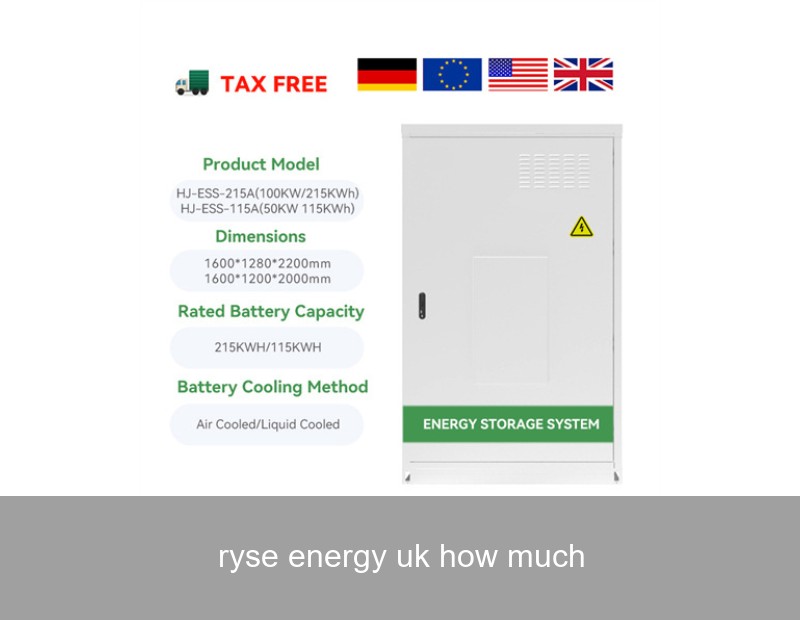
Our H-Series battery storage systems for residential and commercial use are built with long-life, safe LiFePO4 chemistry and feature our proprietary Adaptive Energy Operating System (AEOS). Think of AEOS as the intelligent brain of your energy setup. It doesn't just store power; it learns your consumption patterns, forecasts wind generation based on weather data, and autonomously decides the most economical time to store, use, or sell energy.

Credit: Unsplash - A modern battery energy storage system (BESS) installation. Intelligent systems like Highjoule's maximize self-consumption.
For larger microgrid or industrial applications, our MegaJoule Containerized Storage Solutions provide utility-scale power management, allowing businesses to not only save but also participate in grid-balancing services for additional revenue. By choosing Highjoule, you're not just buying a battery; you're investing in a future-proof platform for total energy management.
Making the Decision: Your Next Steps
So, when you're researching "Ryse Energy UK how much", shift your mindset. You are budgeting for an energy transformation project. Here is a practical action plan:
- Get a Professional Site Assessment: Contact a certified installer to evaluate your wind resource and grid connection. The RenewableUK website is a good resource to start.
- Demand a Holistic Quote: Ask for scenarios with and without integrated battery storage. Calculate the long-term LCOE for each.
- Investigate Incentives: Check for current UK grants, such as those for rural businesses or through local authorities. The UK government's Grants Finder can be helpful.
- Speak to a Storage Expert: Consult with a Highjoule partner to model the optimal storage size and software settings for your specific wind generation profile and consumption needs.
The landscape of energy is changing from a centralized, buy-only model to a decentralized, smart, and self-sufficient one. Your wind turbine is the generator, but intelligence and storage are the keys to true independence. What will your first step be towards designing a system that not only generates power but also generates lasting financial resilience?
 Inquiry
 Online Chat