


The Safest Way to Store Lithium Batteries: A Guide for Homeowners and Businesses
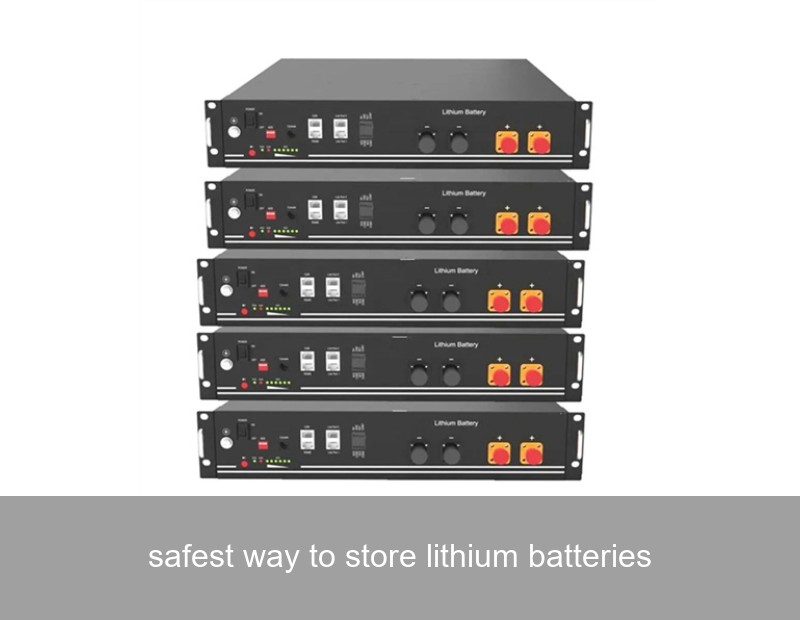
You've made a smart investment in renewable energy, perhaps with solar panels gracing your roof. Now, you're looking at the next logical step: a battery storage system to capture that sunshine for use day and night. But a nagging question arises, fueled by occasional media reports: "Is storing lithium batteries safe?" The answer is a resounding yes—when done correctly. The safest way to store lithium batteries isn't a single secret trick; it's a multi-layered philosophy of design, technology, and intelligent management. This article will demystify the core principles, showcase real-world applications, and explain how modern systems like those from Highjoule are engineered to deliver not just power, but profound peace of mind.
The Core Principles of Safe Lithium Battery Storage
Think of safety not as a feature, but as the foundation. The safest lithium battery storage systems are built on three interdependent pillars: controlling temperature, monitoring every cell, and creating a secure physical environment.
Thermal Management: The Heart of Safety
Lithium-ion batteries perform best and safest within a specific temperature window, typically between 15°C and 25°C (59°F to 77°F). The primary risk, thermal runaway, is a chain reaction where excess heat leads to catastrophic failure. The safest way to store lithium batteries actively prevents this.
- Active Liquid Cooling: Considered the gold standard for larger systems, this method circulates a coolant (like a water-glycol mix) through channels alongside battery cells. It's incredibly efficient at absorbing and dissipating heat, maintaining a remarkably even temperature across the entire battery pack. This uniformity is crucial for longevity and safety.
- Advanced Air Cooling: For many residential and commercial applications, forced air systems with strategically placed sensors and ducts can be highly effective when paired with a stable indoor environment.

Image: A well-engineered battery system emphasizes thermal management and clean integration. (Source: Unsplash, representative image)
The Brain: The Battery Management System (BMS)
If thermal management is the heart, the BMS is the brain and central nervous system. A truly advanced BMS does far more than prevent overcharging. It is the cornerstone of the safest way to store lithium batteries.
| BMS Function | How It Enhances Safety |
|---|---|
| Cell-Level Monitoring | Continuously tracks voltage, temperature, and current of each individual cell, not just the whole pack. |
| State of Charge (SOC) Management | Intelligently avoids charging to 100% or discharging to 0% for daily use, drastically reducing cell stress. |
| State of Health (SOH) Tracking | Analyzes long-term performance data to predict lifespan and flag potential issues before they become problems. |
| Isolation & Fault Protection | Can instantly disconnect the battery from the system in the event of a short circuit, ground fault, or other electrical anomaly. |
Physical Design & Environmental Control
The battery's home matters. Safe storage extends beyond the battery pack itself to its enclosure and location.
- Robust, Fire-Rated Enclosures: Commercial and industrial systems should be housed in standalone enclosures with certified fire ratings, providing critical containment time.
- Ventilation & Placement: Systems should be installed in well-ventilated areas, away from direct sunlight, water sources, and flammable materials, following all local building and electrical codes. For homeowners, a cool garage or utility room is often ideal.
- Clear Labeling & Accessibility: Proper signage and ensuring clear access for emergency services and maintenance personnel is a key, often overlooked, safety practice.
From Principle to Practice: A German Case Study
Let's see how these principles converge in the real world. A mid-sized dairy farm in Bavaria, Germany, sought energy independence and price stability. They installed a 120 kWh lithium-ion battery storage system, coupled with a 100 kW solar array, to manage their high, consistent energy load for cooling and automation.
The Challenge: The battery container was located in an uninsulated barn subject to temperature swings from -5°C in winter to 35°C (95°F) in summer. Maintaining the safe operating window was critical.
The Solution & Data: The system utilized an active liquid cooling system and a precision BMS. Over a two-year period, data logs showed:
- The internal battery pack temperature never deviated outside the 18°C - 24°C band, despite external extremes.
- The BMS reported a cell voltage deviation of less than 0.02V across all 400 cells, indicating perfect balance and minimal stress.
- The system's State of Health (SOH) remained at 99.1%, far exceeding degradation expectations, a direct result of optimal thermal and electrical management.
This case underscores that the safest way to store lithium batteries is through integrated, active systems that defend against real-world environmental challenges. You can read more about safety standards for stationary storage from the National Fire Protection Association (NFPA 855).
The Highjoule Approach: Engineering Safety into Every Layer
At Highjoule, our philosophy is that safety is non-negotiable and must be systemic. Since 2005, we've designed our commercial, industrial, and residential energy storage solutions with this layered safety architecture.
Our HPS Series for commercial applications exemplifies this. It starts with lithium iron phosphate (LFP) chemistry as the base—inherently more stable and less prone to thermal runaway than other lithium-ion types. This is then governed by our proprietary Neural BMS™, which employs AI-driven algorithms to predict cell behavior and optimize performance preemptively. The entire system is housed in a UL9540A tested enclosure with integrated, fail-safe liquid cooling.
For homeowners, our Residential Energy Hub brings this same rigorous thinking to a compact unit. It features multi-layer protection: a cell-level BMS, automatic fire suppression linkage, and a sealed, climate-controlled enclosure designed for easy, code-compliant installation in a garage or basement. We believe true sustainability is impossible without unwavering safety, a principle verified by independent testing labs like those at UL Solutions.

Image: A sleek, integrated home battery system designed for safe installation in residential spaces. (Source: Unsplash, representative image)
Future-Proofing Safety: Emerging Technologies
The pursuit of the safest way to store lithium batteries continues to evolve. Exciting developments are on the horizon:
- Solid-State Batteries: By replacing the flammable liquid electrolyte with a solid material, these promise a fundamental leap in safety and energy density, though they are still scaling for mass market.
- AI-Predictive Analytics: Going beyond monitoring, future BMS will use machine learning on vast datasets to predict specific failure modes weeks or months in advance, enabling proactive maintenance.
- Advanced Internal Sensors: Embedding sensors for pressure and gas detection inside cells themselves will provide even earlier warnings of potential issues.
Staying informed on these trends is key. Resources like the U.S. Department of Energy's battery research portal offer valuable insights into the science driving these advances.
Your Next Step: Evaluating Your Storage System
As you consider investing in battery storage, whether for your business or home, the most important question you can ask your provider isn't just about price or capacity. It's about their safety philosophy. What specific cooling technology do they use? Can they explain the capabilities of their BMS beyond basic terms? What independent safety certifications does their complete system hold?
What specific safety feature in a battery storage system would give you the greatest confidence for your property?
 Inquiry
 Online Chat