


Beyond the Rack: How Server Cabinet Suppliers Power the Green Data Revolution
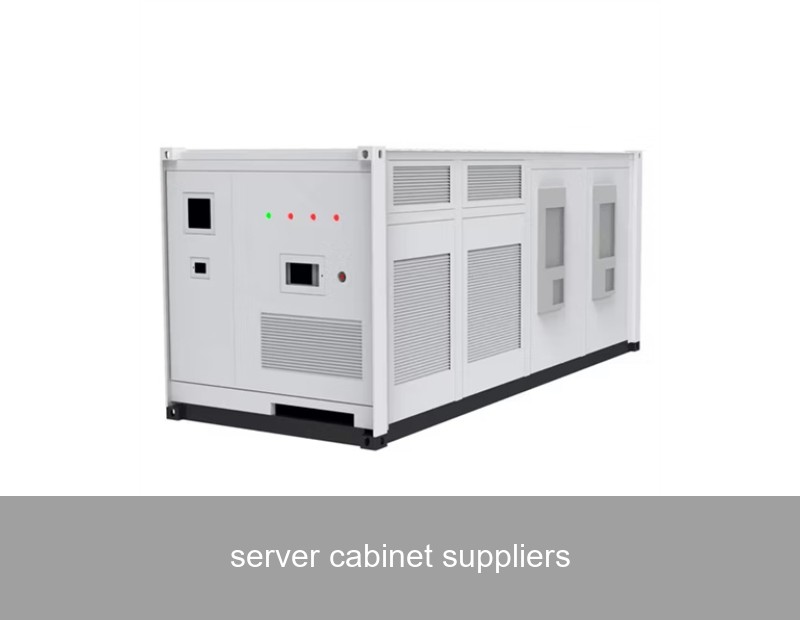
When you think of server cabinet suppliers, what comes to mind? Steel racks, cable management, perhaps cooling fans. For decades, their role was seen as purely physical: housing and protecting sensitive IT equipment. But a quiet revolution is reshaping data centers, and it's forcing everyone—from facility managers to server cabinet suppliers—to think bigger. The driving force? The urgent, global push for sustainability and energy resilience. Suddenly, the cabinet isn't just a container; it's becoming a critical node in a smarter, greener power ecosystem. Let's explore how the very definition of infrastructure is expanding.
Table of Contents
- The Phenomenon: Data Centers at an Energy Crossroads
- The Data: The Soaring Energy Appetite of Digital Growth
- Case Study: A German Industrial Park's Blueprint for Resilience
- The Shift: From Passive Cabinets to Integrated Energy Platforms
- The Highjoule Solution: Intelligent Storage as Core Infrastructure
- The Future: Your Next Cabinet Should Be a Power Plant
The Phenomenon: Data Centers at an Energy Crossroads
Modern data centers are the beating hearts of our digital world. However, this critical role comes with a massive responsibility: an insatiable demand for reliable, clean, and affordable power. Grid instability, rising electricity costs, and stringent corporate carbon reduction goals are no longer future concerns—they are today's pressing operational challenges. Forward-thinking operators are now looking at every component, asking not just "What does it do?" but "How does it contribute to our energy strategy?" This is where the narrative around server cabinet suppliers begins to transform.
The Data: The Soaring Energy Appetite of Digital Growth
The numbers are staggering. The International Energy Agency (IEA) reports that data centers consumed roughly 1-1.3% of global final electricity demand in 2022, a figure set to rise significantly with AI and digital expansion. In regions like Europe and North America, where grids are under transition pressure, this demand creates vulnerabilities. Power outages or frequency fluctuations that last mere milliseconds can cause millions in damage and downtime. This isn't just about keeping servers cool; it's about ensuring the entire power chain supporting them is resilient and efficient.
Consider this simple table breaking down key pressures:
| Pressure Point | Impact on Data Centers | Traditional Cabinet Limitation |
|---|---|---|
| Grid Volatility | Risk of downtime, hardware damage | Passive; offers no power quality correction |
| Energy Costs | OPEX skyrocketing; affects profitability | No contribution to energy management or cost savings |
| Sustainability Mandates | Corporate ESG targets, regulatory compliance | No role in integrating renewables or reducing carbon footprint |
Case Study: A German Industrial Park's Blueprint for Resilience
Let's look at a real-world scenario in Germany, a market with ambitious renewable goals and high industrial energy prices. A large industrial park housing multiple co-location data facilities faced frequent grid brownouts and exorbitant peak-demand charges. Their existing infrastructure—including rows of standard server cabinets from conventional server cabinet suppliers—was part of the energy problem, not the solution.
Their innovative approach? They partnered with a system integrator to deploy a containerized Battery Energy Storage System (BESS) from Highjoule. This wasn't just a backup generator replacement. The 2 MWh Highjoule H-Cube system was strategically integrated to perform multiple functions:
- Peak Shaving: The system automatically discharged during daily price peaks, cutting demand charges by over 30%.
- Frequency Regulation: It provided instantaneous grid stabilization services, generating new revenue streams.
- Renewable Integration: It stored excess power from the park's onsite solar PV, increasing self-consumption by 40%.
The result? A 22% reduction in annual energy costs, enhanced uptime, and significant progress toward carbon neutrality. The project proved that the energy solution must be as intelligent and modular as the IT equipment it supports. 
The Shift: From Passive Cabinets to Integrated Energy Platforms
This case study illuminates the paradigm shift. The most advanced server cabinet suppliers and their clients are now thinking in terms of integrated energy platforms. The cabinet's role is expanding to potentially house or interface directly with advanced power electronics and battery modules. Imagine a server rack where every kilowatt-hour of incoming power is managed, stored, and optimized at the point of use.
This requires a deep convergence of IT and energy technology (EnTech). It's no longer sufficient to supply a grounded metal frame. The future lies in providing solutions that offer:
- Power Density & Thermal Management: Accommodating higher-density computing while managing the heat from both servers and integrated storage systems.
- DC Power Distribution: Enabling more efficient direct current (DC) pathways from solar PV or battery storage to compatible IT loads, reducing conversion losses.
- Smart Monitoring & Control: Built-in sensors and software that provide granular data on energy consumption, temperature, and predictive maintenance needs.
The Highjoule Solution: Intelligent Storage as Core Infrastructure
This is where Highjoule's expertise becomes pivotal. As a global leader in advanced energy storage since 2005, we don't manufacture server cabinets. We empower the ecosystem around them. We provide the intelligent, scalable battery storage systems that turn a standard data hall into a resilient, energy-aware facility.
For data centers and their server cabinet suppliers, Highjoule's product suite offers a seamless layer of energy intelligence:
- H-Cube Containerized BESS: A pre-engineered, plug-and-play solution for large-scale capacity, ideal for campus-level peak shaving, backup, and grid services.
- H-Pack Commercial & Industrial BESS: Modular, scalable units perfect for integration into or alongside data center infrastructure, managed by our proprietary energy management system (EMS).
- Microgrid Solutions: Full-system design that integrates solar, storage, and existing generators to create an independent, optimized power network.
Our systems are designed to communicate seamlessly with building and power management systems, providing the actionable intelligence needed to make real-time decisions. By partnering with Highjoule, forward-looking infrastructure providers can offer their clients a complete "power-ready" enclosure solution. 
The Future: Your Next Cabinet Should Be a Power Plant
The trajectory is clear. The line between energy infrastructure and IT infrastructure is blurring. The next generation of data centers will be both consumers and producers of power—true prosumers. Your choice of server cabinet suppliers will increasingly hinge on their ability to partner with or provide integrated energy resilience solutions.
When evaluating your next infrastructure upgrade, ask yourself and your suppliers: Does this solution simply house my servers, or does it actively participate in my energy security and sustainability strategy? Can it interface with battery storage or solar inverters? Does it provide the data foundation for intelligent load management?
For more on global data center energy trends, you can review the latest report from the International Energy Agency (IEA). To understand microgrid best practices, the National Renewable Energy Laboratory (NREL) offers valuable resources.
Is your data center's physical infrastructure ready to become an active asset in your energy transition? What would a 30% reduction in your demand charges do for your bottom line?
 Inquiry
 Online Chat