


Desert Peak Energy Storage: Powering the Future When the Sun Sets
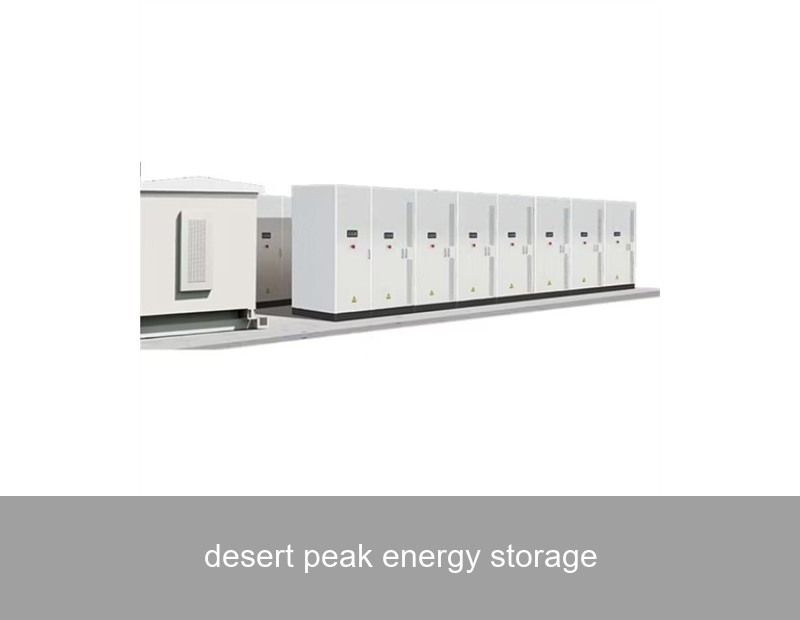
Imagine a vast solar farm in the desert, its panels glinting under the relentless sun, generating gigawatts of clean power. Now, imagine what happens as that sun dips below the horizon. The grid, reliant on that daytime surge, faces a steep cliff. This is the "duck curve" challenge, and its most pronounced peak—the evening demand spike—is increasingly being met by a game-changer: desert peak energy storage. By deploying massive battery energy storage systems (BESS) in arid regions, we're not just capturing solar energy; we're time-shifting it to create a stable, resilient, and sustainable grid for the future.
Table of Contents
The Desert Energy Paradox: Abundance with a Timing Problem
Deserts are prime real estate for solar photovoltaic (PV) farms. High solar irradiance, minimal cloud cover, and available land make them ideal. However, this creates a unique paradox: maximum generation occurs during daylight hours, often exceeding immediate local demand, while demand peaks in the early evening when solar production plummets. This mismatch forces grid operators to ramp up fossil-fuel-powered "peaker plants" quickly—a costly and carbon-intensive process. Desert peak energy storage is the elegant solution, acting as a giant buffer that charges with midday solar surplus and discharges during the critical evening ramp.

Image Source: Unsplash - A desert solar farm at sunset, the precise time when energy storage becomes critical.
The Data Landscape: Why Storage is Non-Negotiable
The numbers paint a clear picture. According to the U.S. Department of Energy's Solar Futures Study, achieving a decarbonized grid could require the U.S. to deploy 1,600-1,800 GW of solar capacity. A significant portion will be in sun-rich, arid regions. The California Independent System Operator (CAISO) famously graphs the "duck curve," showing a deepening belly of midday solar overproduction and a steep neck of evening net demand. In 2022, the difference between the day's low and the evening peak in California could exceed 12,000 MW—a gap increasingly filled by storage, not gas. This isn't just a U.S. trend; countries like Spain, Chile, and Saudi Arabia face identical dynamics.
Key Grid Challenges Addressed by Desert Storage:
- Peak Shaving: Reducing reliance on expensive, polluting peaker plants.
- Renewable Integration: Smoothing the intermittent output of solar PV.
- Frequency Regulation: Providing instant response to maintain grid stability (50Hz/60Hz).
- Capacity Deferral: Delaying costly upgrades to transmission infrastructure.
Case Study: Taming the Mojave's Peaks - The Gemini Solar + Storage Project
Let's look at a real-world example shaping the future of desert peak energy storage. The Gemini Solar Project in the Mojave Desert, Nevada, is more than just a 690 MW solar array. Its co-located 1,400 MWh battery storage system is a cornerstone of its design. Once fully operational, this project is designed to power over 250,000 homes during peak hours, primarily after sunset. The battery system is engineered to store excess solar energy generated during the day and discharge it over a four-hour period in the evening, directly addressing the steepest part of the duck curve. This project highlights a critical evolution: new desert solar installations are now inherently "hybrid," with storage capacity being planned from day one, not added as an afterthought.
| Project Component | Specification | Role in Peak Management |
|---|---|---|
| Solar PV Capacity | 690 MW AC | Daytime base generation |
| Battery Storage Capacity | 1,400 MWh | Evening peak discharge (4+ hours) |
| Grid Service | NV Energy | Provides stable, dispatchable clean power post-sunset |
The Technology Behind Reliable Desert Storage
Desert environments are a blessing for solar yield but a potential curse for hardware. Extreme temperature swings, dust, and arid conditions demand robust engineering. Not all battery storage is created equal for these settings. Lithium-ion phosphate (LFP) battery chemistry has become the dominant choice for large-scale storage due to its longer lifespan, superior thermal stability, and enhanced safety profile compared to older NMC formulations. However, the battery cells are just one component. The true intelligence lies in the Battery Management System (BMS) and the Power Conversion System (PCS).
An advanced BMS continuously monitors and manages the state of charge, health, and temperature of each cell block, ensuring optimal performance and longevity. The PCS acts as the brain, deciding when to charge or discharge based on grid signals, market prices, or operational needs. This is where companies with deep system integration expertise, like Highjoule, create distinct value. Highjoule's H-Series BESS is engineered for such harsh environments. It features an integrated liquid cooling system that maintains an optimal operating temperature range even when external temperatures soar above 45°C (113°F) or plummet at night, directly combating efficiency loss and degradation. Furthermore, its sealed design and advanced filtration mitigate dust ingress—a major concern for desert operations.
Highjoule's Integrated Approach to Desert Challenges
Since 2005, Highjoule has specialized in delivering intelligent storage solutions that go beyond the container. For utility-scale desert projects, we provide an end-to-end service: from initial feasibility and system design using proprietary modeling software, to supplying our ruggedized H-Series BESS, to long-term performance monitoring and optimization via our JouleMind AI platform. This platform enables asset owners to maximize revenue by strategically participating in energy arbitrage (buying low, selling high) and ancillary service markets, all while ensuring the system's health for its 15+ year lifespan. We understand that desert peak energy storage isn't just about having batteries in the sand; it's about creating a fully optimized, financially viable grid asset.

Image Source: Unsplash - Control room monitoring a large-scale energy storage system.
Future Horizons: Beyond Lithium-Ion
While lithium-ion dominates today, the future of desert peak energy storage may see a diversified portfolio. Technologies like flow batteries offer potentially longer durations and easier scalability for very long discharge applications (8+ hours). Compressed air energy storage (CAES) in underground geological formations is another area of research, particularly suited for massive, long-duration storage. The key will be a focus on Levelized Cost of Storage (LCOS)—the total lifetime cost per MWh delivered. Innovations that drastically reduce LCOS while withstanding desert climates will win. You can explore comparative technology roadmaps from authoritative sources like the International Renewable Energy Agency (IRENA).
So, as we deploy more solar in the world's sunbelts, the question becomes less about how to generate the power, and more about how to master its rhythm. The success of our clean energy transition hinges on our ability to turn the desert's daytime abundance into a 24/7 resource. Are you evaluating how large-scale storage could firm up your renewable project or provide critical grid services in your region?
 Inquiry
 Online Chat