


How Much Does It Cost to Set Up Solar Panels? A Clear Breakdown for 2024
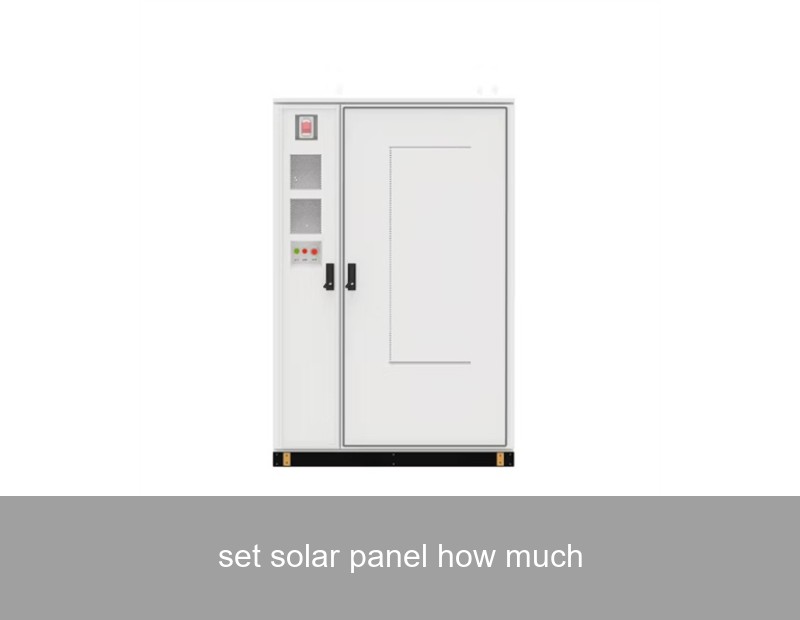
So, you're thinking about "setting solar panels" on your roof. It's a smart move, but the first question that pops up is almost always: "How much will it actually cost?" It's a bit like asking, "How much does a house cost?" The answer depends on a huge range of factors—your location, your energy appetite, the quality of equipment, and crucially, whether you're just capturing sunshine or also storing it for a rainy day. Let's demystify the real cost of setting up a solar panel system, moving beyond the basic price tag to understand the value of a complete, intelligent energy solution.
The Price Puzzle: More Than Just Panels
When you get a quote to set solar panel arrays, you're not just buying the visible blue modules. You're investing in an integrated electrical system. The total cost encompasses:
- Solar Panels (Modules): Typically 15-25% of the total system cost. Efficiency and brand matter.
- Inverters: The "brain" that converts DC solar power to usable AC power for your home (10-15% of cost).
- Mounting & Racking: The hardware that securely attaches everything to your roof (5-10% of cost).
- Electrical Components & Wiring: Safety switches, conduits, and cables (5-10% of cost).
- Installation Labor & Permits: Expertise, local permitting fees, and inspections (15-25% of cost).
- Optional but Crucial: The Battery Energy Storage System (BESS). This is where the modern energy conversation is headed.
According to data from the Solar Energy Industries Association (SEIA), the average cost of a residential solar system in the U.S. before incentives ranges from $18,000 to $36,000. But this often excludes storage.
Key Factors That Determine Your Solar Setup Cost
To understand your specific number, consider this ladder of variables:
| Factor | Impact on Cost | Why It Matters |
|---|---|---|
| System Size (kW) | Directly proportional | Based on your past energy bills. A 6kW system costs less than a 10kW system. |
| Panel Efficiency | Higher efficiency = higher cost per panel | Premium panels generate more power in limited roof space, often offering better long-term value. |
| Roof Complexity | Steep pitch, multiple angles = higher labor | Simple, south-facing roofs are easiest and cheapest to install on. |
| Location | Varies by state/country | Labor rates, permit costs, and available incentives (like the U.S. ITC or European subsidies) differ wildly. |
| Energy Storage (Battery) | Adds $7,000 - $20,000+ | Enables use of solar power at night, provides backup during outages, and maximizes self-consumption. |
The Storage Game-Changer: Why Your Quote Might Be Incomplete
Here's the critical insight: a solar-only system is a partial solution. Without a battery, any excess solar energy you produce during the sunny afternoon is sent back to the grid, often for a minimal feed-in tariff. Then, you buy back expensive power from the utility in the evening. A battery storage system breaks this cycle.
Think of it this way: solar panels are your income. A battery is your savings account. Without savings, you can't weather a financial "outage" or plan for a future with less grid dependence. Including storage from the start often creates a more balanced, future-proof system design.

Credit: A modern home with solar panels and a wall-mounted battery storage unit. This integrated approach is key to maximizing value.
A Real-World Case: The German Bakery Maximizing Self-Consumption
Let's look at a concrete example from our work in Europe. A family-run bakery in Bavaria, Germany, had a 30kW solar array installed in 2020. Their challenge? Their ovens and refrigeration ran heavily in the early morning and evening, outside peak solar production hours. They were exporting 60% of their solar energy for a low feed-in tariff and buying grid power at high rates.
In 2023, they decided to set solar panel production free with a Highjoule HES-25 commercial battery storage system. The results after one year:
- Self-Consumption Rate: Increased from 40% to over 85%.
- Grid Energy Cost: Reduced by 73%.
- Payback Period: The added storage investment is projected to pay for itself in under 7 years, thanks to optimized time-of-use arbitrage and reduced demand charges.
This case, documented in a Fraunhofer ISE study on energy storage economics, highlights that the true cost question should be: "How much does it cost to meet my energy needs independently?" not just "How much for the panels?"
The Highjoule Solution: Intelligent Systems for True Energy Independence
This is where Highjoule's expertise transforms the equation. Since 2005, we've moved beyond being just a component supplier to becoming a provider of integrated, intelligent energy ecosystems. When you partner with us to set solar panel systems up, you're getting a designed outcome: resilience, savings, and sustainability.
Our ResiCore series for homes and GridCore series for commercial sites are more than just batteries. They are AI-powered energy managers. Our systems continuously learn your consumption patterns, weather forecasts, and local utility rates to autonomously decide the most economical moment to store solar energy, discharge it, or even participate in grid services programs (where available).

Credit: An intelligent energy management dashboard, similar to Highjoule's platform, provides real-time control and insights.
For a homeowner in California or a small factory in Italy, this means the system isn't just a cost—it's an intelligent asset that actively optimizes your financial return and carbon savings every single day.
Investing in Your Future: Calculating Long-Term Value
So, let's reframe the initial cost. Instead of a simple expense, view it as a 25-year energy purchase agreement with yourself at a fixed, predictable rate. With a Highjoule system that includes smart storage, you are locking in a significant portion of your energy costs at today's prices, insulating yourself from volatile utility rate hikes.
To get a meaningful estimate, we encourage you to think in terms of Levelized Cost of Energy (LCOE) for your property—the average total cost to generate each kilowatt-hour over the system's life. A high-quality, storage-integrated system often has a lower LCOE than grid power over its lifetime, especially when you factor in rising grid costs. The U.S. National Renewable Energy Lab (NREL) consistently shows the declining LCOE of solar-plus-storage.
Ready to move beyond a generic price per watt for panels? What specific energy goal—total backup power, maximum bill savings, or carbon neutrality—should be the true driver of your system's design and cost calculation?
 Inquiry
 Online Chat