


Finding the Right SHS Solar System for Sale: A Guide to Sustainable Power Independence
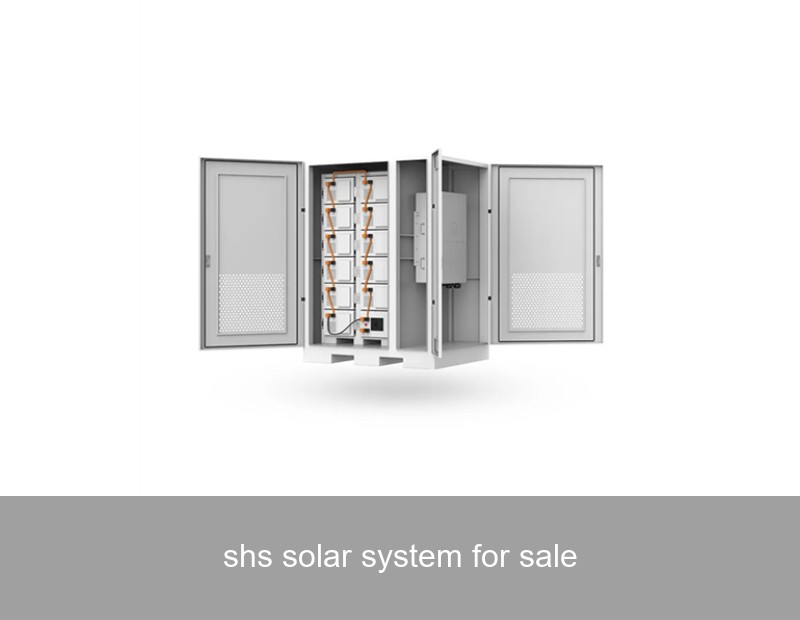
Table of Contents
- What Exactly is a Solar Home System (SHS)?
- The Phenomenon: Why SHS Demand is Skyrocketing
- The Data: More Than Just Cost Savings
- Case Study: A German Farm's Journey to Energy Resilience
- Key Components of a Modern, High-Performance SHS
- Choosing Your SHS: Critical Factors to Consider
- How Highjoule Empowers Your Energy Transition
- Looking Ahead: The Intelligent Future of Home Energy
If you're searching for an "SHS solar system for sale," you're already on a path toward a more resilient and sustainable lifestyle. A Solar Home System (SHS) is no longer a niche technology; it's a mainstream solution for homeowners across Europe and the US seeking to combat rising electricity prices, increase energy independence, and reduce their carbon footprint. But with so many options on the market, how do you choose a system that's not just a collection of parts, but a smart, integrated energy solution built to last? This guide will walk you through the essentials, backed by data and real-world examples, to help you make an informed decision.
What Exactly is a Solar Home System (SHS)?
At its core, a Solar Home System is an integrated setup that captures, stores, and manages solar energy for your household. Unlike simple grid-tied solar panels, a true SHS typically includes solar panels, a battery energy storage system (BESS), inverters/converters, and a smart energy management system. This combination allows you to use solar power day and night, providing a buffer against grid outages and maximizing self-consumption of the clean energy you produce.
Image: A modern SHS installation on a residential home. Credit: Unsplash
The Phenomenon: Why SHS Demand is Skyrocketing
Let's talk about the elephant in the room: energy volatility. You've likely felt it—your monthly utility bill becoming increasingly unpredictable. This isn't just anecdotal. In the EU, household electricity prices have seen significant fluctuations due to geopolitical factors and market dynamics. In the US, grid reliability is a growing concern, with the U.S. Department of Energy reporting an increase in major power outages over the past decade. This phenomenon is driving a fundamental shift. Homeowners no longer view solar panels as just a "green add-on." They are now seen as the cornerstone of a strategic home energy plan, with battery storage as the critical enabler for true independence.
The Data: More Than Just Cost Savings
The financial case is compelling. According to industry analyses, a well-designed SHS can reduce a typical household's grid electricity consumption by 70-90%, depending on location and system size. But the value extends beyond bill savings. Consider resilience: during the 2021 Texas winter storm, homes with solar and storage systems were able to maintain power for days while the grid failed. Furthermore, modern systems add tangible value to your property. A study by the Lawrence Berkeley National Laboratory found that homes with solar photovoltaic (PV) systems sell for a premium compared to homes without.
The key metric is Levelized Cost of Energy (LCOE) for your home. With solar panel costs having fallen over 80% in the last decade and advanced battery systems like lithium iron phosphate (LFP) offering longer lifespans and better safety, the LCOE from your own SHS is now competitive with, and often lower than, retail grid electricity in many regions.
Case Study: A German Farm's Journey to Energy Resilience
Let's look at a concrete example from Bavaria, Germany. The Müller family runs a medium-sized dairy farm with high energy demands for cooling, ventilation, and equipment. Their goals were clear: reduce operational costs, ensure uninterrupted power for critical systems, and leverage available government incentives.
Their Challenge: Erratic energy costs and concern over even brief power outages affecting milk refrigeration.
The Solution: They installed a 45 kWp solar array coupled with a 60 kWh battery storage system. The intelligent system was programmed to prioritize charging the battery with excess solar, then power the farm's loads, and only draw from the grid as a last resort. A unique feature allowed the system to automatically start a backup generator (using biofuel from the farm) if the battery was depleted during prolonged cloudy periods, creating a true microgrid.
The Data-Driven Outcome (12 Months Post-Installation):
| Metric | Result |
|---|---|
| Grid Electricity Consumption | Reduced by 82% |
| Self-Consumption Rate of Solar | Increased from 35% to 94% |
| Payback Period (with incentives) | Estimated at 6.5 years |
| CO2 Emissions Offset | Approx. 32 tonnes annually |
Key Components of a Modern, High-Performance SHS
Not all "SHS solar systems for sale" are created equal. Understanding the components is crucial:
- Solar Panels (PV Modules): Look for high-efficiency, tier-1 manufacturers with strong performance warranties (often 25+ years).
- Battery Energy Storage System (BESS): The heart of modern SHS. Key considerations are capacity (kWh), power rating (kW), depth of discharge (DoD), cycle life, and safety chemistry. LFP batteries are now the industry standard for safety and longevity.
- Hybrid Inverter: This brain of the system manages energy flow between solar panels, batteries, home loads, and the grid. Must be compatible with all components and future-expandable.
- Energy Management System (EMS): Smart software that learns your consumption patterns, optimizes for weather forecasts and time-of-use electricity rates, and allows remote monitoring and control via an app.
Choosing Your SHS: Critical Factors to Consider
When evaluating an SHS solar system for sale, ask these questions:
- Is it an integrated solution or a bundle of parts? Seamless communication between components from a single provider often means better performance and simpler warranty support.
- How scalable is it? Can you easily add more battery capacity or solar panels in the future?
- What is the true total cost of ownership? Consider not just upfront price, but efficiency losses, expected lifespan of each component, and maintenance costs.
- Does it offer grid services or virtual power plant (VPP) capability? In some markets, you can earn revenue by allowing your system to support the grid during peak times.
How Highjoule Empowers Your Energy Transition
This is where Highjoule's nearly two decades of expertise comes into play. Since 2005, we've moved beyond simply supplying components to delivering intelligent, integrated energy ecosystems. For the residential and commercial market, our Highjoule HOMES solution is a prime example of a premium SHS. It features our proprietary LFP battery packs, known for their exceptional cycle life and built-in safety, paired with a smart hybrid inverter and our JouleBrain AI energy management platform.
JouleBrain doesn't just react; it predicts. By integrating local weather data and your utility's rate structure, it automatically optimizes your energy flow to maximize savings and resilience. For instance, it might decide to store extra solar energy rather than sell it at a low rate, knowing a peak tariff period is coming in the evening. Our systems are designed with scalability at their core, allowing you to start with a base configuration and expand your storage capacity as your needs evolve. We provide a single point of responsibility—from design and commissioning to ongoing monitoring and support—ensuring your SHS delivers on its promise for decades.

Image: Professional installation of a home battery storage unit. Credit: Unsplash
Looking Ahead: The Intelligent Future of Home Energy
The SHS is evolving from an isolated asset to a connected node in a smarter energy network. The future lies in systems that can interact with electric vehicles (bidirectional charging), community microgrids, and grid-balancing programs. Choosing a system today with this intelligence and communication capability built-in future-proofs your investment.
So, as you search for the ideal SHS solar system for sale, remember you're not just buying hardware. You're investing in a platform for energy independence, stability, and sustainability. The technology is proven, the economics are sound, and the benefits extend far beyond your meter.
What specific energy challenge—be it unpredictable bills, frequent outages, or a personal sustainability goal—is motivating you to explore a Solar Home System today?
 Inquiry
 Online Chat